
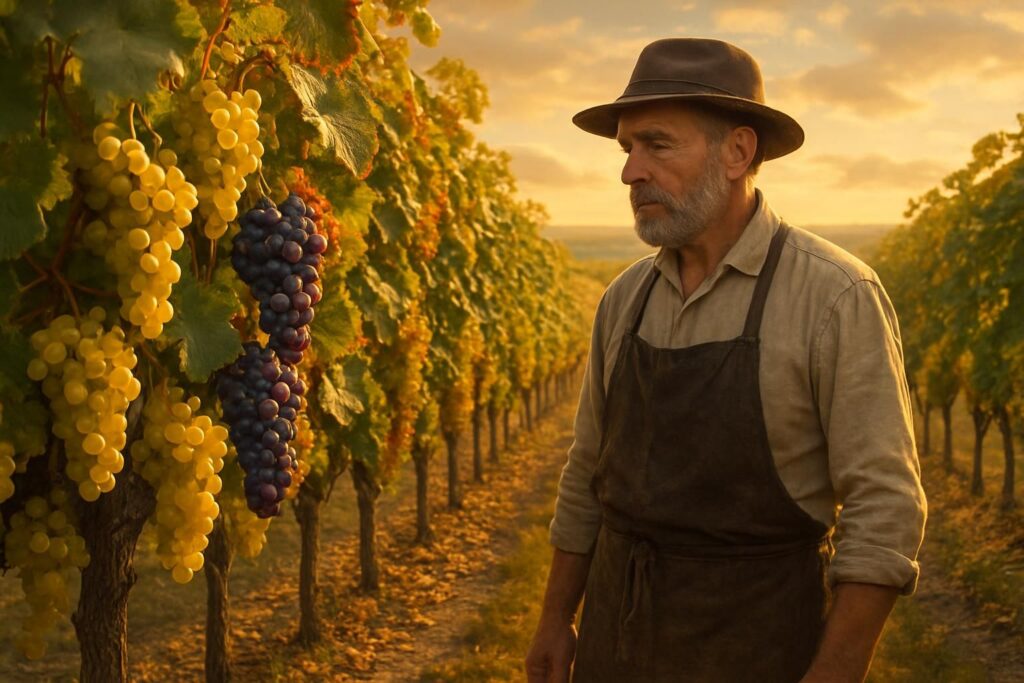
At the heart of the Champagne vineyard, the time of the harvest is not chosen lightly. Although the grapes may appear perfectly ripe, Champagne professionals know that waiting is often essential to guarantee an aromatic balance, just the right acidity, and impeccable final wine quality. Between traditions, climatic constraints, and winemaking requirements, this controlled waiting is particularly tied to the specific Champagne terroir, where patience remains a precious virtue in service of the noble grape varieties that make up this exceptional appellation.
The apparent precocity of the grape, visible to the naked eye, can indeed be deceptive. The vineyard, especially in the northern areas of Champagne, benefits from a large temperature amplitude between day and night, which directly influences the maturation progress. In 2026, as in previous years, the average date of the harvest was around September 20th, although climatic disruptions or local exceptions—such as Montgueux in the Aube—sometimes allow for earlier picking within the respect of sanitary and qualitative rules. This approach is an integral part of the constant quest for grapes that are both ripe and balanced, in order to preserve the unique signature of Champagne.
Understanding the maturation of grapes in Champagne: a complex balance between sugar and acidity
Grape maturity cannot be summarized by a simple visual observation or by the sole measurement of sugar content. It is actually a subtle interaction between several parameters, which must be rigorously assessed to decide the ideal harvest date. In Champagne, the final quality of the wine depends on a perfect harmony of sugar, acidity, and also phenolic compounds that influence the aromatic profile. Aromatic fullness builds during this period where the grape continues to evolve in flavor and texture until the last moment.
The balance between acidity and alcohol level is an essential factor. While sugar accumulates quickly under sunny conditions, acidity tends to decrease over time. It is this acidity that will ensure Champagne’s characteristic freshness, a signature that winemakers must imperatively preserve despite the temptation of an early harvest as soon as the grape appears ripe. Too low an acidity leads to a flat wine, less expressive and with compromised preservation.
The decision-making also relies on the analysis of grape varieties and terroir. Chardonnays, Pinots Meuniers, and Pinots Noirs have different maturation rhythms, and their grapes must reach perfect maturity adapted to each cuvée. Cooler terroirs of the Montagne de Reims, for example, often see slower maturation, allowing a later harvest without quality loss, while in the Aube, the perceived heat sometimes leads to a faster apparent maturity.
In 2026, the harvest illustrated this phenomenon: despite potentially high alcohol levels as early as the beginning of September, winemakers often chose to wait, taking advantage of acidity still preserved, a sine qua non condition for producing an exceptional wine.
Regulatory and technical constraints requiring patience before the harvest in Champagne
While the vine partly dictates its own calendar, several regulatory rules and constraints also govern the harvest date in Champagne. Set by the Comité Interprofessionnel du Vin de Champagne (CIVC), the opening date of the harvest must take into account overall maturity, but also quality and technical imperatives.
The complexity of Champagne winemaking requires that grapes arrive at the presses in impeccable condition. Therefore, the harvest must be done by hand, and the bunches must remain whole to guarantee the quality of the must. This technical requirement currently prohibits the use of mechanical harvesters, which considerably slows the pace of harvests and requires rigorous organization, especially for a late harvest.
Moreover, the regulations are very strict regarding the sugar content and acidity of the grape. This regulatory “barrier” prevents harvesting too early, even if the grape appears visually ripe. Any anomaly or premature harvest risks compromising the wine quality, notably in terms of effervescence and aromatic balance. A quality sparkling wine would then rest on a base that does not meet the criteria required by the appellation, potentially affecting marketing and the brand’s longevity among enthusiasts and connoisseurs.
Finally, the timing of the harvest is also influenced by yield imperatives. In 2026, Champagne faces a reduced grape quota due to difficult climatic conditions in recent years consulted here. Thus, some producers choose to wait for each bunch to reach optimal quality before harvesting it, to best enhance this limited resource.
Impact of climatic conditions and terroirs on the timing of the harvest in Champagne
The Champagne climate plays a decisive role in managing grape maturation and therefore in deciding the harvest date. Bordered by a northern geographical position, the vineyard indeed experiences particular weather conditions that strongly affect the progress of berry maturity. Short days and cool nights slow down maturation, unlike other more southern wine regions. This phenomenon influences the balance between technological maturity and phenolic maturity.
In drought years, as recently observed, grapes undergo faster sugar ripening, but acidity concentration can decrease prematurely, impacting the freshness sought for Champagne wine more details here. This imbalance may push winemakers to wait to maximize aromatic quality and especially the overall structure of the grape. However, this patience also carries a risk with the possibility of deterioration due to bad weather or disease attacks during the often wet September periods.
Each terroir thus brings its specificity. In Montgueux in the Aube, for example, grapes benefit from more sunshine and sustained warmth, promoting earlier maturity and sometimes justifying an INAO exemption to start the harvest the day before the official ban. This type of adaptation ensures grapes are harvested at their full value, aligning quality with market demands and the expectations of Champagne houses.
Climatic variations between vintages therefore force winemakers to be extremely vigilant, combining terroir characteristics, grape richness, and constraints imposed by winemaking to determine the optimal harvest timing. Only this complex alchemy can ensure a harvest adapted to the ever higher standards of contemporary Champagne.
The quest for quality: why patience is the key to a successful harvest in Champagne
Patience before the harvest is a fundamental approach illustrating the qualitative demand specific to Champagne producers. Indeed, in this region where sparkling wine reigns supreme, every step, from growth to winemaking, is governed by the desire to achieve perfect balance. Harvesting too early just because the grapes appear ripe often amounts to sacrificing this pursuit of excellence for an illusory time gain.
This patience is felt through several factors:
- A perfect aromatic balance: some aromatic compounds, notably esters and other volatile molecules responsible for Champagne’s emblematic aromas, develop fully only in the final maturation stages.
- Preservation of natural acidity: the freshness and liveliness of the wine depend on sufficient acidity at harvest time, hence the importance of not rushing the picking.
- Better structure and aging potential: slowly ripened grapes offer a density in sugars and phenolic compounds that favors aging and the progressive complexity of Champagne in the bottle.
Major Houses and many independent winemakers have always applied this philosophy, although the climatic winds of change and commercial pressure may encourage anticipating the harvest. In 2026, the unprecedented maturation dynamics observed during the harvest once again showed that respecting this necessary time brought undeniable qualitative added value see the special 2026 harvest report.
In short, waiting even when grapes seem technically ripe is a carefully thought-out strategy allowing optimization of finesse, balance, and complexity of Champagne. This rigorous approach, respectful of each grape variety and terroir, ensures that the harvest becomes the promise of an exceptional wine with vibrant aromas and elegant structure.
Winemaking and harvesting: an indispensable harmony for exceptional Champagne
After the patience respected in the vineyards, the harvest is the first key step in controlled winemaking. It largely defines the quality of the must and, consequently, that of the Champagne. Respecting the timing ensures that the extracted juice is rich in natural sugars while maintaining sufficient acidity for fermentation and long-term preservation.
Accuracy in harvesting also conditions pressing efficiency. The rule in Champagne requires grapes to be pressed quickly and gently to avoid premature oxidation or excessive extraction of bitter tannins. The manual harvest, mandatory here, guarantees meticulous selection of intact bunches, a fundamental element in seeking final quality.
The impact of the calendar on winemaking must not be underestimated. An early harvest can produce juice that is too acidic or unbalanced, while a late harvest risks yielding must too sweet and less fresh, altering the very nature of the expected sparkling wine. Adjustments in winemaking recipes therefore depend on the rigor with which each step is respected.
In this context, technological advances support the process, offering precise analytical techniques to evaluate maturity and aromatic compounds in real time. These tools reinforce the ability of Champagne houses and winemakers to decide the right time for the harvest, integrating environmental parameters of the season. They thus help maintain the prestige and typicity of Champagne wines in the face of climatic challenges and international market demands.
This concern for harmony between harvest and winemaking largely defines Champagne’s international reputation. Maintaining this rigor is a guarantee for enthusiasts and connoisseurs that each bottle hides behind it a commitment to quality, born of a clever balance between patience and know-how.
{“@context”:”https://schema.org”,”@type”:”FAQPage”,”mainEntity”:[{“@type”:”Question”,”name”:”Why do grapes in Champagne seem ripe before the harvest?”,”acceptedAnswer”:{“@type”:”Answer”,”text”:”Grapes accumulate sugar quickly and change appearance, but despite this, acidity and essential aromatic compounds are not yet optimal for picking.”}},{“@type”:”Question”,”name”:”What are the risks of harvesting too early in Champagne?”,”acceptedAnswer”:{“@type”:”Answer”,”text”:”An early harvest can result in an unbalanced wine, lacking freshness and acidity, which negatively affects the quality and longevity of Champagne.”}},{“@type”:”Question”,”name”:”How do winemakers determine the right harvest date?”,”acceptedAnswer”:{“@type”:”Answer”,”text”:”They rely on regular analyses of sugar levels, acidity, and close observation of aromatic development and the sanitary condition of the grapes.”}},{“@type”:”Question”,”name”:”Does terroir influence the harvest schedule?”,”acceptedAnswer”:{“@type”:”Answer”,”text”:”Yes, depending on geographical area and microclimate, grape maturation varies, which changes the optimal time for picking.”}},{“@type”:”Question”,”name”:”Does winemaking impose constraints on the timing of the harvest?”,”acceptedAnswer”:{“@type”:”Answer”,”text”:”Absolutely, the must must be balanced in sugar and acidity to allow effective fermentation and ensure the final quality of Champagne.”}}]}Why do grapes in Champagne seem ripe before the harvest?
Grapes accumulate sugar quickly and change appearance, but despite this, acidity and essential aromatic compounds are not yet optimal for picking.
What are the risks of harvesting too early in Champagne?
An early harvest can result in an unbalanced wine, lacking freshness and acidity, which negatively affects the quality and longevity of Champagne.
How do winemakers determine the right harvest date?
They rely on regular analyses of sugar levels, acidity, and close observation of aromatic development and the sanitary condition of the grapes.
Does terroir influence the harvest schedule?
Yes, depending on geographical area and microclimate, grape maturation varies, which changes the optimal time for picking.
Does winemaking impose constraints on the timing of the harvest?
Absolutely, the must must be balanced in sugar and acidity to allow effective fermentation and ensure the final quality of Champagne.