
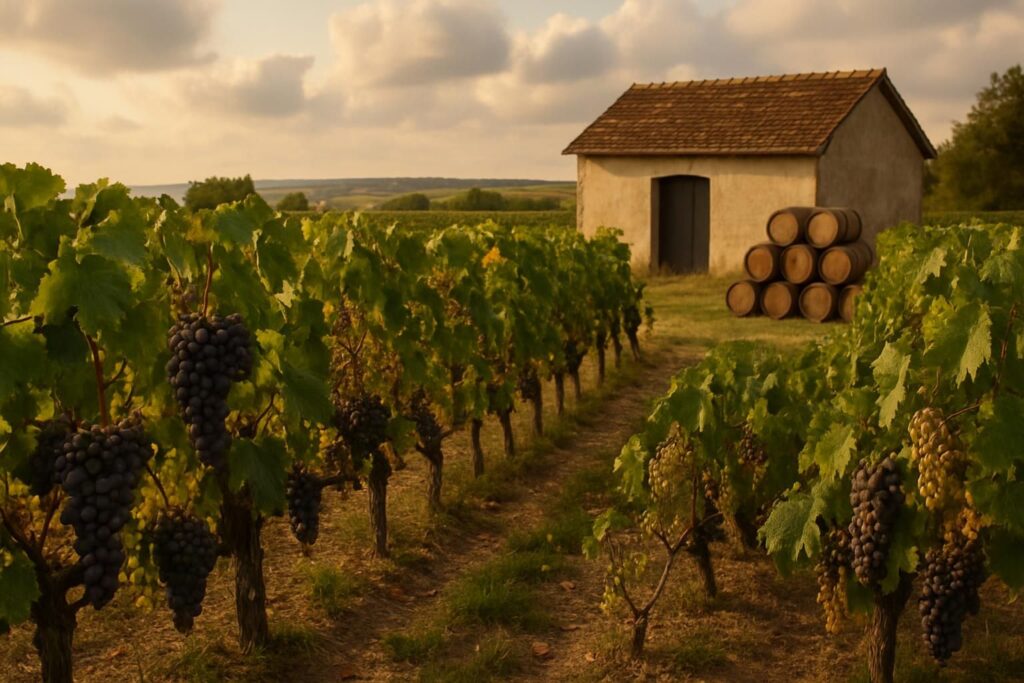
The Champagne sector is once again preparing to adjust its production ambitions in the face of an uncertain global economic context and particularly capricious climatic conditions. The Executive Bureau of the Comité Champagne has formalized the reduction of the marketable grape quota for the 2026 harvest, lowering it to 8,800 kilos per hectare. This decision marks the fourth consecutive year of restrictions, following a historic peak reached in 2022. Behind this adjustment lies a clear strategy: to reduce accumulated stocks, curb supply, and preserve the value of Champagne.
This development reflects a strong desire to rebalance production and demand, while the global market experiences contrasting fluctuations, notably a slowdown in the French market and a slight boost in exports. The Champagne vineyard, facing severe weather risks such as spring frost, prolonged drought, and heatwaves, sees its productive potential weakened, directly affecting the quality and quantity of available grapes. Moreover, independent growers are sounding the alarm over a yield drop that threatens their break-even point.
Reduction of the marketable grape quota: an economic and viticultural imperative
The Comité Champagne, which brings together nearly 16,000 winegrowers, 390 houses, and 125 cooperatives, has decided to further reduce the ceiling of marketable grapes for the upcoming harvest. Set at 8,800 kilos per hectare, this quota has been steadily decreasing since 2023, a decision that reflects not only current economic realities but also the constraints imposed by Champagne viticulture in a demanding climatic context.
From the 12,000 kilos per hectare recorded at their peak, authorized yields have dropped significantly. This tightening of the quota responds to a dual necessity: on the one hand, to reduce excess volumes that have led to a significant stockpile, estimated at nearly 1.3 billion bottles in cellars, and on the other, to protect the valuation of Champagne in a global market marked by consumer caution and economic volatility.
This production slowdown and strict regulation contribute to a structural rebalancing, ensuring better alignment between production and demand. The aim is to avoid downward pressure on prices by limiting surpluses while maintaining impeccable quality of the grapes integrated into this precious blend.
Implications for Champagne viticulture and sector stakeholders
This constraint directly impacts all sector stakeholders, especially grower-harvesters whose productivity and profitability are now seriously tested. For some independent operators, the yield limit of 8,800 kg/ha is below the break-even point, which they estimate close to 10,000 kilos, generating serious concern about the viability of their operations.
Champagne houses, for their part, are adopting a measured strategy of supply and stock management, accompanied by a progressive destocking policy. This aims to reduce stored volumes, sometimes exceeding real production needs, to stabilize markets and prevent overproduction that could devalue all Champagne vintages.
In this context, the decision to limit the quota is taken after in-depth dialogue among various sector entities, passionate about terroir quality and aware of the requirements of the international market. Through this framework, the Comité Champagne strives to ensure a delicate balance between viticultural tradition and economic performance.
The weight of climatic hazards in quota reduction and their effects on production
While the economic and strategic aspect is paramount, the direct impact of climatic variations that strongly marked the recent viticultural campaign should not be overlooked. After a very early start to the vegetative cycle, the Champagne vineyard suffered devastating spring frosts in 2026, followed by a period of intense heat and prolonged drought. These phenomena are far from insignificant and partly explain the Comité Champagne’s decision.
Spring frosts reduced the initial production potential, causing sometimes significant losses of grape clusters. Meanwhile, the stifling drought since July affected the ripening of grapes, limiting their size and quality. These extreme conditions require rapid adaptation of viticultural practices, with increased vigilance on irrigation, although it remains regulated and limited in Champagne.
The consequences are not only quantifiable in kilos per hectare. The aromatic quality and concentration of the grapes can be greatly affected, which then influences the organoleptic characteristics of the cuvées. The 2026 season proved to be a real test for winegrowers, who had to juggle natural constraints and regulatory decisions to preserve the sustainability and reputation of their products.
Technical adaptations and innovations facing climatic challenges
In response to these hazards, the Champagne vineyard is moving toward more resilient and sustainable viticultural practices. Several estates have invested in precision technologies and enhanced agronomic monitoring to anticipate weather variations and adjust cultural interventions. The objective is to protect vine health as much as possible while limiting losses.
Natural methods, such as mulching or soil work to limit evaporation, are gradually developing. Furthermore, the selection of rootstocks more resistant to drought and the use of adapted pruning techniques help better manage water stress. These innovations help soften the effects of climatic phenomena while respecting the strict rules of the Champagne AOP specifications.
Market challenges and consumption dynamics in an uncertain context
The Champagne market is currently part of a complex dynamic, where encouraging signals intersect with more cautious ones. Bottle shipments show a slight increase over the first six months of the year, nearing 107 million units, mainly supported by dynamic export demand. Conversely, the French market remains restrained, with domestic consumption declining, complicating the management of produced and stored volumes.
This situation requires increased vigilance from houses and producers regarding their production policies. The risk of an imbalance between supply and demand could indeed compromise price stability, a key factor in valuing an exceptional product like Champagne.
The responses combine quota control, limitation of surpluses, and encouragement of consumption recovery through targeted campaigns, notably internationally. Emphasis is also placed on product differentiation, highlighting terroir specificities, elaboration of exceptional cuvées, and brand image innovation to attract discerning consumers.
A progressive destocking strategy to regain balance
The high rate of bottles in cellar, both among producers and houses, represents an important lever and a simultaneous source of tension. To avoid any negative impact on prices, a coordinated approach of progressive destocking has been initiated to align stocks with actual demand. Such an approach aims not only to optimize inventory turnover but also to preserve wine quality and freshness.
In parallel, efforts are being made to encourage the sale of older batches through specific channels or promotions, while continuing to curb pressure on cultivated agricultural volumes. This dual action is essential to ensure the sustainable health of the sector, maintain the financial solidity of operations, and meet market expectations.
Perspectives and concerns of independent winegrowers regarding the quota reduction
While all Champagne professionals agree on the need to adapt production to market realities, some segments of the sector express growing concern. This is particularly the case for the Federation of Independent Winegrowers, spokesperson for owner-harvesters, often small operations.
These winegrowers, who market their own grapes directly, view the quota drop below 9,000 kilos per hectare with concern. Indeed, they point out that the break-even point is currently above this level, threatening the economic viability of their operations. This fragility could permanently change the composition of the Champagne vineyard, with a potential risk of reducing the number of independent players on the ground.
Despite this tense situation, maintaining this reduced quota illustrates the priority given to the overall economy and Champagne’s positioning on the world stage. Dialogue between producers, houses, and cooperatives remains crucial to find balanced solutions that will preserve both terroir richness and actor diversity.
Key dates and the 2026 harvest schedule
The calendar has been officially set with the harvest opening designated for August 15, imposing a picking period that could extend from August 20 to 25 depending on the ripeness of the grapes. This early harvest results from the advanced vegetative cycle and spring and summer weather conditions.
After this date, picking is prohibited except for strict exemptions, ensuring compliance with rules and optimal fruit quality. Faced with regulated production and a constrained harvest, the vintage promises to be a key moment, crucial to preserving the excellence and reputation of Champagne worldwide.
Why is the marketable grape quota reduced each year?
The quota reduction aims to regulate supply to avoid production excesses and encourage progressive destocking, in an uncertain economic context and facing unfavorable climatic conditions.
What is the impact of the quota reduction on independent winegrowers?
Independent winegrowers are particularly affected because their break-even point is often higher than the fixed quota. This endangers their activity and could reduce the number of players in the vineyard.
What are the major climatic consequences affecting the 2026 harvest?
The 2026 harvest was marked by an early vegetative cycle start, spring frost, followed by intense heat and prolonged drought, reducing the quantity and quality of grapes.
How does the Champagne sector manage the large stock of bottles?
The Comité Champagne has implemented a progressive destocking policy to balance production with demand, maintain market value, and prevent price drops.
When will the 2026 harvest officially start in Champagne?
The official opening of the harvest is set for August 15, with a likely general start between August 20 and 25, depending on grape maturity.