
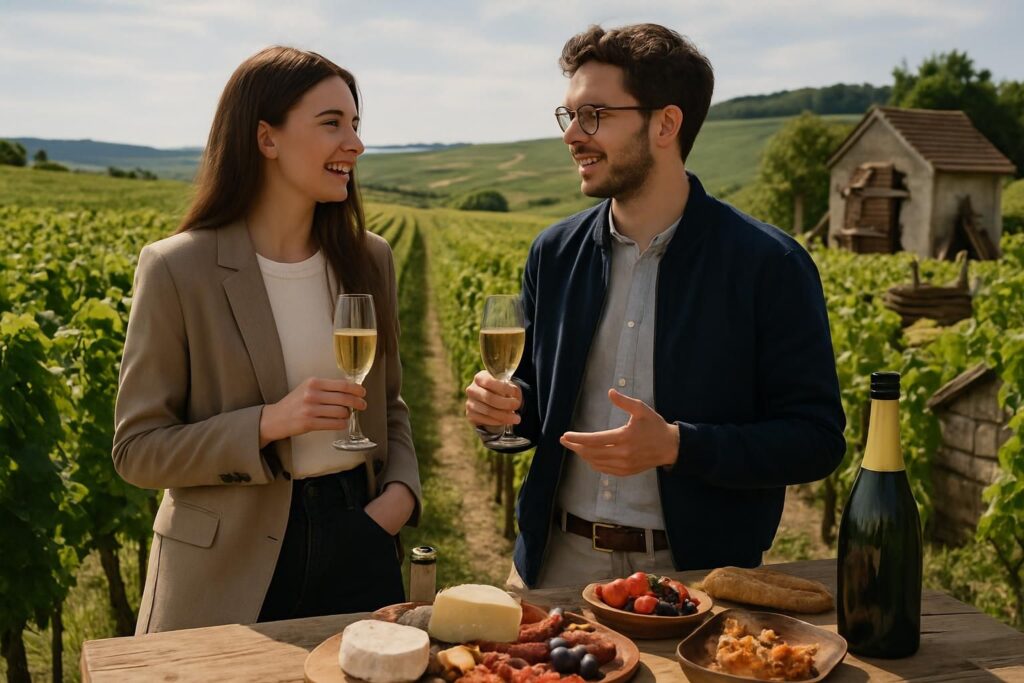
In Reims, the spiritual cradle of champagne, two young locals from Reims are bringing a breath of innovation to the traditional world of vineyards. Their bold project combines passion for champagne, respect for the terroir, and love of local gastronomy to offer a wine tourism experience full of finesse and discovery. This young entrepreneurial couple invests in new forms of gourmet tourism, where blending tasting, artisan know-how, and sensory wonder becomes reality. In a region that brilliantly combines viticultural tradition and modernity, this initiative stands out as a model of tourism innovation linked to exceptional heritage.
As the tourism sector in Champagne reinvents itself, notably through structures such as the “Le 3” site in Reims, this unprecedented project gives a new dimension to tasting and vineyard visits. Their approach, aligned with contemporary visitors’ expectations, favors a complete immersion: authentic encounters, unexpected routes, and regional flavors find their full place here. At the heart of this territory listed as a world heritage site, this unique experience not only promotes Champagne wines but also the rich local gastronomic heritage.
An innovative approach combining Champagne vineyards and local gastronomy for an unprecedented wine tourism experience
Innovation in wine tourism in Champagne is constantly evolving. The project initiated by these young locals from Reims perfectly reflects this evolution. Rather than limiting themselves to the traditional cellar visits and simple tastings, they offer a journey that combines sensory discovery of vineyards and gastronomic exploration. This approach reflects a dual objective: to highlight the richness of the Champagne terroirs while showcasing local culinary know-how.
This new form of gourmet tourism unfolds through sensory routes where champagne tastings are accompanied by carefully selected dishes from local artisans. The idea is to offer coherence and harmony between the wine and the cuisine, thus providing visitors with an authentic and refined experience. For example, a pairing between a single-vineyard cuvée and a revisited Champagne specialty, served in the heart of nature amid the vineyards, creates an intense alchemy. This unprecedented marriage between vine and gastronomy opens a new path for oenological tourism.
Besides tasting, the initiative emphasizes the discovery of the vineyards themselves. Through guided walks in nature, visitors are invited to understand the vine’s vegetative cycle, the specificities of the Champagne terroir, and sustainable viticulture techniques. These explanatory walks, often enriched by visits to family estates, foster lively and educational exchanges. The result is a better understanding of champagne at the end of the chain, reinforced by meeting passionate winemakers who share their know-how through captivating stories.
The combination of these elements makes this project a true catalyst of emotions and knowledge. Together with local gastronomy, the visit becomes a sensory invitation, where the richness of the vineyard and the quality of terroir products unite in an unforgettable experience. This innovative approach perfectly fits the current trend of responsible tourism, privileging authenticity, geographic proximity, and respect for the environment.
The role of young entrepreneurs from Reims in transforming wine tourism in Champagne
Faced with evolving visitor expectations, young actors from Reims play an essential role in transforming the wine tourism offer. Their dynamism and innovative vision allow rethinking the reception and routes around champagne and regional wines. Reims, as the historical capital of champagne, benefits from this renewal driven by a new generation of committed entrepreneurs.
These young visionaries know how to draw from the richness of their territory to create original and captivating experiences. Their intimate knowledge of the vineyards and local gastronomy is a major asset. They often associate their skills with those of other taste artisans to offer a plural and multisensory discovery. By combining heritage and innovation, they help make Reims and Champagne a major hub for gourmet tourism, attracting more and more enthusiasts seeking authenticity.
Their approach also relies on integrating new technologies, used subtly to enrich the visit. For example, some spaces equipped with interactive models, 3D animated maps, or immersive devices illustrate concretely the vineyard’s vegetative cycle or the champagne-making process. This type of innovation facilitates the understanding of this sometimes complex universe while captivating a varied audience, from novices to connoisseurs.
Moreover, these young entrepreneurs’ commitment to a sustainable and eco-responsible approach resonates with current expectations. They promote short supply chains, highlight local products, and reduce their environmental impact, without sacrificing quality or sensory experience. These initiatives strengthen the destination’s attractiveness and contribute to valuing a unique terroir recognized internationally.
This innovative movement, notably relayed by platforms specializing in Champagne tourism such as Champagne.news, reflects a new dynamic where tradition meets creativity and responsibility. They embody a generation of leaders fully supporting the transformation of wine tourism towards more emotions and authentic immersions.
Unprecedented sensory routes designed to seduce wine and gastronomy lovers
The heart of the young Reims locals’ project lies in creating particularly refined sensory routes combining tasting and culinary discovery within the Champagne vineyards. These itineraries allow visitors to explore both the diversity of champagnes and the regional gastronomic richness in a natural setting conducive to relaxation and conviviality.
Each stage is designed to enhance sensations and create a harmonious dialogue between wine and accompanying dishes. These pairings result from close collaborations with chefs and local artisans eager to highlight their products through unprecedented combinations. From artisanal bread to matured cheeses and creations based on terroir products, the flavor palette emphasizes the region’s typical tastes.
Among the flagship experiences are rustic dinners outdoors in the heart of the vines, accompanied by explanations about the characteristics of the tasted cuvées. For example, near slopes classified as world heritage, a meal is organized around a specially prepared menu to accompany a range of single-vineyard champagnes. These convivial moments, sometimes animated by exchanges with winemakers, reinforce the feeling of an authentic and personalized experience.
At the same time, interactive workshops offer participants the chance to deepen their knowledge through winemaking demonstrations or introductions to tasting. These sessions enrich the visit by providing technical and sensory insights combined with the place’s emotion.
This renewed offer contributes to the emergence of gourmet tourism in Champagne, which emphasizes terroir quality with constant attention to coherence and creativity. It fits into a clearly identified trend, as evidenced by the explosion of initiatives promoted on platforms dedicated to wine tourism discovery such as Champagne picnics.
The importance of Reims as a hub of wine tourism innovation in Champagne
Reims, the historic capital of champagne, plays a central role in the wave of innovation currently shaking wine tourism. Beyond its architectural and cultural heritage, the city asserts itself as a true idea laboratory where tradition and modernity combine to renew the Champagne experience.
The development of emblematic places such as “Le 3,” a wine tourism site created by Champagne Thiénot, illustrates this trend. This 5,000-square-meter site in the city center combines a playful and educational path within historic cellars, interactive exhibition spaces, and a dedicated restaurant highlighting the Champagne art of living. This innovative concept thus offers visitors a total immersion into the champagne universe, blending heritage and conviviality.
In this spirit, the young entrepreneurs from Reims also work to enrich the local fabric with their own creations. Their ability to offer differentiated experiences and integrate cultural, heritage, and gastronomic elements is a real engine to make Reims a leading destination by 2026.
This dynamic is strengthened by the synergy between public and private players, who support these innovative initiatives and encourage short circuits and the local economy. It also benefits from targeted media coverage on the growth of tourism in Champagne, notably through specialized articles such as those offered on Champagne.news.
Thanks to this concentration of innovation and talent, the city thus affirms its ability to attract both connoisseurs and novices seeking an immersive approach to the world of wines and gastronomy. Reims becomes the nerve center of a sector in full mutation, where creativity constantly reinvents the relationship with the terroir.
The economic and cultural impacts of this new wine tourism offer in Champagne
The development of this innovative wine tourism offer led by young Reims locals is not limited to a simple improvement in vineyard visits. It also generates major economic and cultural benefits contributing to the vitality of the Champagne-Ardenne region.
Economically, integrating a gastronomic dimension into wine tourism promotes job creation in various sectors: viticulture, catering, local crafts, cultural animation, etc. These sensory routes attract a broader and more diverse clientele, thus increasing tourist attendance and local actors’ turnover. The young project leaders also help revitalize rural areas often seeking new revenue sources through short circuits highlighting terroir products.
Moreover, this new offer contributes to the region’s cultural enrichment. It highlights a living heritage where viticultural traditions blend with culinary art and contemporary creativity. By promoting responsible vineyard discovery, it also raises awareness of the need to preserve landscapes and sustainable production methods.
This participatory wine tourism model strengthens local identity and weaves links between visitors and producers. Highlighting artisanal know-how and showcasing Reims gastronomy gives strong visibility to professions sometimes little known. The dynamism of these initiatives breathes new life into the Champagne vineyards, offering an attractive showcase for regional wines nationally and internationally.
- Creation of strengthened tourist appeal thanks to innovative sensory experiences.
- Development of local jobs in the viticulture and gastronomic fields.
- Promotion of the terroir and enhancement of quality artisanal products.
- Support for the circular economy through the promotion of short and sustainable supply chains.
- Strengthening of the cultural influence of the Champagne-Ardenne region.
This synergy between economy, culture, and innovation makes this exemplary project a model for the future of wine tourism in Champagne, serving a unique and differentiated experience around the vineyard and gastronomy.
What is wine tourism in Champagne?
Wine tourism in Champagne refers to all tourist activities centered around the vineyard, cellars, and champagne tasting, often enriched with cultural and gastronomic experiences.
How do young entrepreneurs from Reims innovate in this sector?
They offer sensory routes combining champagne tasting, local gastronomy, and vineyard discovery, integrating immersive technologies and a sustainable approach.
What are the economic benefits of this wine tourism innovation?
It generates new local jobs, attracts a varied clientele, promotes short supply chains, and highlights artisanal skills, thus contributing to regional economic dynamism.
How is local gastronomy integrated into the wine tourism experience?
Food and champagne pairings are carefully crafted with local artisans and chefs, offering convivial and gourmet moments in the heart of the vineyards.
Which places in Reims illustrate this dynamic of innovation?
Sites like “Le 3” created by Champagne Thiénot exemplify the alliance between heritage, innovation, and wine tourism in the heart of the city of Reims.