
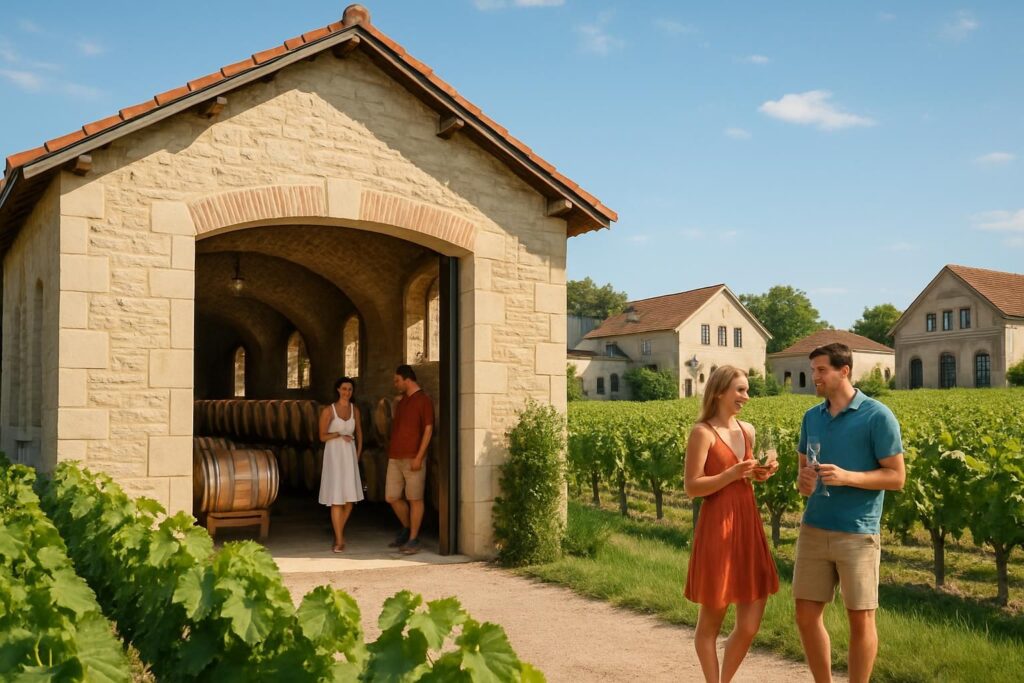
Reims, an essential jewel of wine tourism, attracts thousands of visitors each summer passionate about champagne and the Champagne heritage. As the historic capital of the region, the city offers privileged access to legendary champagne cellars, carved into Gallo-Roman chalk pits classified as a UNESCO World Heritage site. These exceptional places invite you on a unique underground journey, blending history, know-how, and tasting of rare vintages. In 2026, the wine-growing dynamism still reigns supreme in Reims, with renowned houses and emerging estates opening their doors to a curious public. The summer season is therefore the perfect opportunity to immerse yourself in the refined world of champagne, touring these iconic cellars where time seems suspended.
From discovering meticulous winemaking processes to tasting vintage bottles, the Reims cellars offer a range of experiences suited to all, from connoisseurs to newcomers. Wine tourism is thus developing with a varied offer of guided tours, sensory workshops, and gourmet getaways. Among the must-sees, some houses stand out for their bold architecture, their centuries-old history, or their commitment to sustainable practices. This summer in Reims, the promise is clear: a total immersion in the sparkling universe of champagne, at the heart of the vineyards, through seven remarkable cellars not to be missed.
Exploring the Champagne Cellars in Reims: An Exceptional Underground Heritage
Beyond tasting, visiting the champagne cellars in Reims means diving into a true underground network shaped over the centuries. These chalk pits, often dug more than 30 meters underground, offer an ideal temperature and humidity for champagne aging. Their origin dates back to the Gallo-Roman era, when limestone extraction was used for building monuments and the Reims cathedral. Today, these galleries stretch over kilometers, forming a mysterious labyrinth where history and technicality combine to enhance the wine.
Houses such as Veuve Clicquot, Taittinger, or Ruinart offer unique guided tours, illustrating the importance of these chalk pits in the refinement process. Detailed explanations reveal ancestral techniques mixed with recent innovations in the champagne industry. For example, at Veuve Clicquot, the tour plunges into a universe where each bottle promises impeccable quality, thanks to rigorous control within this preserved natural environment.
Another key element of this heritage is its UNESCO World Heritage listing, recognition highlighting the historical and cultural value of these cellars. This label encourages site preservation and the development of responsible tourism. Visitors can therefore explore these worlds with an increased awareness of respecting the places, thus contributing to the protection of a fragile but precious heritage.
This architectural, historical, and oenological richness makes the champagne cellars in Reims a must-see for history and wine lovers, offering an immersive experience, both sensory and educational. Summer remains the ideal time to fully enjoy these visits, when light illuminates the city, revealing above ground a heritage that extends well below, as mysterious and peaceful galleries.
The Seven Must-Visit Champagne Cellars This Summer in Reims
The diversity of champagne houses in Reims offers a range of experiences for all visitor profiles. Visiting these establishments is not only about appreciating exceptional champagnes but also about immersing in an ancestral wine-growing tradition. Here is an overview of the seven cellars not to miss during a summer stay in the city of Reims:
- Veuve Clicquot: Globally recognized, this house offers an immersive tour in its chalk pits as well as a tasting of prestigious cuvées such as Yellow Label. The adventure here combines feminine history and technical expertise.
- Taittinger: The visit allows discovering an exceptional underground network, with a gallery dug into chalk dating from the 4th century. An experience blending heritage and oenology in a soothing atmosphere.
- Ruinart: The first champagne producer, the house offers a discovery of its historic cellars followed by a refined tasting, highlighting the delicate expression of Chardonnay.
- Pommery: Famous for its architecture, the house invites you to explore its vast cellars, combining contemporary arts and tastings in a surprising environment.
- Mumm: Focused on viticultural knowledge and winemaking, the visit is complemented by a tasting of emblematic cuvées, in a more traditional and warm setting.
- Le Brun de Neuville: More intimate, this family house offers a personalized experience with in-depth guided tours and a sharp selection of champagnes. Ideal for those looking to go off the beaten track.
- Anne Laroque: An emerging estate in Épernay, recommended for an accessible escape from Reims. An invitation to discover terroir champagnes, with a friendly and passionate welcome.
Combining these visits offers a complete understanding of the diversity of styles and philosophies in champagne production. Each house values its terroir and specificities, thus offering visitors a comprehensive panorama of the regional viticultural wealth.
Champagne Tasting: Art and Tradition in Reims
Champagne tasting is at the heart of the cellar visits. In Reims, this age-old art is practiced with rigor and passion, mixing sensitivity and expertise. Each house offers a range of cuvées, from classic brut to rare vintages, allowing one to perceive the nuances of a unique terroir.
The experience generally begins with an introduction to the Champagne grape varieties – Pinot Noir, Pinot Meunier, and Chardonnay – and their characteristics. The guided tasting awakens the senses by discovering the aromas, structure, and texture of the wines. This leads to a better understanding of gustatory particularities related to cellar aging, soil richness, and meticulous winemaking.
Several Reims houses, aiming to innovate in wine tourism, have developed sensory workshops. These educational sessions invite participants to decipher differences between a non-vintage brut and a blanc de blancs or to pair champagnes with local dishes. It is a way to deepen the appreciation of champagne in a friendly and authentic setting.
Champagne tasting is not limited to immediate taste: it also involves understanding the story of the bottle, its crafting, and sometimes the sustainable commitments of the producers, responding to climate changes affecting the Champagne vineyard. The link between respect for terroir and quality of vintages is thus highlighted.
For enthusiasts wishing to deepen their knowledge, some houses offer tasting sets to take away, perfect for extending the experience at home or during a private event. In 2026, this enhanced offer fits into a global context where wine tourism in Reims is developing with a premiumization of the oenological experience.
Tourism and Vineyards around Reims: A Complete Wine Itinerary
Beyond the cellars located in the city, wine tourism extends to the vineyards shaping the Reims landscape. Summer 2026 offers the opportunity to immerse oneself in a bucolic environment, punctuated by outdoor outings, with bike or walking routes through the vine rows. These excursions invite a dual discovery, between nature and human know-how.
The vineyards of the Montagne de Reims, the Côte des Blancs, or the Vallée de la Marne compose the emblematic terroirs that give champagne its distinctive flavors. By taking an adapted walk, it is possible to observe the work on the vine, understood both in traditional gestures and in ecological innovations implemented by certain producers.
Some estates also offer Champagne picnic experiences, an original idea to combine conviviality and gastronomic discovery. This approach allows tasting regional specialties, naturally accompanied by champagnes that enhance each dish. A moment of relaxation not to be underestimated for visitors wishing to extend their immersion in the terroir.
Moreover, Reims benefits from efficient tourism infrastructure with hotels, restaurants, and services adapted to champagne lovers. In 2026, special offers including cellar visits, stays, and tastings are developing to meet the growing demand for wine tourism. These packages facilitate planning a stay combining comfort and discovery of Champagne’s riches.
To prepare your stay and choose the establishments to visit, consulting an interactive map of champagne cellars can be very useful. It offers an overview of available options, with practical information and personalized advice.
Practical Tips for a Successful Visit to Champagne Cellars in Reims
Organizing your visit to the champagne cellars in Reims requires good preparation to optimize the experience. The high summer season brings strong attendance, so it is recommended to book your spots in advance, especially for the most sought-after houses like Pommery or Ruinart. Many visits are also adapted for families, with fun activities for children, making the experience accessible to all.
In terms of duration, plan between 1.5 and 2 hours for a complete visit including the discovery of chalk pits, explanation of techniques, and a tasting, allowing an unhurried immersion. Some estates also offer private visit options or themed workshops, ideal for enthusiasts seeking a deeper experience.
The equipment remains simple: comfortable shoes to stroll through the cool cellars, and attire suitable for the temperate climate of underground galleries. Guided tours, led by passionate experts, guarantee a route rich in anecdotes and detailed information about champagne production and history.
For those wishing to combine visits with shopping, boutiques of champagne houses often offer limited editions and personalized gift sets, perfect for bringing back an exceptional souvenir. Finally, following news related to the sector allows staying informed about novelties and special events, such as seasonal tastings or temporary exhibitions.
By deepening especially the particularities of the vineyard with resources like Adeline Bass and her Champagne route, visitors can enrich their experience, discovering multiple facets of a terroir with unsuspected riches.
What is the best period to visit the Champagne cellars in Reims?
Summer is particularly recommended to fully enjoy the visits with pleasant weather. However, spring also offers beautiful light and a vineyard in full growth.
Should you book in advance to visit champagne houses in Reims?
Yes, it is strongly advised to book your visits in advance, especially in summer, to guarantee your place in the most popular houses and avoid disappointment.
Are cellar visits accessible to families with children?
Some houses offer circuits adapted for families, with fun activities for children. It is recommended to check with the estates before booking.
Can you buy champagne directly in the cellars?
Yes, most houses have shops where it is possible to buy exclusive champagnes as well as limited editions.
What are the main stages of champagne production discovered during visits?
The cellar visit allows discovering pressing, fermentation, aging in the cellar, and disgorging, key steps in champagne production.