
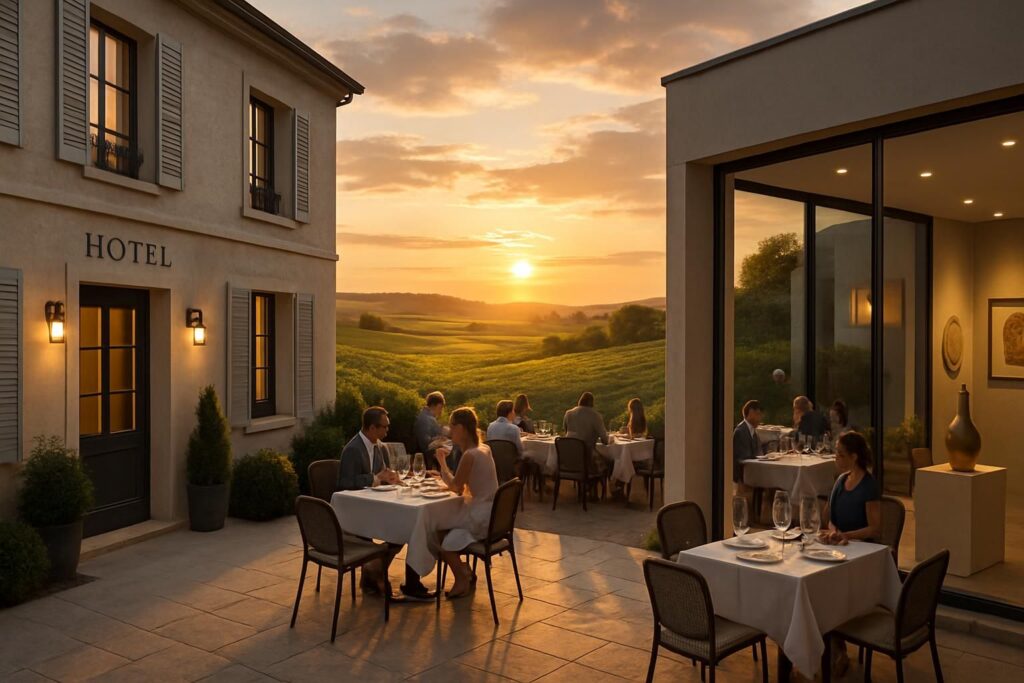
Champagne, the cradle of the famous sparkling wine, is reinventing itself today with an increasingly strong appeal for leisure tourism. Long associated with historical commemorations and memories of past wars, the region now promotes a rich and diverse offer, focused on the discovery of its vineyards, its cultural heritage, and its gastronomic innovations. Travelers seeking high-end experiences will find in this region a subtle blend of elegance, contemporary art, and luxury hospitality, closely connected with the champagne houses. Initiatives in hospitality, dining, and exhibitions reinforce this dynamic, pushing Champagne to position itself as a must-visit destination for wine and cultural tourism.
Reims and Épernay, at the heart of this tourism transformation, bear witness to a profound change, thanks to a rapidly growing hotel sector, now offering stays that are both refined and immersive. Restaurateurs now combine inventive gastronomy with food and champagne pairings, attracting an increasingly broad and demanding audience. Finally, the multiplication of art exhibitions, integrated into cellars or estates, confirms the desire to showcase local culture while enhancing ancestral know-how. This recent evolution perfectly illustrates how the region combines tradition and modernity to enrich the visitor experience.
An upscale hospitality rise transforming stays in Champagne
The development of the hotel sector in Champagne constitutes one of the major changes of recent years. Between 2016 and 2023, there was a notable 60% increase in overnight stays in Reims, an indicator revealing the growing popularity of the region as a preferred stay destination. This trend is based on the local actors’ desire to offer higher quality accommodations, often designed by renowned architects or designers, embodying elegance and comfort in harmony with the Champagne identity.
A striking example is the Royal Champagne Hotel & Spa, located in Épernay. This exceptional five-star hotel not only offers a panoramic view over the lush valley of the Montagne de Reims but also a unique experience combining relaxation and gastronomy. Its 47 rooms and suites, soberly decorated by Sybille de Margerie, reflect refined luxury. At the heart of the establishment, visitors can enjoy two swimming pools and a spa for a wellness break, while tasting rare Leclerc Brillant cuvées during a gourmet dinner. Such an address perfectly illustrates this alliance between the Champagne art of living and high-end service.
In the center of Reims, the boutique hotel Le 3, inaugurated in 2026 by the house Thiénot, offers a more intimate and modern alternative to the traditional Champagne stay. Composed of twelve rooms and a panoramic suite overlooking the city, the establishment relies on a contemporary oak design, created by the Basque manufacturer Alki. This aesthetic choice gives the hotel a discreet charm, accompanied by a 500 m² rooftop terrace offering an unobstructed view of the bell towers and the cathedral, a flagship emblem of Reims. Although this address lacks a restaurant, it innovates with exclusive wine experiences, ranging from classic tasting courses to a disgorgement master class, allowing guests to understand the subtleties of champagne production.
Another flagship project pending is the future Bollinger hotel in the village of Aÿ, which will complement the region’s prestigious hotel offer. This new high-end establishment, with about twenty rooms, continues a tailor-made hospitality approach for champagne enthusiasts eager to discover the largest barrel park in Champagne, located nearby. Once opened, this hotel will become an essential anchor point for visitors seeking an authentic and luxurious stay in the heart of the vineyard.
Finally, diversification also manifests through original proposals: the Caserne Chanzy in Reims, for example, combines 5-star accommodation with a bio spa offering top-quality treatments by Biologique Recherche. The wellness experience is enhanced by champagne tastings offered by a partner brand, highlighting the spirit of innovation and the pursuit of exclusivity that characterizes Champagne hospitality today.
Restaurants in Champagne: gastronomy serving wine and visitors
The culinary universe in Champagne is experiencing a marked boom, where gastronomy harmoniously combines with the art of champagne tasting. The concept goes beyond a simple meal to become a true sensory journey, pairing refined dishes with the finesse of bubbles, all set in often majestic or intimate settings.
In Reims, the restaurant Polychrome, located on the Taittinger estate, plays a pioneering role in this approach. Open only at lunchtime, the establishment is led by Michelin-starred chef Charles Coulombeau, whose inventive cuisine is based on the skillful blending of regional products with selected cuvées. This initiative fosters dialogue between gastronomy and wine, creating pairings that reveal all the nuances of the Champagne terroir. With nearly 60,000 visitors per year to the Taittinger cellars, this restaurant helps strengthen the city’s position as a must-visit gastronomic destination.
Bistronomes and enthusiasts looking for newness will also find their happiness in emerging addresses offering menus combining culinary creativity and champagne pairings. These restaurants highlight local terroirs, while offering committed experiences around slow tourism or ethical cuisine, thereby strengthening the links between producer, chef, and diner.
Moreover, Champagne Houses are increasingly investing in the restaurant world. Veuve Clicquot, for instance, deploys gastronomic tasting areas at the heart of its cellars, linking the mechanics of bubbles with complex flavors, as can be discovered through its œnotourism policy that combines luxury, culture, and gourmet pleasures. These initiatives contribute to a redefinition of the relationship between wine and food, appealing to both novices and connoisseurs.
Culinary festivals, such as the Relais du Goût held annually in Reims, strengthen this dynamic by bringing together renowned chefs, winemakers, and champagne houses around exceptional workshops and dinners. These events contribute to tourist appeal and create a showcase of excellence for regional gastronomy.
For curious visitors seeking new experiences, it is advisable to discover addresses listed in specialized guides that allow mixing cultural discoveries with gastronomic pleasures—a precious alliance for a successful stay in Champagne.
Exhibitions and contemporary art: cultural experiences integrated into Champagne houses
The close relationship between culture and sparkling wine is remarkably expressed in exhibitions and the integration of contemporary artworks within Champagne estates. This approach enriches the tourist experience by offering an additional dimension, blending aesthetics, innovation, and heritage.
A striking example is the Ruinart house in Reims, which, since its architectural rehabilitation entrusted to the Japanese Sou Fujimoto, invites visitors to explore a space where modernity meets heritage. The millenary chalk cellars shelter an open-air art gallery, where the works of Tadashi Kawamata, famous for his installations made from simple materials, coexist with those of other contemporary artists such as Éva Jospin or Nils-Udo. The visitor is immersed in a dialogue between nature, architecture, and creation, reinforcing the sensitive link between terroir and culture.
Beyond Ruinart, the Vranken-Pommery House continues this policy relying on history and Art Nouveau style. With emblematic installations signed by Jean-François Fourtou, which punctuate the gardens and cellars, Pommery offers a playful and profound artistic route, accessible to a wide audience. The Louis Roederer Foundation, for its part, invests in photography, cinema, music, and literature through high-level sponsorships, encouraging research and creation within the Champagne region.
This cultural effervescence is not a mere ornament but rather a factor of tourist appeal. It allows visitors to perceive Champagne differently, far from the sometimes stereotypical image of the sole vineyard, and to enjoy stays rich in emotions and discoveries. Temporary and event exhibitions support this renewal, offering both a fresh perspective on heritage and unprecedented encounters with contemporary artists. The Ruinart house, with 50,000 annual visitors, illustrates the importance of this strategy by bringing together both art lovers and champagne enthusiasts in the same place.
This marriage between art and wine perfectly fits the global tourism attractiveness strategy, where the stay becomes a moment of cultural enrichment as much as gustatory pleasure.
New œnotouristic and slow tourism experience venues in Champagne
The current trend in Champagne is to offer more sustainable and environmentally friendly tourism, favoring slow tourism. This movement values human encounters, nature, and the relaxed pace of discoveries. It reflects a new sensitivity to ecological issues and the growing desire of visitors to fully immerse themselves in the region.
Many vineyards and champagne houses have committed to this path by reinventing visitor reception. Beyond traditional cellar visits, they now offer walks or bike rides in the vineyards, pruning workshops, or tasting sessions at the heart of the terroirs. These routes provide a total and authentic immersion, highlighting ancestral know-how in a nature-respecting approach.
At the same time, eco-friendly hotels and restaurants are emerging, favoring short supply chains and local products. This approach thus combines gastronomy and ethics, with an offer adapted to an audience attentive to quality and the impact of their consumption.
The discovery is extended in often unusual places, such as refuges or accommodations in the heart of nature, allowing visitors to live the territory in a new way. Tourism in Champagne also opens up to thematic events, workshops about champagne and local culture, as well as events combining traditions and modernity.
This orientation towards responsible tourism is also supported by initiatives aimed at revitalizing villages and local heritage, notably around popular festivals or traveling exhibitions. It fits into a global logic of enhancing the terroir, which aims to make each stay a unique and memorable experience, off the beaten path.
For more information, visitors can consult dedicated resources such as innovative œnotouristic projects in Champagne which well illustrate this current dynamic.
Heritage and authenticity: essentials for a successful stay in Champagne
Beyond assets related to accommodation and gastronomy, Champagne offers remarkable historical and cultural heritage which strengthens the region’s tourist appeal. The Notre-Dame Cathedral of Reims, a Gothic jewel listed as a UNESCO World Heritage site, remains an essential stop, symbolizing a millenary history linked to the coronation of French kings. The visit to this monument often includes the Palais du Tau and several museums that tell the rich Champagne saga.
However, for demanding visitors, the real charm also lies in discovering typical villages and hidden treasures of the region, witnesses of darker times marked by world conflicts. Yet, these pages of history are now integrated into a renewed memory tourism, more peaceful and aimed at a better understanding of the Champagne identity.
Enthusiasts also find their happiness in thematic tours that combine heritage and viticulture, allowing visits to historic cellars, prestigious estates, or local artisans’ workshops. The diversity of experiences offered guarantees a tailor-made stay, combining authenticity and comfort.
Art lovers can enjoy a rich cultural offer with visits to houses like Perrier-Jouët, known for the largest private collection of French Art Nouveau in Europe, or Louis Roederer, an active patron in artistic support who plans to open luxury guest rooms soon in its townhouse in Reims. These initiatives reinforce the image of a Champagne that values both its roots and contemporary evolutions.
Moreover, every year, popular and cultural events animate the region, such as the Music Festival or international gastronomic fairs, allowing visitors to discover the territory in a festive and friendly atmosphere. These moments are opportunities for memorable encounters with passionate winemakers, essential to understanding the human richness behind each bottle.
Among the many resources to prepare one’s stay, it is recommended to consult recent articles and tourist guides such as those dedicated to the rediscovery of Champagne treasures, offering a comprehensive overview of new features and must-sees in 2026.
What is the best period to visit Champagne?
The ideal period spans from spring to autumn, notably in May-June and September-October, when the climate is mild and harvests or œnotouristic events are numerous. It is also a favorable moment to enjoy cultural and gastronomic animations.
What types of accommodations are offered in Champagne?
Champagne offers a wide range of accommodations, from boutique hotels to five-star luxury establishments, with also more intimate and ecological options, adapted to a varied and demanding clientele, always connected to the terroir and local lifestyle.
What are the must-visit sites during a stay in Champagne?
Main sites include the Notre-Dame Cathedral of Reims, the cellars of major houses like Ruinart, Bollinger, or Pommery, the Palais du Tau, as well as wine villages and museums dedicated to Champagne heritage. Contemporary art exhibitions in the estates are also highly appreciated.
How to best enjoy Champagne gastronomy?
It is recommended to frequent gastronomic restaurants that associate regional dishes with selected cuvées, participate in festivals such as the Relais du Goût, and initiate into food and champagne pairings through workshops offered in champagne houses or specialized establishments.
Are there specialized offers for sustainable tourism in Champagne?
Yes, many houses and local structures encourage slow tourism, with walking or cycling routes in the vineyards, eco-friendly accommodations, as well as activities highlighting respect for the environment and natural heritage.