
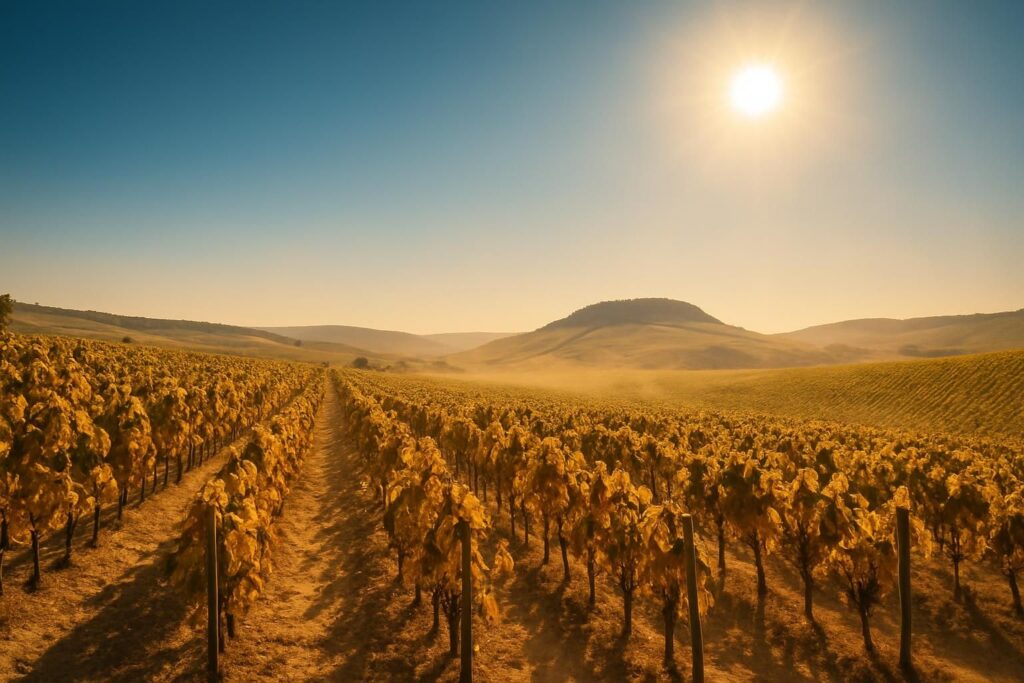
Faced with a climate context disrupted by exceptional temperatures, the Champagne region is experiencing an unprecedented period. The first six months of the year have broken historical heat records, directly impacting a territory deeply connected to its vegetation, culture, and wine economy. This unusual heatwave, coupled with a rapidly changing environment, raises questions about the future of the Champagne vineyard, renowned worldwide but weakened by these atmospheric disruptions. In 2026, after decades of observations, data recorded by meteorologists and climatologists confirm an alarming trend of exacerbated climate changes.
These abnormally high temperatures affect all of France, but Champagne, due to its geographical positioning and specific climate, is a privileged observation ground. This historic region, with a strong identity, is marked by an accelerated vine growth season, a plant development impacted by this prolonged heatwave. Viticulture, the heart of the local economy, finds itself on the front line facing the challenges posed by this new climate.
At the same time, the situation highlights the interrelation between rising temperatures and sustainable practices in vineyard management. The link between climate and vine work is more confirmed than ever, with crucial issues regarding harvest timing, crop quality, and preservation of endemic grape varieties. Champagne is thus a microcosm illustrating the direct consequences of global warming on agriculture and the environment at both a local and global scale.
Impact of the historic heat record on climate and temperatures in Champagne
The first six months period was marked by an exceptionally warm development with temperature records measured since the start of recordings in 1900. With a clear upward trend, measurements indicate a significant thermal anomaly, illustrating a climate now rapidly changing. This sharp rise in temperatures exceeds seasonal norms, causing a chain of effects on ecosystems and human activities.
These high temperatures notably widened the gap between nighttime and daytime temperatures, intensifying the heatwave sensation and contributing to soil dehydration. This situation disrupts the biological cycles of plants and alters the natural water dynamics of the territory. For the Champagne region, known for its temperate climate, these changes translate into a tangible climate change, with more frequent drought episodes and intense heat.
Recent climatic data evoke a succession of days above 30°C, often followed by nights where temperatures remain exceptionally mild. These conditions disturb photosynthesis in vine plants and lead professionals to rethink cultural practices and irrigation methods. Moreover, this context increases soil vulnerability to erosion and modifies interactions among local flora.
This heat record is also a strong signal in the global transformation leading the region towards a more pronounced Mediterranean climate. Indeed, climate forecasts anticipate lengthening summer drought periods and increased water stress, testing the resilience of Champagne’s historic grape varieties. Thus, this situation constitutes a double challenge: preserving grape quality while adapting traditional methods to the demands of a new environment under intense thermal pressure.
Consequences for the vine and viticulture: challenges posed by the hottest first six months
The Champagne vineyard, an economic and cultural pillar of the region, is directly affected by the effects of global warming. These hot first six months result in an advanced vegetative cycle, with early grape ripening. This phenomenon leads to direct consequences on the final wine quality, as well as on vineyard management and maintenance techniques.
One of the first observed impacts is the anticipation of the harvest. Indeed, winegrowers must now consider an earlier harvest to avoid excessive overripening of the grapes, which could degrade the aromatic balance and freshness of Champagnes. This precocity requires tighter organization and rapid mobilization of teams, increasing pressure on the local sector.
Moreover, intense heat and drought affect vine behavior. Vines, subjected to water stress, reduce leaf development and may show signs of fatigue, notably through leaf drying. This situation makes the plant more vulnerable to diseases and insects, increasing the need for heightened vigilance and adaptation of phytosanitary treatments.
To address these constraints, some Champagne estates invest in innovative practices aimed at limiting the impact of extreme climate. For example, there is an increase in planting on less exposed soils or diversification of grape varieties to ensure better resistance. Furthermore, water management techniques are becoming crucial, with increased use of regulated irrigation measures, adapted to the terroir’s specificities and current environmental standards.
The constant pressure from warming also leads Champagne houses to rethink their global strategies to maintain their reputation for excellence. This adjustment affects both production and marketing, as it influences the authenticity of taste and style, key elements of Champagne’s identity.
Specific measures have been put in place to manage the heatwave, strengthening the resilience of vineyards against extreme heat events, and demonstrating a concrete willingness to adapt to climate evolution.
Environmental challenges and adaptation of Champagne facing global warming
The historic heat record raises major questions about the climatic and environmental balance of the Champagne territory. More than a simple fluctuation, this period reveals a strong trend towards global warming with multiple and lasting consequences.
The rise in temperatures disrupts natural ecosystems. Biodiversity, essential for maintaining soil health and vine fertility, is severely tested. Certain local animal and plant species, accustomed to a temperate climate, see their habitat altered, leading to ecological imbalance.
Managers and stakeholders in the wine world face the need to integrate sustainability at the heart of their practices. The objective is to limit environmental impact while ensuring sustainable development. The use of agroecology, reduction of chemical inputs, and regulated water management help strengthen the resilience of the Champagne vineyard.
Champagne also illustrates the urgent need to enhance awareness and cooperation among local actors, scientists, and policymakers. Innovative projects are emerging to support this transition, combining ancestral know-how with modern techniques. These initiatives not only have a positive effect on the natural environment but also help enhance an exceptional product facing global climate change challenges.
This approach fits within a broader perspective, linked to circular economy issues and resource preservation. The region can become an example for other terroirs facing similar challenges, demonstrating remarkable adaptability.
Actions initiated by emblematic houses such as Vranken-Pommery reflect this dynamic of innovation and environmental responsibility. These joint efforts illustrate a strong desire to reconcile tradition and modernity in a context of pronounced warming.
Social and economic consequences of an unprecedented spring and start of the year in Champagne
The record of the hottest first six months affects not only the climate and environment but also local populations and the regional economy. Viticulture being a flagship activity, its evolution directly impacts jobs, production, as well as tourism related to Champagne.
The human factor is central to this issue. Winegrowers and their teams must adapt to modified working hours, often extended to manage early harvests and heatwave protection measures. This situation generates increased fatigue and requires rigorous organization.
Economically, vineyard management under extreme heat leads to increased costs related to water consumption, infrastructure maintenance, and phytosanitary protections. Some estates face a quantitative drop in harvests, creating additional pressure on the international Champagne market.
Moreover, this changing climatic context is drawing growing attention from the tourism sector. The region must manage visitor flows while preserving its terroir and promoting an image of quality and excellence. Tourism stakeholders innovate by adapting their offers to new climatic realities, providing experiences around wine and its culture while raising awareness of climate-related challenges.
Within this framework, initiatives aiming to protect workers from the effects of heat peaks are gaining importance. Concrete measures have been adopted to safeguard teams’ health during heatwave situations, demonstrating effective consideration of risks linked to extreme heat in professional environments.
The social dynamic in Champagne thus reflects a significant capacity for adaptation, while highlighting the limits imposed by a rapidly evolving climate. This reality more than ever underlines the necessity of proactive management and constant vigilance regarding human impacts associated with extreme climatic episodes.
Innovations and perspectives for a sustainable future in Champagne facing heat records
Faced with the challenges posed by these exceptionally hot first six months, Champagne is turning towards technological and agronomic innovations allowing it to preserve its identity while adapting to climate change. Improvement of environmental monitoring tools finds significant resonance in vineyard management and optimization.
Advances in climate modeling and meteorological recordings now allow anticipating heatwave episodes and adjusting interventions in real time. The use of sensors in vineyards alerts winegrowers to water needs and vine conditions, thus limiting waste and strengthening responsiveness to thermal stresses.
Furthermore, the development of innovative techniques in organic and biodynamic viticulture shows the way toward better harmony with the environment. These methods contribute to soil regeneration and favor local biodiversity, key elements to mitigate the impacts of extreme heat.
Another important avenue concerns grape variety diversification. Complementing the classic pinot noir, chardonnay, and pinot meunier, ongoing experiments try to introduce varieties more resistant to drought and high temperatures. This work, carried out in collaboration with research institutes, could ultimately reinvent the Champagne viticultural identity while preserving its international reputation.
Key actors, whether large houses, cooperatives, or small producers, mobilize around a common ambition: to combine tradition, innovation, and respect for the climate. This adaptation strategy is essential to maintain the quality of Champagnes and guarantee their sustainability in an uncertain climatic future.
The example of houses like Krug demonstrates Champagne’s commitment to this path, combining historic know-how and constant research for sustainable solutions. These initiatives concretely illustrate the necessary innovation capacity to safeguard Champagne heritage in a context marked by record heat.
What are the direct impacts of the heat record on the Champagne vineyards?
The heat record accelerates the vegetative cycle of the vines, causes early ripening of the grapes, and increases water stress, which can affect the final quality of the champagne as well as the health of the vines.
How are Champagne winegrowers adapting to this new climate?
They adopt innovative practices such as regulated irrigation, diversification of grape varieties, and the use of technologies to monitor the condition of the vines to better manage heat and water stress.
What are the economic challenges linked to this exceptional heat period?
Operating costs increase due to water management, enhanced phytosanitary treatments, and an earlier harvest organization, potentially impacting the quantity and quality of harvests.
What sustainable solutions is Champagne implementing to face warming?
The region relies on agroecology, organic viticulture, grape variety diversification, and technologies to maximize environmental resilience and ensure sustainable production.
How does this climate record affect vineyard workers?
Harvest teams must manage more intense work hours and loads, often under extreme temperatures, with specific measures in place to protect their health during heatwave episodes.