
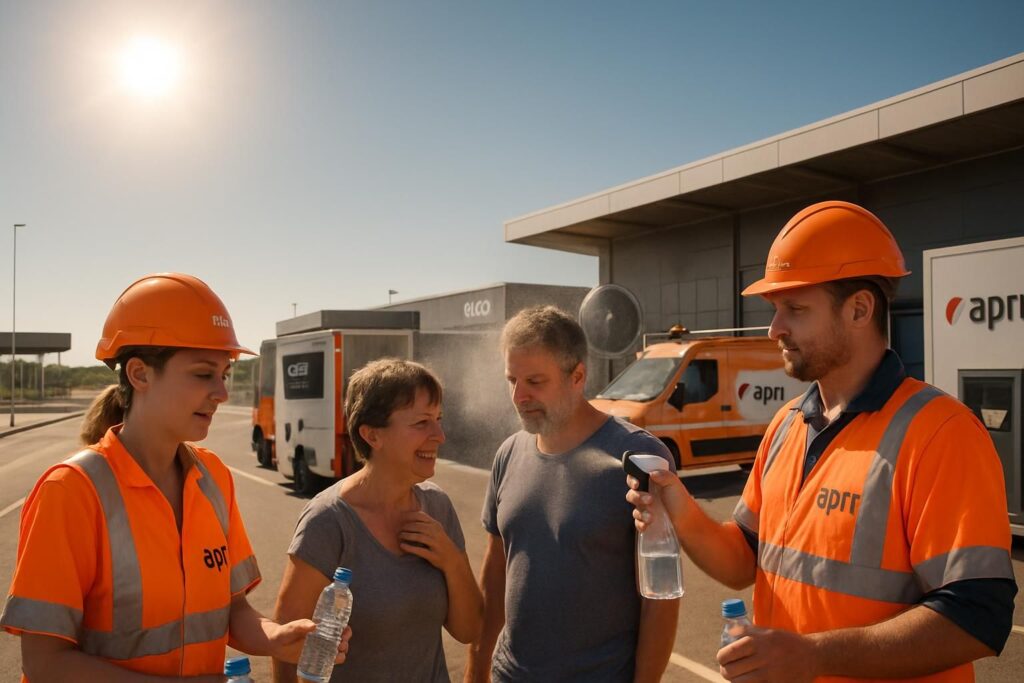
As intense heat waves characteristic of summer 2026 approach, the APRR group positions itself as a key player in crisis management on its motorway network. This mobilization relies on a meticulous organization focused on user safety and the comfort of its internal teams, in the face of a heatwave that this year is breaking records. With temperatures rising to unprecedented levels, particularly on road surfaces and in rest areas, APRR adapts its measures to anticipate and reduce risks related to extreme heat. The holiday departures coincide with this critical period, intensifying the teams’ vigilance in daily traffic management and potential incidents.
Drivers, now mostly families on vacation, face changing and particularly stressful traffic conditions due to the high temperatures. Road safety becomes an absolute priority, especially with the increase in breakdowns, such as tire bursts caused by overheated asphalt that can reach up to 60°C. In response to this phenomenon, APRR implements reinforced preventive measures and shares practical advice useful to motorists to prevent heat-related fatigue and avoid accidents. This dual commitment, focused on crisis management and support for clients as well as employees, illustrates APRR’s ability to combine performance and social responsibility.
The impacts of the heatwave on road safety and the APRR network
The heatwave plays a determining role in user safety across the entire motorway network managed by APRR. This year, the recorded extreme temperatures have direct consequences, particularly on road surface conditions. It has been observed that the asphalt surface can reach temperatures significantly exceeding 50°C, with record readings of 56.3°C on certain sections, such as the A5. This overheating of the ground causes real tire degradation, sometimes resulting in sudden bursts while driving, major factors in serious accidents.
The head of APRR’s Champagne district, Ronald Rondeau, stresses the need to adapt driving and check tire conditions before undertaking a trip. Heat-related risk management is not limited to the roadway but also now includes vigilance issues for drivers. During heatwaves, the phenomenon of a “sudden drop in energy” occurs more frequently and more abruptly, especially in the early afternoon. This sudden drowsiness, exacerbated by the heat, significantly increases the risk of accidents. This observation leads APRR to strengthen its awareness campaigns by emphasizing trip preparation, the necessity of regular breaks, and hydration.
Patrol services are also reinforced during this critical season. Beyond rapid incident response, their teams are now equipped with specific equipment, such as coolers to provide immediate assistance to drivers in difficulty, especially those who forgot to bring water or sun protection. This field proximity enables combining prevention and assistance, contributing to a safer network even during periods of maximum thermal stress. In 2026, these adaptations illustrate the transformation of motorway practices in a climate context where heat management becomes a major strategic issue.
APRR’s mobilization for the comfort and safety of its internal teams during the heatwave
Faced with rising temperatures, the protection and well-being of employees working in the field are at the heart of APRR’s concerns. The heatwave puts these professionals, sometimes exposed outdoors to manage traffic, in a situation of increased risk. Adapting working conditions is essential to guarantee not only their health but also effective performance in a tense context. Ronald Rondeau, head of the Champagne district, had to revise team organization to limit the most exposed working hours and multiply breaks in air-conditioned spaces.
Addressing the heat also comes with increased awareness for preventive gestures. Regular water distribution in sufficient quantities, provision of suitable clothing, and protective equipment such as hats or specific glasses are now part of the temporary standards established during heat peaks. APRR also strives to adopt enhanced health monitoring, with particular vigilance on at-risk employees, such as the elderly or those with health issues.
In terms of organization, scheduling of patrol rounds is optimized to avoid peak sunlight hours. Internal crisis management also involves smooth and continuous communication, allowing rapid response to any health or technical emergency. This thorough preparation results in better service resilience and a strengthened capacity to maintain traffic flow for customers. APRR thus illustrates how workplace safety is integrated into a global heat management strategy.
Prevention, advice, and best practices from APRR for users during the heatwave
Prevention remains a major axis in APRR’s strategy to limit the heatwave’s impact on motorist safety. First and foremost, drivers are encouraged to anticipate their trip, both to avoid traffic peaks and to protect themselves against heat-induced risks. It is recommended to rigorously check the condition of tires, whose integrity is vital on asphalt where temperatures can exceed 60°C, an impressive record that increases the risk of blowouts.
Route management must include regular breaks, with the priority being to hydrate and protect against intense sunlight. Carrying a survival blanket, often forgotten, is a simple but effective gesture to protect oneself from direct radiation in case of an incident or prolonged breakdown. APRR also warns against the consumption of alcohol and drugs, which increase fatigue and reduce reaction abilities already impaired by heat. This vigilance is essential to maintain collective safety.
Rest areas on the network are arranged to offer maximum freshness and comfort, with drinking water points and shaded areas enhanced to amplify the relaxing effect. APRR teams also ensure increased presence on the ground through patrollers equipped notably with coolers to quickly assist users negligent in their preparations. Proactive communication also relies on digital media, such as real-time dissemination of weather alerts and advice on official platforms, the visibility of which grows each season. This support work proves essential to ensure safer and more pleasant travel under the weight of the heatwave.
Crisis management at APRR: effective coordination between teams and anticipation
The crisis management caused by the heatwave is characterized by dynamic coordination between APRR’s different services, combining centralized management with local reactivity on the ground. Each department, particularly the Champagne district, works closely with meteorological services and local authorities to continuously adjust safety measures. This organization relies on advanced technological tools allowing real-time monitoring of climatic conditions, traffic, and infrastructure status.
Attention to training internal teams is also essential. These teams are prepared to manage critical situations, from saturation of rest areas to rapid intervention during heat-related incidents. In 2026, this system incorporates specific heatwave protocols, including adapted signage and optimized communication means. APRR’s ability to mobilize its human and technical resources during intense heat ensures not only rapid intervention but also better anticipation of incidents, limiting impacts on safety and traffic flow.
In this logic, internal communication is strengthened through the establishment of digital collaborative spaces, allowing field teams and district managers to communicate in real time, exchange information and implement appropriate solutions. This approach promotes enhanced cohesion and underlines the importance of collective crisis management. This exemplary operational model perfectly illustrates how APRR combines economic, safety, and human imperatives in a constantly evolving environmental context.
APRR’s innovations and perspectives to anticipate the effects of future heatwaves
Facing the multiplication of heatwave episodes in the coming years, APRR actively invests in the development of innovative solutions aimed at anticipating and mitigating the impacts of extreme heat on its infrastructures and users. This approach is part of a sustainable policy combining technological modernization and respect for environmental requirements. Among the explored avenues, road surfaces with high thermal resistance are tested to reduce asphalt overheating and thus avoid premature tire degradation.
Moreover, APRR is also working on deploying intelligent climatic monitoring systems integrated into infrastructures, capable of alerting drivers and management centers in real time about high-risk zones. This allows instant adaptation of signage, proposing alternative routes, or reinforcing human presence on critical sections. For example, in the Champagne district, these technological innovations are already in a pilot phase showing promising results.
Regarding comfort and safety, APRR also develops adapted facilities for its rest areas, with the installation of cooling devices powered by renewable energies, and the creation of enhanced shaded zones to improve user stay quality during extreme heat. These initiatives reflect a proactive consideration of climate change effects, with an approach focused on health protection and traffic fluidity.
Additionally, APRR relies on partnerships with specialists, such as the Champagne industry, where climate management is equally critical, to exchange know-how in controlling precise environmental conditions. The report on this innovative collaboration is available on champagne.news, illustrating how diverse sectors can support each other in facing climate challenges.
This video presents all the adaptation measures developed by APRR during periods of intense heat, highlighting field interventions and technological initiatives.
Discover practical advice for drivers and APRR teams to ensure safety and peace of mind during the heatwave on the motorway network.
- Anticipate your trip: include regular breaks and bring sufficient water.
- Check your vehicle: tire condition and coolant levels.
- Protect yourself from sun rays with appropriate equipment.
- Avoid substances that impair vigilance such as alcohol and drugs.
- Follow real-time information via official APRR and weather channels.
- Enjoy rest areas equipped for comfort and freshness.
What are the main risks related to the heatwave for APRR network users?
The heatwave causes asphalt overheating that can lead to tire bursts, as well as increased driver fatigue which can cause accidents. APRR works to prevent these risks through awareness and adapted measures.
How does APRR protect its internal teams during periods of intense heat?
Teams benefit from an adjusted organization with frequent breaks, adapted equipment, ensured hydration, and enhanced health monitoring to prevent heat-related risks.
What advice does APRR give to motorists to drive safely during the heatwave?
APRR recommends anticipating your trip, checking tire conditions, carrying water and a survival blanket, avoiding alcohol and drugs, and resting regularly in cooled rest areas.
What innovations is APRR implementing to limit the impact of future heatwaves?
APRR tests thermoresistant coatings, deploys intelligent monitoring systems, and equips rest areas with cooling devices powered by renewable energy to improve comfort and safety.