
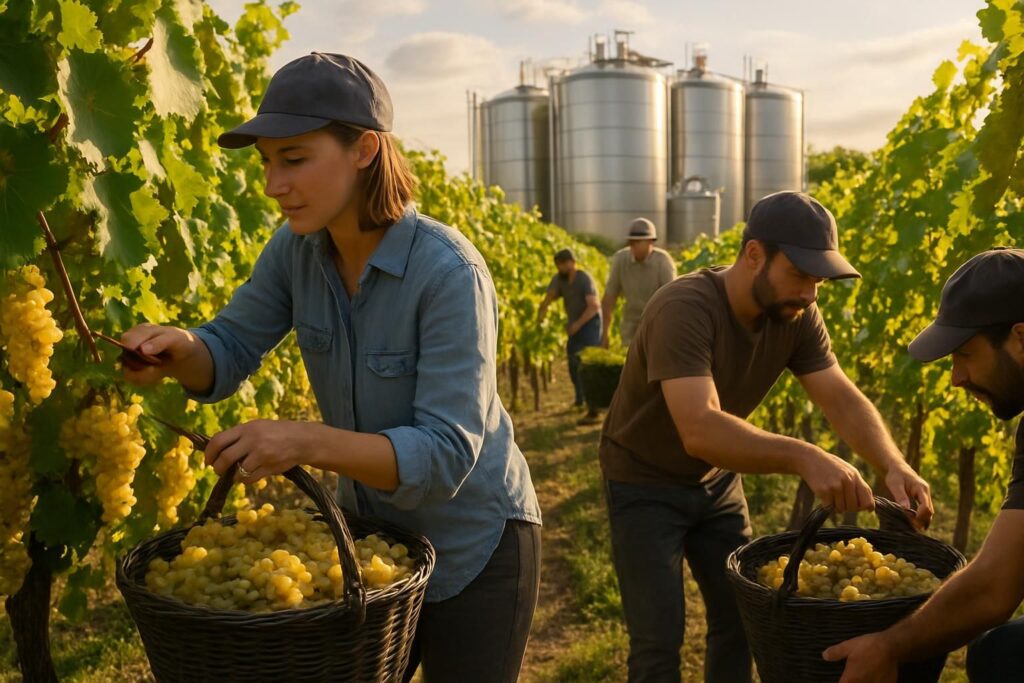
The 2026 harvest in Champagne takes place in an unprecedented context marked by extreme climatic conditions that disrupt the traditional balances of Champagne viticulture. The combination of scorching summers and persistent droughts has promoted accelerated grape ripening, pushing sugar levels to record highs. This phenomenon naturally has major repercussions on the alcohol content of future champagnes, which could exceed the symbolic 13% threshold. This situation challenges producers, who must now adapt their methods in face of the challenges of climate change, while ensuring the quality and typicality of this exceptional product are preserved.
With exceptionally early harvests, Champagne brands observe a sugar concentration often higher than average, sparking intense debates on grape sales management and yield control. The sector strives to reconcile volume, quality, and regulation to meet a growing global demand, all while navigating an uncertain agricultural context. These elements outline the contours of a harvest that could well be historic, with an unprecedented taste and alcohol profile, shaped by a climate that spares no aspect of Champagne production.
Harvest 2026 in Champagne: an unprecedented potential alcohol level at the heart of viticulture
The potential alcohol content of grapes at harvest is generally a closely monitored indicator in the Champagne appellation, as it directly impacts the quality, structure, and balance of the wines produced. In 2026, Champagne viticulture faces a major challenge: the alcohol level is likely to exceed 13%, a threshold rarely reached in this region. This development is mainly explained by the exceptional meteorological conditions that marked the season, with a succession of heat waves and drought episodes.
The phenomenon of climate warming accelerates grape ripening, increasing their fermentable sugar content. This naturally leads to higher alcoholization of wines after fermentation. Winemakers must then anticipate these changes, notably by adjusting the timing of the harvest. This anticipation is essential to try to limit excess alcohol while maintaining sufficient acidity to guarantee the freshness and salinity characteristic of champagnes.
It is important to understand that this alcohol level affects not only the style of the wine but also its aging potential and aromatic maturity. The traditional Champagne grape varieties, such as Pinot Noir, Meunier, and Chardonnay, show different reactions to this phenomenon, making grape selection and blend management particularly crucial this year.
In certain areas, notably exposed plots, the phenolic quality of the grapes is considered exceptionally good despite the high alcohol, which indicates an unprecedented aromatic potential. This context requires rigorous monitoring of phenolic maturity and a fine evaluation of the acidity/sugar ratio, all essential parameters to guide harvest management.
To learn more about the approaches adopted by winemakers to manage these high alcohol levels, it is advisable to consult detailed analyses on the 2026 harvest in Champagne and the technical adaptations implemented.
Anticipating early harvests in the face of a calendar disrupted by drought and heat
The 2026 harvests fall within a remarkably early calendar, a direct consequence of intense heat episodes occurring since June. This significant advancement of the harvest was decisive in controlling the alcoholization of the grapes, but also in preserving the intrinsic quality of the fruit.
The success of the harvest largely depends on the decision-making regarding the optimal harvest date. When the sugar level in berries rises too quickly, it is vital to anticipate and even move up the picking date. Winemakers thus faced a real technical urgency to regulate maturity by limiting the transition to excessively high alcohol levels.
This situation was particularly observed in areas affected by persistent drought, which impacted water availability and modified the vine’s vegetative cycle. Hydric stress combined with record heat intensified sugar concentration, reducing cluster volume but increasing density. This factor also encouraged yield reductions to promote better qualitative expression of the grapes.
The choice of harvest date involves several consequences :
- Control of the sugar-acidity balance: earlier picking helps preserve sufficient acidity, essential for the freshness of champagne.
- Terroir management: certain plots matured faster than others, requiring differentiated harvesting.
- Economic impacts: earliness can shift production cycles and disrupt estate logistics.
To understand how harvest dates adapt to climatic realities, a comprehensive overview is available through regular analyses on early harvests in Champagne. This resource highlights trends and vineyard strategies in this unprecedented context.
Qualitative challenges: wine quality and balance facing high alcohol levels
The increase in alcohol content in champagnes brings complex challenges related to the final quality of the wines. Above 13%, alcohol can affect organoleptic balance and modify aromatic perception, highlighting the need for rigorous mastery of the winemaking and blending process.
Within the Champagne sector, winemakers promote innovative practices to preserve freshness and finesse, even when grapes arrive with unusually high sugar levels. This includes optimizing fermentation temperatures, regulating yeasts, and adapting blends to compensate for alcohol.
This approach is part of a clear desire to maintain the identity of crus while responding to a demanding consumer market accustomed to the subtle signature of champagne. Efforts also concern the strict selection of bunches during harvest, favoring those with aging potential and a good acid-sugar balance.
Moreover, viticultural practices such as adaptive pruning and vine work aimed at optimizing vigor and sugar distribution contribute to limiting excess alcohol upstream. Aromatic complexity thus remains a priority, ensuring a sensory experience faithful to expectations, even in the face of climatic upheavals.
The technical challenge is even more intense because cellar aging can accentuate the alcohol perception if the initial balance is not perfectly controlled. The quality of champagnes from the 2026 harvest will therefore be closely scrutinized, notably by experts and professional tasters.
Impact of climate warming on grape varieties and Champagne viticulture
Climate warming now stands as a determining factor in the developments of Champagne viticulture. Changes in meteorological conditions affect not only yields but also the aromatic profile and physiology of traditional grape varieties.
Pinot Noir, Meunier, and Chardonnay, pillars of Champagne blends, are summoned to adapt to these new constraints. For example, Pinot Noir, generally sensitive to heat, has shown earlier ripening with a higher sugar concentration. This development forces producers to rethink cultural practices and adjust the intervention calendar to optimize terroir expression.
Water management becomes crucial in the face of recurrent drought episodes that tend to deprive vines of the hydration necessary for balanced ripening. These prolonged hydric stresses can fatigue vines, negatively influence photosynthesis, and increase the risk of cryptogamic diseases.
In this context, several strategies have been implemented :
- Yield reduction to favor qualitative concentration.
- Use of rootstocks resistant to hydric stress.
- Experimentation with new grape varieties or clones better adapted to future climate.
- Canopy management techniques to protect grapes from excessive sun.
These adaptations testify to the innovation capacity and resilience of the Champagne viticulture sector in the face of the challenges imposed by climate. Increased vigilance is necessary to maintain the excellence of champagnes while anticipating future developments.
To deepen this subject, it is recommended to follow studies on the environmental impact on production through news of the harvest in Champagne and agricultural innovations in response to warming.
Yield regulation and economic implications for the 2026 harvest in Champagne
The 2026 campaign in Champagne is also characterized by strict regulatory measures regarding yield caps, set at 8,800 kg per hectare. This regulation occurs in a context where the sector must manage both qualitative and quantitative production adapted to global demand.
By limiting the harvested volume, authorities aim to guarantee sugar and aroma concentration in the bunches, thus promoting richer and qualitative champagnes. This limitation imposes difficult choices on winemakers, notably in the allocation of plots to prioritize and the efforts to optimize each hectare.
On the economic level, these constraints may influence :
- Grape prices: limited quantity creates scarcity that can increase the market value of raw materials.
- Strategy of Champagne houses: adapting blends and production based on available volumes.
- Harvest planning: increased labor needs during specific and geographically segmented periods.
The viticulture sector thus plays an active role in balancing environmental requirements, consumer quality expectations, and economic regulation. The 2026 harvest thus promises to be a case study illustrating the complexity of Champagne viticulture in the age of climate change.
For a comprehensive view on yield challenges and harvest management, it is useful to explore detailed resources on mid-August harvests in Champagne and recent economic strategies in the region.
Why does the alcohol content often exceed 13% in the 2026 champagnes?
The high alcohol content is explained by exceptional climatic conditions, notably very hot and dry summers that increase sugar concentration in the grapes, leading to fermentation producing an alcohol level above 13%.
How do winemakers adapt to these high alcohol levels?
Winemakers bring forward harvest dates to limit excessive sugar maturity, rigorously select grapes, and adjust their winemaking process to preserve the balance between alcohol, acidity, and aromas.
What impact does this alcohol level have on the quality of champagnes?
A higher alcohol level can alter the aromatic profile and gustatory perception of champagne, making perfect mastery of the winemaking and blending process crucial to maintain the freshness and characteristic finesse.
Is climate warming the only factor responsible for this evolution?
Climate warming is the main driver of this evolution, but it combines with other factors such as water management, viticultural practices, and grape variety choices, which influence the final wine output.
What is the regulation concerning yields for the 2026 harvest?
Yield is capped at 8,800 kg per hectare to control grape quality and ensure a balance between production and the market, in a context of early harvest and high alcohol levels.