
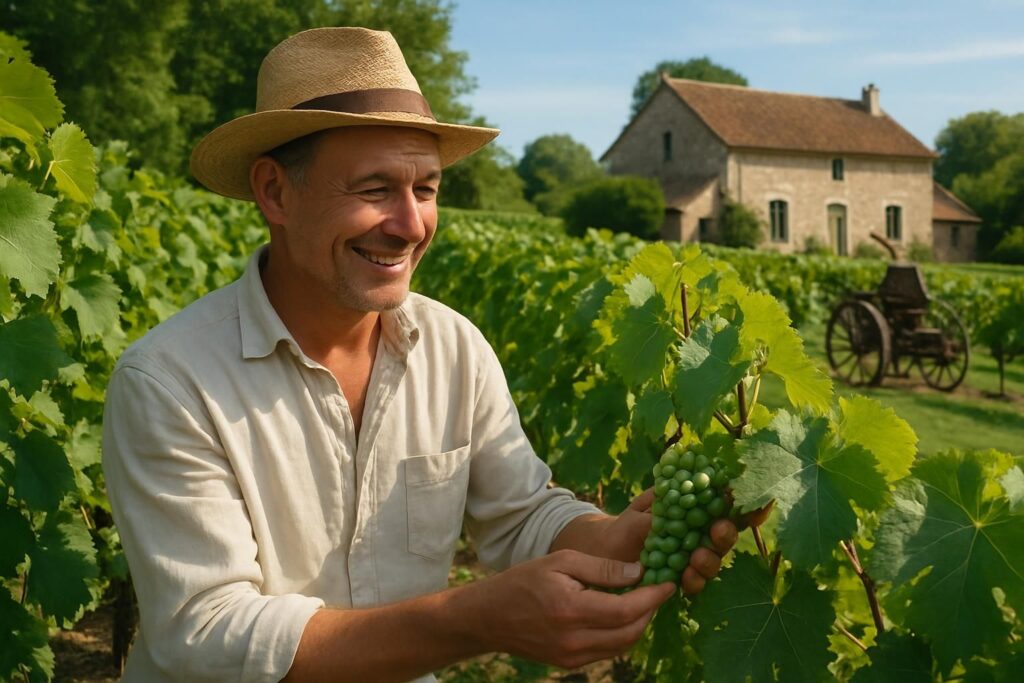
In the vibrant heart of Champagne, a unique reality dominates the conversations of professionals and wine enthusiasts alike: the exceptional value of vineyard land. With prices regularly exceeding one million euros per hectare, this region continues to fascinate due to the rarity of its terroirs, the quality of its grapes, and the international fame of its wines. These staggering figures represent far more than mere market value; they embody the history, tradition, and passion that animate Champagne’s winemakers. Among them, some former operators stand out for their unwavering attachment to their estates, perpetuating meticulous know-how in an environment where every square centimeter truly counts.
The example of a now-retired Champagne winemaker perfectly illustrates this phenomenon. Having lived off the vine all his life, he continues to nurture his estate with extraordinary dedication, blending technical expertise and love for the terroir. His commitment reflects the complexity and depth of a profession where every decision influences the final quality of the champagne. His approach also reveals the current economic challenges of the vineyard, where land prices pose a constant challenge and where rigorous vineyard management represents a true quest for excellence.
This economic reality goes beyond a simple statistic. It testifies to the constant pressure felt by winemakers, marked by the scarcity of arable land and fierce competition around the most coveted plots, notably in Côte des Blancs and other Grand Cru classified areas. Thus, beyond the financial aspect, the million euros per hectare symbolizes a living heritage, the memory of a terroir, and the preservation of ancestral know-how.
Understanding the million euros per hectare in Champagne: a unique market in viticulture
The Champagne vineyard is an exception in the French vineyard land market. While values of agricultural or vineyard lands may vary considerably in other regions, Champagne maintains a particularly high price threshold, often exceeding one million euros per hectare. This singularity is explained by several intrinsic factors:
- An exceptional terroir: The variety of soils, unique topography, and ideal exposure of the plots create an environment conducive to growing superior quality grapes, fundamental for producing exceptional champagnes.
- Historical prestige: For centuries, Champagne has gained worldwide recognition through renowned houses and classified terroirs, increasing the perceived value of each hectare.
- Strict regulations: Controlled appellation limits and rigorous production rules affect the availability of land.
- Economic attractiveness: The Champagne industry attracts local and foreign investors, leading to strong demand and a steady rise in prices.
For example, the Côte des Blancs, famous for its Chardonnay, features some of the highest prices per square meter, with plots sometimes reaching 1.65 million euros per hectare. This region remains the economic benchmark, concentrating the majority of sales projects and regularly renewing ownership. By comparison, Aisne shows a significantly lower average around 860,000 euros per hectare, but this difference mainly highlights the diversity of the vineyard and the crucial importance that some terroirs hold in champagne production.
Beyond this general observation, it is crucial to integrate the impact of the passion and expertise of winemakers, who bring intangible added value to these lands. It is this subtle marriage between nature, history, and human expertise that fuels the dynamics of this unique market.
A former Champagne winemaker who perpetuates tradition and cares for his estate
Many former Champagne winemakers, even after ceasing their commercial activities, remain closely tied to their estates. This was the case of a former operator who, having settled in Anjou for several years, continues to keep a watchful eye on his Champagne plots. This attachment translates into meticulous management aimed at quality and respect for the terroir.
In viticulture, every gesture counts. Pruning, the choice of grape varieties, soil maintenance, and biodiversity preservation directly impact production and grape quality. This winemaker, enriched by decades of accumulated experience, rigorously applies these principles right in the heart of his estate, guided by an intact passion for Champagne. The transmission of know-how plays an essential role here, with special attention given to respecting Champagne traditions and to measured innovation.
This approach also reflects current economic challenges: balancing land valuation and the need to ensure sustainable yield is often fragile. However, for this former professional, the estate remains much more than a simple agricultural operation. It is a living heritage, a place of expression for the Champagne terroir where each vine and each grape holds vital importance.
The care given to the vine also manifests in vigilance against climatic hazards and health challenges. It is about combining tradition and modernity to preserve grape quality in an increasingly complex context.
The crucial role of terroirs and the rarity of land in Champagne
The concept of terroir in Champagne goes far beyond the simple notion of a production site. It is a complex ensemble where altitude, soil nature, exposure, and even historical factors come into play. This specificity largely justifies the exceptional valuation of hectares, where one million euros constitutes the minimum base for a transaction in 2026.
The Grand Cru classified plots, numbering only 17 municipalities within the appellation area, are particularly sought after. The land price there reflects the superior quality of the grapes, essential for major houses or independent winemakers wishing to leave their mark with a high-end champagne. In these zones, even the smallest sale or acquisition mobilizes considerable financial pressure, not only because of the price but also due to the historical and emotional weight these lands carry.
This reality often exhausts contenders, even experienced winemakers, who must deal with a tight market. The paradoxical effect is that although Champagne is one of the smallest French vineyards in size, it represents one of the highest land values in the world. This scarcity intensifies competition, emphasizing the need to manage each plot with sharp expertise and deep commitment.
Alongside these constraints, each hectare offers unique opportunities for the expression of grape and terroir. That is why initiatives like careful harvest management or the adoption of environmentally respectful cultivation techniques have become priorities to ensure the future of the Champagne vineyard.
The recent evolution of prices and implications for Champagne winemakers
Since the early 1990s, the price of Champagne vineyards has continuously grown, reaching and surpassing the symbolic threshold of one million euros per hectare. Yet, this increase is never linear. It results from a multitude of economic, climatic, and social factors, notably including:
- The growing scarcity of available land, with increasingly fragmented plots.
- Sustained demand, both from champagne houses and investors attracted by the market’s solidity.
- Regulatory changes strictly controlling vineyard surface area, limiting geographic expansion.
- Climatic hazards that can affect grape quality and thus the final valuation of the lands.
Take the example of Côte des Blancs, where average prices have exceeded 1.65 million euros per hectare. This upward trend is accompanied by increased selection of plots put up for sale and quality pressure that benefits champagne’s reputation. But it also creates difficulties for young winemakers or newcomers to this market, often forced into partnerships or lease strategies.
Another notable aspect is the tension between tradition and innovation. Some winemakers, like the previously mentioned operator, opt for estate management focused on passion and the long term. This approach sometimes involves foregoing quick financial gains in favor of qualitative and patrimonial valorization.
This complex mechanism shapes the face of the vineyard in 2026. Managing the million euros per hectare becomes a strategic issue, conditioning the sector’s economic balance and the sustainability of Champagne winemaking.
The passion of Champagne winemakers: between heritage and contemporary challenges
The taut link between land’s economic value and the winemaker’s passion forms the living heart of the Champagne vineyard. Each hectare, whether operated by a big name in Champagne or an independent, represents a concentration of history and know-how.
The winemaker’s passion is expressed daily, through involvement in viticulture, from planting to harvest. Attention to each vine, observing grape maturation, and adapting to climatic hazards require recognized expertise and particular sensitivity. This determination makes a Champagne estate both an art and a science.
Moreover, this passion faces contemporary challenges: biodiversity preservation, adapting to climate change, and ever more demanding quality requirements. It also finds resonance in communication and promotion of terroir products, notably through events like the Musiques en Champagne festival, which celebrate local culture and strengthen the bond between wine and heritage.
Here are the elements every Champagne winemaker cherishes and cultivates:
- Respect for the terroir: considered the essential foundation of all production.
- Mastery of viticulture: a know-how transmitted and renewed.
- Meticulous attention at every stage of the vine’s cycle.
- The quest for quality at the heart of every bottle produced.
- Sustainable commitment to the environment and local biodiversity.
Why is a hectare of vineyard in Champagne worth more than one million euros?
The value exceeds one million euros due to the rarity of the land, the exceptional quality of the terroirs, historic renown, and strong demand from investors and champagne houses.
What factors influence the price of vineyards in Champagne?
The terroir, plot classification, strict regulations, geographic location, as well as climatic conditions considerably influence the price of vineyards in Champagne.
How do former winemakers maintain their estate after retirement?
They apply their knowledge and meticulous management to preserve grape quality, often guided by passion and respect for the terroir, thus ensuring the estate’s longevity.
What is the importance of terroir in Champagne viticulture?
Terroir is fundamental as it determines grape quality and, consequently, the finesse and personality of the champagnes produced. It combines soil, climate, and cultural traditions.
How do winemakers face today’s challenges of climate change?
They adapt their cultivation practices, reinforce health vigilance, and favor environmentally respectful methods to preserve the quality of harvests despite climatic hazards.