
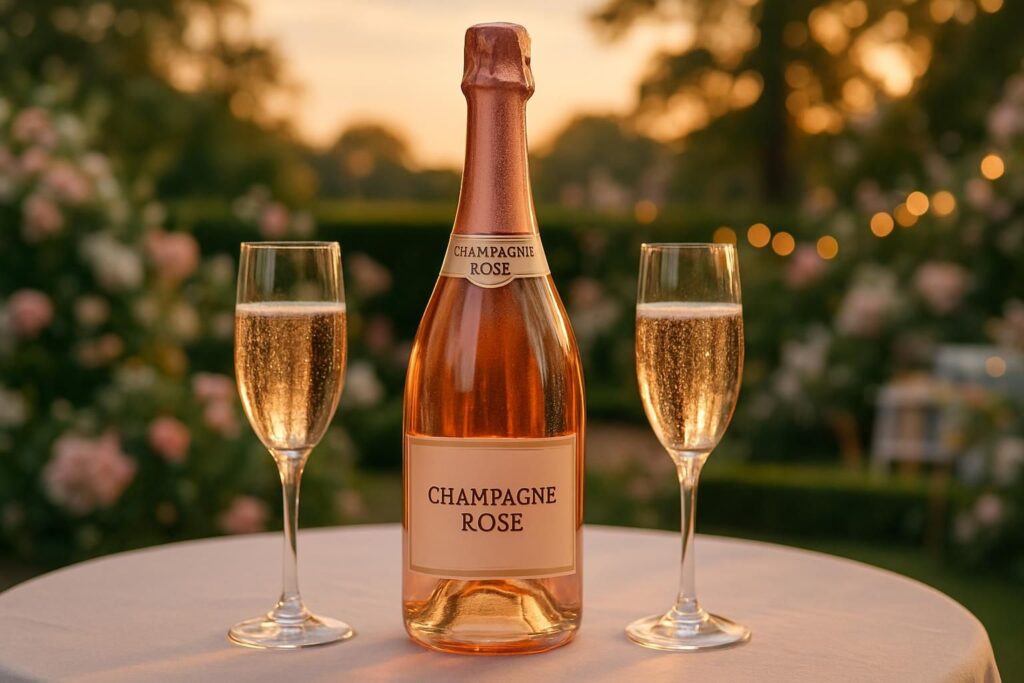
Rosé champagne remains an essential benchmark in the world of sparkling wines. More than just a drink, it embodies the art of refinement, finesse, and celebration. In 2026, in a market where the diversity of cuvées offers enthusiasts an unparalleled palette of emotions, some names stand out for their excellence and originality. The Paradis Brut Rosé 2008 from the house of Alfred Gratien, nestled in Épernay, is among those rare finds that captivate with their aromatic complexity and rare elegance. Produced in limited quantities, this rosé champagne draws a clear line between tradition and boldness, centered around a bottle of undeniable charm.
This vintage cuvée, dominated by the Chardonnay grape variety, reveals a subtle olfactory and gustatory signature of intensity, blending notes evoking both nature and a delicate pastry. On tasting, each glass reveals an evolving bouquet, a crescendo of aromas between undergrowth and candied fruits, enriched with unexpected exotic touches such as saffron. The Paradis Brut Rosé also excels in versatility at the table, adapting gracefully to both seafood and delicate meat dishes.
The Paradis Brut Rosé 2008 by Alfred Gratien: an exceptional wine from a micro-vineyard in Épernay
In the world of rosé champagne, quality comes as much from know-how as from the terroir. The Paradis Brut Rosé 2008 comes from a micro-vineyard of barely 1.59 hectares, located in the prestigious areas of the Côte des Blancs and the Montagne de Reims. This modest production ensures absolute control over the quality of the bunches and grapes. This rigorous selection is the cornerstone of a cuvée that is both rare and precious.
This cuvée is primarily distinguished by its so-called “saignée” vinification method, an ancient technique that favors a short maceration of the black grapes from Pinot Noir, in order to extract a very delicate salmon flesh-color essence. This process guarantees a natural aromatic complexity, often sought after by connoisseurs for the intensity and finesse of the fruity notes it imparts to the wine.
The characteristic aromas that emanate open with subtly earthy, almost wild scents, reminiscent of undergrowth and chanterelle mushrooms. These nuances quickly evolve towards a very indulgent pastry register: caramel, candied fruits, orangettes, and a mysterious hint of saffron enrich this olfactory palette. These fragrances reveal themselves as much on the nose as on the palate, where they balance around a creamy texture, a signature of elegance from the house of Alfred Gratien.
This refined flavor is not simply the result of an exceptional vintage but also of respectful and patient vinification, which allows this sparkling wine to fully express itself. Ideally served between 10 and 14 degrees, it offers a tasting experience that highlights every nuance, every subtlety of the bouquet. Even decanting this champagne proves to be a remarkable trick to release its full structure and enhance its aromatic profile.
Food and wine pairings that reveal the potential of the Paradis Brut Rosé 2008
This exceptional rosé champagne does not just amaze in the glass. It excels at the table, where its balanced aromas allow pairing with a wide range of prestigious dishes. Seafood such as clams, scallops, or langoustines find an ideal companion in this sparkling wine, where the controlled acidity highlights the freshness and finesse of marine flavors.
The diversity of dishes compatible with this cuvée reminds us that the Paradis Brut Rosé will also enhance the delicate character of white meats, especially veal fillet, whose tender texture and subtle taste harmonize beautifully with the complex notes of the rosé champagne. The aromatic richness and creamy lightness provide remarkable mouth comfort, from the beginning to the end of the meal.
This type of expert selection, highlighting a rare vintage cuvée, fully contributes to the refinement of gourmet meals. In a context where affordable champagnes are gaining notoriety, such rarities serve as a reminder of the importance of meticulous and passionate work on exceptional terroirs.
The aromatic subtleties and structure of the Paradis Brut 2008 rosé champagne
The aromatic profile of this rosé champagne asserts itself as a true sensory journey. In the background, the aromas of undergrowth with their woody accents bring a wild dimension that contrasts with the initial sweetness of red fruits. This alliance creates a unique balance, the hallmark of the greatest rosé champagnes.
Pastry notes — caramel, toasted bread, orangettes — unfold with finesse and impart a rare indulgence to the tasting. They likely derive from the prolonged aging of the cuvées on lees, which also imparts this airy and creamy texture enveloping the palate. The spicy touches, notably saffron, punctuate this experience with an originality comparatively rare in sparkling rosé wines.
The dominance of Chardonnay in the blend offers an elegant structure, subtly acidic, that carries this entire aromatic range. This freshness and tension are indispensable to guarantee the wine’s ability to support the previously mentioned gastronomic pairings. Perfect mastery of the effervescence ensures a delicate mousse that does not mask the nuances but subtly highlights them.
This aromatic complexity, both refined and accessible, places it among the rosé champagnes not to be missed in 2026, confirming the status of the Paradis Brut Rosé 2008 as a true favorite of sommeliers and professional critics. The pursuit of exclusivity and the rarity of the vintage help solidify its place in a dynamic market, where consumers are more demanding than ever.
Major trends in sparkling rosé wine in 2026
Rosé champagnes are experiencing a marked evolution, both in their production techniques and in their presentation. The Paradis Brut Rosé 2008 embodies both respect for ancestral traditions and openness to new sensory experiences. In 2026, attention to the origin of the grapes, to natural and even biodynamic vinification methods, is a major criterion influencing the choices of champagne houses.
Within this movement, there is also an increasing appreciation for limited productions, small in size but ambitious in quality. The passion for rosé champagnes that reveal a distinct identity resonates with connoisseurs seeking a bottle full of meaning, a visible symbol of excellence and refinement.
Moreover, the diversity of still and sparkling rosés, of which Alfred Gratien is a part, marks a new era where the expression of grape varieties and terroirs is increasingly emphasized. To better understand this complexity, enthusiasts can explore articles dedicated to various production methods, such as the guide offered by the nuances of rosé wines, which precisely details these subtleties.
Ideal tasting methods to appreciate a prestigious rosé champagne
Tasting an exceptional rosé champagne such as the Paradis Brut Rosé 2008 requires particular attention to details that influence the enjoyment offered by the bottle. The recommended serving temperature, between 10 and 14 degrees, is a fundamental element, enhancing the balance between freshness and aromatic intensity.
The choice of glass is also strategic: traditional wide-rimmed coupes may disperse aromas, while tulip-shaped or white wine glasses favor the concentration of perfumes, thus opening a better olfactory understanding. Decanting, commonly applied to still wines, proves to be an enticing technique here as it reveals the richness and complexity of the notes without altering the effervescence.
Practically, observing the salmon-colored robe under different lighting, inhaling its successive aromas, then savoring its creamy texture while tracing the different phases — from the initial freshness to the persistent final notes — allows one to fully grasp this exceptional cuvée. This ritual elevates champagne to the level of a complete sensory experience, far from a simple festive function.
Furthermore, the tasting is set within a context that values sharing and conviviality, where each sip becomes an invitation to discovery and renewed pleasure. Thus, whether during a sophisticated dinner or a private celebration, the bottle of Paradis Brut Rosé 2008 is a constant promise of multiple emotions.
Current challenges regarding the production and marketing of rosé champagnes
The production of exceptional rosé champagne such as those from the house of Alfred Gratien takes place in a wine-growing landscape undergoing rapid change. In 2026, issues related to climate change have a direct impact on the quality and typicity of the wines, pushing producers to adapt their practices, both in the vineyards and in the winery cellars.
The international renown of champagne is also challenged by increased competition from sparkling wines originating from other European regions. This dynamic stimulates the constant pursuit of quality, innovation, but also a better understanding of the terroir as a distinctive mark, to preserve the uniqueness of cuvées like the Paradis Brut Rosé 2008.
Moreover, the risk of losing the Champagne appellation remains a concern for sector stakeholders. This reality is reported in several recent articles, emphasizing the importance of collective commitment and strict regulation to maintain the added value of an emblematic product. A point to know for any informed enthusiast, it helps reveal the complexity and importance of the Champagne terroir in the global prominence of sparkling rosé wine.
In terms of marketing, the rarity and difficulty of access to prestigious cuvées such as the Paradis Brut Rosé encourage particular attention to distribution, often through specialized channels, where consumers demand guarantees of authenticity and excellence. These challenges are at the heart of initiatives aimed at better promoting these prestigious wines to an ever wider audience.
- Exclusivity: limited production guarantees superior quality and a unique experience.
- Aromatic complexity: based on a mastered blend, it offers multiple and evolving sensations.
- Gourmet pairings: versatility with various dishes enhances meals.
- Traditional methods: saignée vinification preserves finesse and color.
- Respect for terroir: adaptation to climate challenges and preservation of the appellation.
What distinguishes an exceptional rosé champagne?
An exceptional rosé champagne is characterized by limited production and a carefully mastered blend, offering elevated aromatic complexity and remarkable finesse on the palate.
How best to serve the Paradis Brut Rosé 2008?
It is recommended to serve this champagne between 10 and 14 degrees in a tulip glass for better concentration of aromas. Decanting can also reveal its full gustatory richness.
With which dishes to pair a rosé champagne like this one?
This sparkling wine pairs perfectly with seafood such as langoustines or scallops, as well as delicate white meats like veal fillet.
Why is the saignée vinification important?
This method ensures a natural and subtle extraction of color and aromas, offering a complex and elegant profile particularly prized for rosé champagnes.
What are the current challenges in rosé champagne production?
The main difficulties linked to climate change and international competition push producers to innovate while protecting the Champagne appellation and the recognized quality of their wines.