
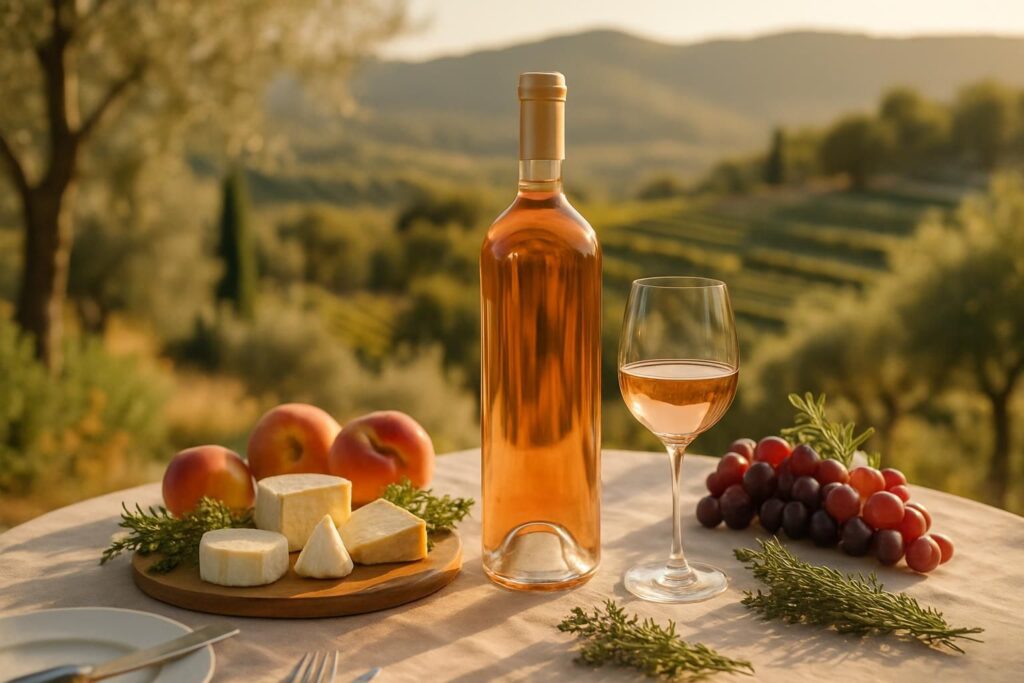
In the Provençal wine landscape, rosé wine holds a prominent place, notably thanks to the Bandol appellation. Originating from this renowned Mediterranean region, the rosé wine Nuances du Château de Pibarnon symbolizes excellence and authenticity in an artisanal production dedicated to gastronomy. This wine, both complex and subtle, represents a break from the classic “pale” rosé standards, asserting a strong identity where the expression of the Mourvèdre grape variety reveals all its uniqueness. Between tradition and innovation, this confidential cuvée conquers refined palates in France as well as internationally.
Beyond the simple clichés related to the summer consumption of rosé, Nuances establishes itself as an essential table wine: an invitation to tasting and pairing with refined dishes, reflecting the growing role of premium rosés in great Mediterranean crus. This recognition is explained by a rigorous winemaking approach, a particular terroir, and technical mastery embodied by Éric de Saint-Victor, heir to a family tradition and inventor of a new approach to rosé.
The uniqueness of the Bandol terroir and its influence on the rosé wine Nuances
The terroir of Bandol, located in the southeast of France, is one of the most prestigious in the Mediterranean for viticulture. It stands out for a mild and dry climate, with long and sunny summers, and diverse soils combining clay, limestone, and sand. This natural environment directly contributes to the aromatic expression and structure of the rosé wine Nuances.
The Mediterranean character of the vineyard gives the wine intense aromas and freshness that allows it to flourish elegantly. This particularity is reinforced by the altitude of the parcels, notably Le Col de Bel Air, which provides the main raw material for this cuvée. The freshness of the nights preserves the integrity of the berries, thus limiting their oxidation and favoring controlled maceration.
The choice of grape varieties is also fundamental. Mourvèdre, the emblematic grape of Bandol, makes up 95% of the Nuances cuvée. Often associated with powerful and structured red wines, it reveals here a more salivating and balanced profile, far from clichés about the heaviness of southern rosés. This natural salinity, almost iodine-like, gives the wine a rich and vibrant sap, ideal to accompany Mediterranean dishes rich in flavors.
Cultural practices in this vineyard prioritize quality over quantity, with controlled yields and rigorous monitoring of the parcels. This guarantees excellent raw material, essential for refining the elaborate vinification of the rosé Nuances. Thus, the soil’s typicity, geological diversity, and microclimate bring forth an exceptional rosé wine, reflecting a terroir full of character.
The role of grape varieties in the aromatic complexity of rosé Nuances
The aromatic signature of rosé wine Nuances mainly rests on the expression of Mourvèdre, a grape that provides structure, finesse, and depth. Contrary to received ideas, this grape does not necessarily impart harshness to rosé wines; on the contrary, it infuses them with a salivating dimension, enlivened by a pleasant Mediterranean tension.
This grape is sometimes complemented by other varieties like Grenache and Cinsault, although their presence remains minimal to preserve the purity of Mourvèdre. These subtle blends enrich the wine with aromatic nuances and offer a complementary palette where fruity and floral notes reveal themselves, balancing the intrinsic power of Mourvèdre.
The aromas of rosé Nuances oscillate between fruity freshness – white peach, wild strawberry – and a more spicy and saline touch, typical of the maritime terroir. This aromatic alliance allows the cuvée to stand out, reinforcing its gastronomic character that makes it perfectly suited for table tasting.
This complexity is also the result of meticulous winemaking, inspired by practices developed in Champagne, particularly in the management of skin maceration. Thus, a cold maceration of around 15 hours favors the delicate extraction of aromatic compounds and tannins that structure the wine without weighing it down.
The care given to this stage is fundamental to transforming this rosé wine into a true meal companion. Traditional winemaking is complemented by a nine-month aging in Clayver stoneware jars. This type of container, chosen for its controlled porosity, allows a subtle refinement that preserves the bitters so precious for prolonging the wine’s finish.
These techniques, far from being trivial, reflect a desire for innovation carried by the de Saint-Victor family. They enable the rosé Nuances from Bandol to maintain an intense and refined personality, while remaining in harmony with the expectations of lovers of elegant and complex wines.
A winemaking inspired by Champagne tradition for an exceptional rosé
The inclination towards an original winemaking is directly inspired by Champagne practices, notably those observed on the Riceys side. There, skin maceration overnight is carried out with frequent controls to perfectly establish the stop moment. Transposed to Mourvèdre, this unprecedented method makes the rosé wine Nuances as structured as it is elegant.
This complex technique allows finding in the wine all the substance, chewiness, and finesse necessary for a unique tasting experience. The idea of aging a rosé over a relatively long period moves away from classic standards, where rosés are often bottled quickly to preserve their freshness, sometimes at the expense of aromatic richness.
The choice of aging in Clayver stoneware jars, as opposed to traditional large wooden vats or barrels, optimizes the wine’s expression. These jars, made with materials from Greece but fired with German precision, ensure a controlled micro-oxygenation essential for preserving bitters and complex aromas.
Bottling occurs about two and a half years after harvest, an unusual delay requiring considerable patience and know-how. This waiting allows the rosé wine Nuances to reach its aromatic fullness, ideal for sipping in mid-season, notably during the Indian summer.
This choice of traditional and innovative winemaking gives the rosé Nuances a unique profile, both airy and deep, capable of rivaling the finest crus of Provence.
Gastronomic pairings revealing the potential of rosé Nuances
Rosé Nuances asserts itself as a gastronomic wine, an ideal partner to enhance Mediterranean dishes. Its salivating qualities and length on the palate offer a perfect balance with a variety of dishes where freshness, delicacy, and character mingle.
The most successful pairings associate Nuances with white meats, shellfish, or dishes flavored with garlic, anchovies, and sage. The wine’s aromatic richness supports pronounced flavors while maintaining a beautiful overall finesse on the palate.
This versatility makes Nuances a rosé capable of accompanying grilled sea bass as well as a tagine with mild spices, or even a salad with fresh herbs. Dishes based on Mediterranean vegetables, like ratatouille or artichokes, also find a remarkable echo in this wine.
Furthermore, the best serving temperature is around 8 to 10°C, allowing the full aromatic palette to be revealed without masking the structure or depth. This precision in tasting proves essential to fully appreciate its potential.
Curious enthusiasts can explore this universe through an extended selection of the best rosés from Bandol, available in France and by allocation in the United States, where Nuances has known a genuine enthusiasm for several years, notably among barbecue cuisine lovers.
- Aromatic white meats: herb-seasoned poultry, rabbit with sage
- Grilled fish: turbot, sea bream with Mediterranean flavors
- Shellfish and seafood: langoustines, pan-seared scallops
- Dishes with southern accents: ratatouille, tapenade, tagine
- Mild cheeses: brousse, fresh goat’s tomme
International enthusiasm for Nuances and the promotion of Bandol rosés
Since the launch of its first vintage in 2014, Nuances has established itself as an exceptional wine supported by confidential production: only 2,000 to 3,500 bottles are offered each year. This exclusivity contributes to its prestige, especially among an international audience attentive to the richness and quality of Mediterranean wines.
In the United States, the Nuances cuvée has quickly found a particular echo among gastronomy lovers and those fond of wines combining breadth and delicacy. Its profile avoiding excessive power appeals to a clientele sensitive to refinement and subtlety.
In Provence, rosé Nuances has become a must-have at meals, enhancing the art of the table and carefully considered pairings. Its presence in connoisseurs’ selections helps redefine the image of rosé, granting it the status of a true aging and culinary accompaniment wine.
This trend does not go unnoticed in the wine world, where there is a rising prominence of premium rosés. Bandol rosé and especially Nuances thus benefit from recognition by the general public and professionals who, recently, place it on the same level as certain red or white crus.
To deepen the knowledge of premium rosé wines, it is interesting to consult specialized and updated resources, such as those presented in this article on affordable champagne selections or market analyses available on price trends of great wines. This information enriches the understanding of the distinctive positioning of Provençal wines in the global wine universe.
{“@context”:”https://schema.org”,”@type”:”FAQPage”,”mainEntity”:[{“@type”:”Question”,”name”:”What is the particularity of the Mourvèdre grape variety in rosé Nuances?”,”acceptedAnswer”:{“@type”:”Answer”,”text”:”Mourvèdre makes up 95% of the Nuances cuvée and brings a unique salinity, rich sap, and a perfect balance between power and finesse, far from clichés about the harshness of southern rosés.”}},{“@type”:”Question”,”name”:”How is the winemaking process of rosé wine Nuances carried out?”,”acceptedAnswer”:{“@type”:”Answer”,”text”:”The wine is vinified with a cold skin maceration of about 15 hours, followed by nine months aging in Clayver stoneware jars, which brings structure and complexity to the wine.”}},{“@type”:”Question”,”name”:”What food and wine pairings should be favored with Nuances?”,”acceptedAnswer”:{“@type”:”Answer”,”text”:”Nuances pairs perfectly with white meats, grilled fish, shellfish, spicy Mediterranean dishes like ratatouille, and even certain mild cheeses.”}},{“@type”:”Question”,”name”:”Why is Nuances particularly appreciated in the United States?”,”acceptedAnswer”:{“@type”:”Answer”,”text”:”Its balanced aromatic profile, with breadth and finesse without excessive power, appeals to American enthusiasts, especially with barbecue dishes.”}},{“@type”:”Question”,”name”:”What is the significance of traditional winemaking for this rosé?”,”acceptedAnswer”:{“@type”:”Answer”,”text”:”Traditional winemaking at Nuances relies on meticulous maceration, aging in jars, and late bottling, favoring aromatic development and complexity.”}}]}What is the particularity of the Mourvèdre grape variety in rosé Nuances?
Mourvèdre makes up 95% of the Nuances cuvée and brings a unique salinity, rich sap, and a perfect balance between power and finesse, far from clichés about the harshness of southern rosés.
How is the winemaking process of rosé wine Nuances carried out?
The wine is vinified with a cold skin maceration of about 15 hours, followed by nine months aging in Clayver stoneware jars, which brings structure and complexity to the wine.
What food and wine pairings should be favored with Nuances?
Nuances pairs perfectly with white meats, grilled fish, shellfish, spicy Mediterranean dishes like ratatouille, and even certain mild cheeses.
Why is Nuances particularly appreciated in the United States?
Its balanced aromatic profile, with breadth and finesse without excessive power, appeals to American enthusiasts, especially with barbecue dishes.
What is the significance of traditional winemaking for this rosé?
Traditional winemaking at Nuances relies on meticulous maceration, aging in jars, and late bottling, favoring aromatic development and complexity.