
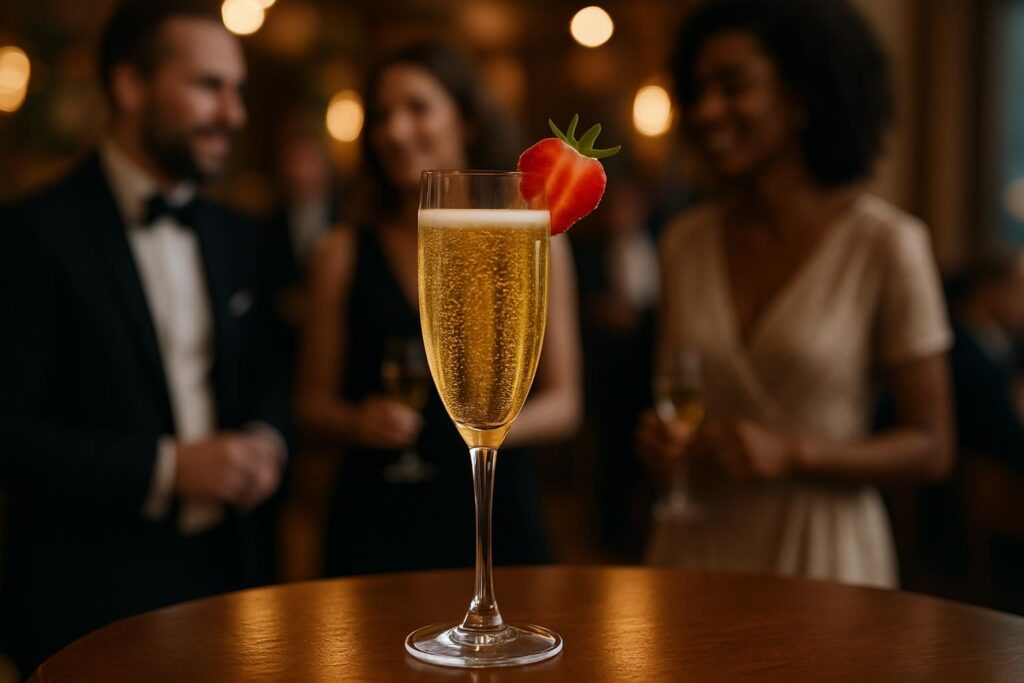
In the world of festive drinks, the champagne cocktail has established itself as a reliable choice to make a lasting impression. It embodies elegance and lightness, while adding that essential sparkling touch for a successful atmosphere. As many hosts look to surprise their guests, there is a secret recipe that combines simplicity, sophistication, and balanced flavors, achieving unanimous approval at every gathering. This refined drink, easy to make, has won over a wide audience thanks to its chic appearance and perfectly mastered taste. The cocktail, crafted from accessible ingredients and orchestrated with precision, proves to be the undisputed star of summer aperitifs on the terrace and convivial evenings at home.
A champagne cocktail owes its success to a subtle alchemy between freshness, controlled acidity, and intense effervescence. Too often, adding ingredients that are too sweet or too aromatic disturbs this harmony, making the drink heavy and quickly flattening the bubbles, which are at the heart of the festive effect. This secret recipe, carefully developed, instead exploits the champagne’s power to its fullest, combining it with a simple yet perfectly balanced spirit: a dry spirit, bright lemon juice, and a balanced simple syrup. This trio is enriched by an authentic gesture that preserves all the liveliness of the bubbles for an elegant and perfectly perceptible result on the palate.
The secrets of an irresistible champagne cocktail that charms guests
This sensational cocktail is based on the classic principle of a “sour” base, a nimble and dynamic blend of spirit, acidity, and sweetness. Here, gin is chosen for its aromatic finesse rather than intensity, capable of providing a light structure without overpowering the delicate notes of the champagne. Using freshly squeezed lemon juice is essential to inject that bright acidity, a key element that awakens the taste buds and balances the whole. The simple syrup, made from water and sugar, must be measured precisely: enough to sweeten without masking the acidity or finesse of the champagne. Added at the final stage, the champagne ensures lasting effervescence, giving the cocktail its festive and refreshing personality.
A common mistake that compromises the cocktail’s success is trying to “party” at all costs by adding too many flavors or sugars, which quickly causes an unpleasant heaviness and a collapse of the bubbles. The recipe offered here places particular emphasis on the quality of the ingredients, notably the use of a well-chilled brut champagne, which keeps its sparkle and delicate pearls in the glass. For an equally appealing alternative, one can consider an Alsace or Loire crémant, often more accessible and just as sparkling.
The balance in this cocktail is so well mastered that guests quickly ask for the recipe, impressed by the apparent simplicity and the sophistication on the palate. The amateur bartender’s gesture also plays a non-negligible role here: an energetic mixing of the gin, lemon juice, and syrup with a good amount of ice, followed by a delicate addition of the champagne that preserves all its intensity and elegance. Nothing is stirred after adding the sparkling wine, to avoid losing those precious bubbles.
An accessible and refined recipe to impress every time
The beauty of this drink lies in the simplicity of its ingredients combined with the rigor of its preparation. Just gather the following elements to make up to four perfectly balanced cocktails:
- 200 ml of gin – a moderately dry quality gin is sufficient, it should bring floral notes without dominating the champagne.
- 120 ml of freshly squeezed lemon juice – acidity is the engine of the cocktail; avoid overly sweet industrial juices.
- 80 ml of simple syrup – made from 40 ml of water and 40 g of sugar, dissolved and then cooled, it subtly doses the sweetness.
- 300 to 400 ml of well-chilled champagne – depending on glass size and desired bubble intensity.
- a large amount of ice to ensure optimal cooling without diluting too much.
- 4 lemon twists for garnish and subtle release of essential oils.
Speed of preparation is also a major asset. In a shaker, combine the gin, lemon juice, and syrup, then add ice for an effective thermal shock. After about ten seconds of vigorous shaking, the liquid should be almost chilled. Straining into previously chilled glasses ensures that temperature and flavor remain consistent. The final touch is to gently pour in the champagne, respecting the order of ingredients so as not to compromise the bubbles.
The final presentation enhances the look: a folded twist placed on the rim of the glass or dropped inside, releasing its aromas. This gesture, although simple, adds an aromatic dimension that perfectly complements the drink’s balance. Hosts are then convinced by this flavorful cocktail that perfectly marries the sparkle of champagne with the tart freshness of lemon, giving the whole a lively and elegant character.
Variations and aperitif pairings to enrich the champagne cocktail experience
In 2026, exploring the diversity of ingredients around such a cocktail opens an infinite field for creativity, while respecting the essential structure: acidity respect, freshness, and preserved bubbles. For a fruitier version, adding a thin slice of strawberry or a few raspberries at the bottom of the glass brings a gourmand dimension without weighing down the drink. For a herbal touch, a basil leaf placed in the coupe is essential, awakening the senses and pleasantly contrasting with the lively character of the gin and lemon.
Alternative fans will also find interest in substituting champagne with an extra-dry prosecco or a recognized appellation crémant, particularly suited for large receptions where budget is scrutinized. These nectarine bubbles remain light and full of freshness, perfect for a summer party on the terrace as mentioned in this article.
On the gastronomy side, the cocktail finds its best companions in crunchy umami-flavored appetizers: cheese gougères, parmesan chips, or roasted almonds offer a salty and clean counterpoint. For a more refined option, fresh goat cheese with a touch of olive oil extends the discreet opulence and festive sensation the drink inspires.
To guarantee an optimal experience, four golden rules apply:
- Controlled acidity: use only fresh lemon juice.
- Optimal chilling: glasses and champagne served very cold.
- Controlled dilution: shake briefly with plenty of ice.
- Champagne pouring technique: pour last and gently to keep the bubbles intact.
Respecting these principles prevents premature bubble burst, which often empties the life and lightness of the cocktail, and guarantees each time a drink that snaps, refreshes, and turns every aperitif into a true event.
Professional gestures for a champagne cocktail worthy of a cocktail bar
Learning to prepare this cocktail with precision reveals a technical approach at the crossroads between the art of the bartender and the respect for sparkling wine. The fluidity of the movement, the speed of execution, and above all temperature control make all the difference. The essential thing to remember is that champagne is a “living” ingredient, subject to the fragility of its bubbles and the sensitivity of its aromas. Therefore, it must be added at the last second, without stirring. This final step is crucial; it preserves the taste signature and the glass’s dynamics.
Professionally, a suitable shaker and a fine strainer will be chosen to hold back the ice, thus avoiding excessive dilution. The choice of glass shapes perception: the flute enhances effervescence, while a wider coupe offers the necessary space for olfactory emotions. Depending on the season, one may prefer a wine glass, bringing a chic relaxed touch to an outdoor aperitif.
This recipe, whether served in a small group or adapted for a larger event, systematically elicits the same admiration: guests are surprised by the simplicity, but above all impressed by the flavor. The cocktail also lends itself to many adaptations, as explained in detail in this article dedicated to the easy preparation of champagne cocktails.
Incorporating this drink into an aperitif ensures a moment both elegant and flavorful. The bubbles awaken the palate, acidity controls the roundness, and every sip contributes to the festive atmosphere without ever becoming heavy. A true secret recipe, finally revealed, confirming why champagne remains the reference for successful event drinks.
Frequently asked questions to master the perfect champagne cocktail
{“@context”:”https://schema.org”,”@type”:”FAQPage”,”mainEntity”:[{“@type”:”Question”,”name”:”What type of champagne should I choose for this cocktail?”,”acceptedAnswer”:{“@type”:”Answer”,”text”:”It is recommended to use a well-chilled brut champagne because it retains its bubbles longer and offers balanced acidity. A crémant or an extra-dry prosecco can also be interesting alternatives depending on preferences and budget.”}},{“@type”:”Question”,”name”:”Can this cocktail be prepared in advance?”,”acceptedAnswer”:{“@type”:”Answer”,”text”:”It is advised not to mix the champagne in advance to preserve the bubbles. The gin, lemon, and syrup mixture can be prepared and kept chilled, then topped with champagne just before serving.”}},{“@type”:”Question”,”name”:”How can I prevent the cocktail from losing its bubbles?”,”acceptedAnswer”:{“@type”:”Answer”,”text”:”Adding the champagne last, gently, and without stirring afterward is the key to maintaining bright and long-lasting bubbles until the glass is finished.”}},{“@type”:”Question”,”name”:”What are the best options to vary this recipe?”,”acceptedAnswer”:{“@type”:”Answer”,”text”:”Incorporating red fruits like strawberries or raspberries at the bottom of the glass, or fresh herbs like basil, adds an original touch without undermining the cocktail’s balance.”}},{“@type”:”Question”,”name”:”What accompaniments best serve this cocktail?”,”acceptedAnswer”:{“@type”:”Answer”,”text”:”Savory and crunchy appetizers such as gougères, parmesan chips, or roasted almonds, as well as fresh goat cheese, harmoniously complement this elegant and flavorful cocktail.”}}]}What type of champagne should I choose for this cocktail?
It is recommended to use a well-chilled brut champagne because it retains its bubbles longer and offers balanced acidity. A crémant or an extra-dry prosecco can also be interesting alternatives depending on preferences and budget.
Can this cocktail be prepared in advance?
It is advised not to mix the champagne in advance to preserve the bubbles. The gin, lemon, and syrup mixture can be prepared and kept chilled, then topped with champagne just before serving.
How can I prevent the cocktail from losing its bubbles?
Adding the champagne last, gently, and without stirring afterward is the key to maintaining bright and long-lasting bubbles until the glass is finished.
What are the best options to vary this recipe?
Incorporating red fruits like strawberries or raspberries at the bottom of the glass, or fresh herbs like basil, adds an original touch without undermining the cocktail’s balance.
What accompaniments best serve this cocktail?
Savory and crunchy appetizers such as gougères, parmesan chips, or roasted almonds, as well as fresh goat cheese, harmoniously complement this elegant and flavorful cocktail.