
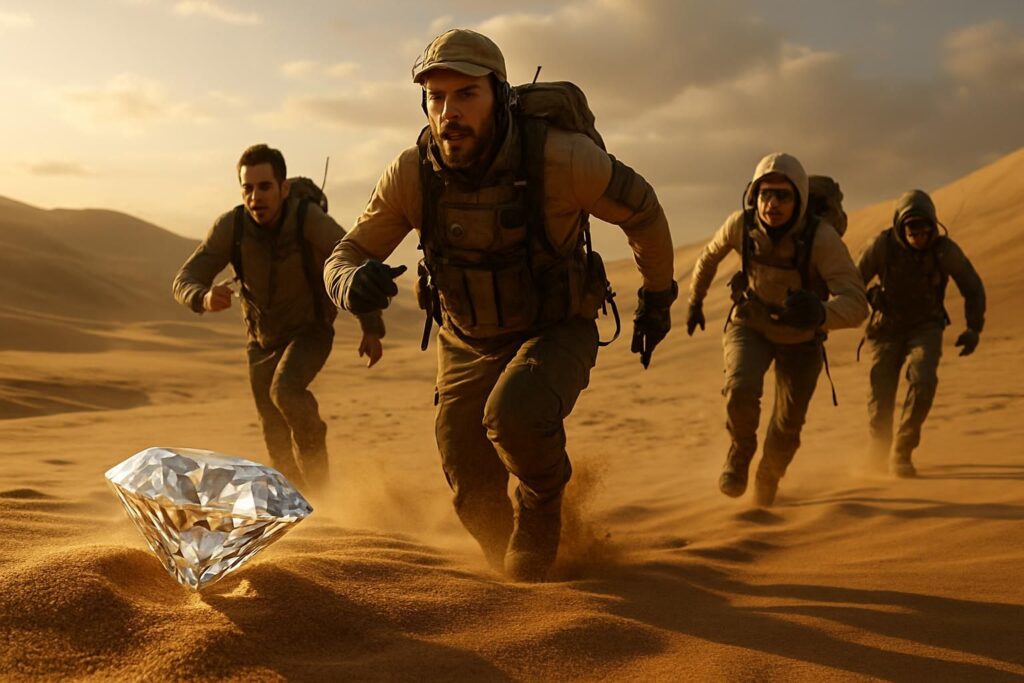
The desert diamond, known by the evocative name of champagne diamond, today embodies a fascinating and complex reality at the crossroads of jewelry, economy, and environment. This stone, whose warm and golden hue attracts a growing number of enthusiasts, is at the heart of a frantic race against time. The natural rarity of this gem, combined with the growing urgency to preserve limited resources, fuels crucial issues that far exceed mere aesthetic appeal. In 2026, while the whole world questions the environmental impact of mining and the geopolitical repercussions linked to this precious quest, the champagne diamond becomes an elusive symbol of the contemporary challenge: how to reconcile desire, authenticity, and sustainable development? This common thread guides an entire industry while revealing the strategies developed by stakeholders in the sector to ensure the survival and legitimacy of a precious and fragile natural resource.
Beyond its material value and brilliance, the desert diamond is also a stone that crystallizes significant tensions related to its origin and extraction. Consumers’ perspectives are evolving, redirecting traditional quality criteria towards valuing natural colorations, notably those between grades K to N. This shift is not trivial: it reflects a renewed appetite for authentic stones, carriers of geological stories deeply connected to the desert lands where they form. However, the grace of a champagne hue must not mask the economic and environmental interests that coexist in this race against time. The survival strategies implemented by jewelry houses, stone hunters, and regulators demand particular attention to the responsible management of natural resources, in order to prevent the attraction for this unique stone from turning into excessive exploitation with heavy consequences.
The origins and uniqueness of the desert diamond: a color with multiple meanings in jewelry
The champagne diamond, often nicknamed desert diamond because of its warm and sunny hue, stands out with shades ranging from grades K to N, in contrast to the classic white diamond placed between D and H. This classification reflects less a question of purity or size than an intrinsic characteristic of the natural color, which evokes golden and amber reflections similar to those of the precious beverage lending it its name. Historically, white diamonds were widely praised for their brilliant whiteness, symbol of purity and prestige. However, over the past ten years, the appeal of colored tones has undergone a major turning point, placing the champagne diamond at the forefront of coveted jewels.
Zack Stone, heir to the Steven Stone house founded in 1937, emphasizes that “the essential difference lies in this warmer, more organic tone, rather than in lesser quality.” This shade gives the stone a singular look, bringing a visual warmth that seduces a new clientele. The geological history behind this color is just as captivating: the presence of specific elements during the formation of the diamond grants these reflections, giving the desert diamond an authenticity that some white stones, sometimes synthesized, cannot match.
This renewed interest in the champagne diamond is reinforced by an opening toward consumers with broader tastes. This trend reflects an expansion of cultural and aesthetic references in jewelry acquisition. For many, the warm shade symbolizes uniqueness, even a commitment to a form of assumed naturalness, as opposed to the standardized perfection of colorless diamonds. Consequently, the desert diamond becomes a jewel bearing identity and emotion, embodying authenticity in a world where origin and ethics take on growing importance.
Crucial issues around natural resources: rarity and mining exploitation of the champagne diamond
The race against time to appropriate the desert diamond hides a much more complex reality, linked to the intrinsic rarity of this natural stone. Unlike some more abundant white diamonds, certain champagne diamond mining zones are characterized by limited availability and concentration in delicate desert environments. Intensive mining, if not regulated, risks causing a rapid depletion of these precious resources.
The traditional extraction methods in these areas also represent a double challenge for ecological balance. They can lead to lasting soil degradation and significant environmental impact, especially in terms of biodiversity and water resource management, which remain scarce in these desert formations. Attention to compliance with environmental standards and sustainable development is therefore at the heart of current debates.
In this context, jewelry houses and market players are encouraged to rethink their strategies. To limit the effects of mining, several innovative approaches are emerging, such as strict traceability of stones, the use of more sustainable extraction techniques, or partnerships with NGOs dedicated to the preservation of local ecosystems. These measures are part of a broader will to meet a growing demand for responsible and ethically sourced purchases, while ensuring the survival of a resource on the path to scarcity.
Moreover, the rarity and warm quality of the desert diamond generate significant economic pressure. This precious stone thus precedes an intensification of geopolitical conflicts related to its provenance, sometimes disputed. Controlling mines and securing supply become strategic issues for states and private actors. This reality highlights how the commercial valorization of a diamond now exceeds the general sphere of jewelry.
A frantic race against time: accelerated scarcity and its consequences on the global market
The most striking characteristic of the desert diamond lies in its annually limited nature due to the very nature of its extraction. Every year, the quantity of available mining blocks is constrained, which accelerates competition among collectors, jewelry houses, and passionate investors. This dynamic creates a phenomenon of a race against time where annual scarcity leads to a rapid rise in prices, heightening tensions at the global level.
This situation weighs on consumers seeking to purchase a champagne diamond, often combined with increased awareness of environmental and ethical issues. They now seek to better understand the history of their purchases, far from superficial shining images. This trend fuels a new demand structure, favoring stones accompanied by a certificate of strict traceability. In this context, houses like the Stone family’s, with a long tradition in jewelry, strengthen their position by betting on service quality, transparency, and personalized buyer support.
Beyond the economic aspect, this rush also raises questions about the sustainability of the sector in the long term. How to preserve this resource without compromising the balance of the affected territories? The temptation remains strong to resort to alternatives such as synthetic diamonds, generating an intense ethical debate. In this regard, the interest for the natural and warm stone represented by the champagne diamond is accompanied by profound reflection on strategies to guarantee the longevity of this mineral treasure.
This intense quest resonates directly in reports and analyses related to the sector’s evolution, notably in circles linked to jewelry excellence. To deepen links between authenticity, heritage, and modernity, it is recommended to follow certain events such as the Red Cross gala, where philanthropy and the promotion of these natural riches often mingle.
The emergence of a new paradigm: from timeless luxury to environmental responsibility
The repositioning of the champagne diamond on the global market resonates as a profound mutation of purchasing criteria. More than a simple luxury, this stone now reflects a new ethic. The desire to limit environmental impact drives actors to integrate more responsible practices into their value chain. The frequentation of mining areas requires constant vigilance, especially since the desert presents fragile and sensitive ecosystems.
In this perspective, sustainable development strategies include better management of mining waste, emission control, and site restoration. They also impose strengthened dialogue with local communities, promoting positive social benefits and thus reducing the risks of geopolitical conflicts. These approaches reflect awareness that goes beyond the mere commercialization of the diamond to embrace its social, cultural, and ecological dimension.
The desert diamond thus becomes an emblem of this transformation. It invites consumers and professionals to consider how the use of natural resources can fit into a long-term perspective. This paradigm shift profoundly modifies the dialogue between luxury and sustainability, offering relevant avenues to reconcile tradition and ecology within a globalized market.
Survival strategies at the heart of an industry in full mutation
Faced with crucial challenges and a constant race to secure the best stones, actors in the desert diamond sector must adopt innovative and adaptive strategies. These strategies revolve around several essential axes, helping to preserve both the product’s quality and the integrity of extraction environments.
- Optimization of traceability: Control of each diamond from its origin to its market placement becomes an unavoidable standard. Authenticity thus guaranteed reassures consumers particularly concerned about the social and ecological impact of their choices.
- Investment in research and innovation: Testing less invasive extraction techniques, promoting full valorization of extracted materials, and reducing waste are priorities to limit environmental footprint.
- Promotion of a new aesthetic narrative: By highlighting the warmth and uniqueness of the champagne diamond, stakeholders reposition this stone as a symbol of elegance while reframing classical notions of purity.
- Strengthening local partnerships: To ensure responsible and sustainable exploitation, engaging constructive dialogue with communities living around mining sites is now a priority.
- Diversification of commercial approaches: Combining traditional sales, digital and cultural events, such as exhibitions or exclusive collaborations, to reach a diverse and demanding clientele.
This overview of deployed strategies illustrates how much the survival of the desert diamond depends on a balanced management between innovation, responsibility, and respect for socio-environmental challenges. These orientations are essential to maintain the appeal of a rare resource, avoid excesses, and prepare a sustainable future for the jewelry sector as a whole.
At a time when the desert diamond still fascinates, there is an urgent need to think about and integrate these challenges into the overall strategy. These developments now shape the identity of a market where brilliance also reveals its profound and strategic stakes.
What is the desert diamond?
The desert diamond, also called champagne diamond, designates a natural diamond characterized by a warm and golden hue, generally located in the grades K to N, which gives it a unique coloration compared to classic white diamonds.
Why is it important to secure the natural resources of the champagne diamond?
The rarity of the champagne diamond and the constraints related to its extraction in fragile desert environments require responsible exploitation to avoid premature resource depletion and minimize environmental impact.
How do jewelry houses respond to consumer expectations in 2026?
They adopt strict traceability practices, invest in sustainable extraction techniques, and highlight the authenticity and uniqueness of the champagne diamond through a new aesthetic narrative.
How does the color of the champagne diamond influence buyers’ perception?
The warm and organic hue of the champagne diamond is perceived as a sign of authenticity and naturalness, valuing a real geological history and an imperfection that gives meaning, contrasting with the artificial perfection of synthetic diamonds.
What are the main environmental challenges linked to the exploitation of the desert diamond?
Major challenges include sustainable management of mines in desert environments, soil preservation, biodiversity conservation, and better cooperation with local communities to limit geopolitical conflicts.