
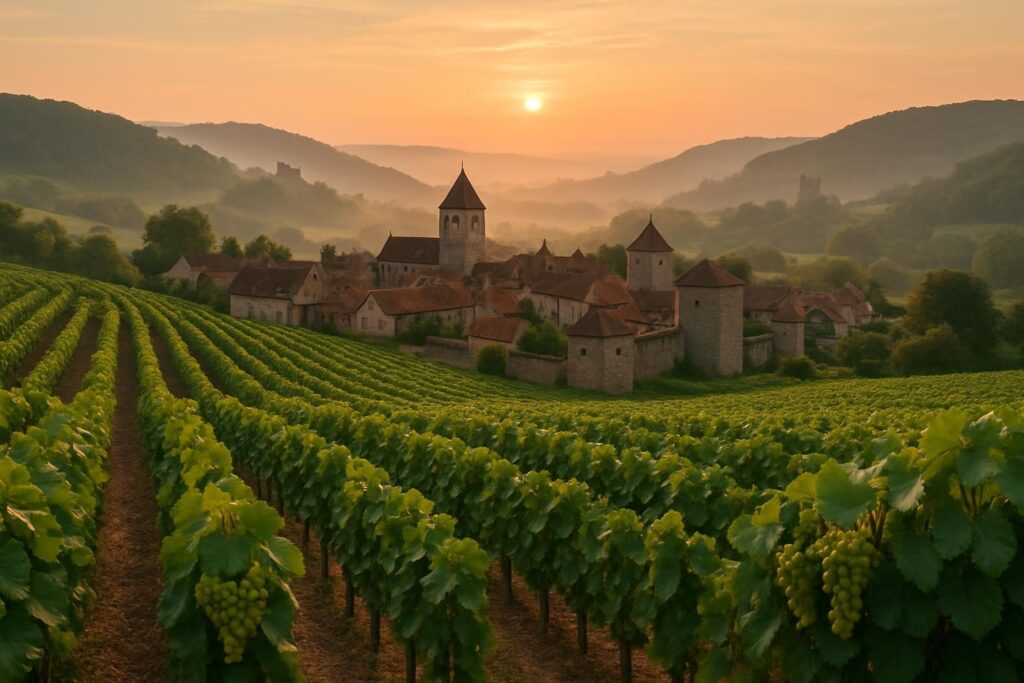
Champagne, a region globally renowned for its sparkling wines, hides far more than its famous beverage with legendary bubbles. Behind the reputation of its vineyards unfolds a little-known history, that of a dynamic medieval principality which shaped the heritage and culture of a strategic region in Europe. From the Counts of Champagne to influential matrimonial alliances, this territory played a crucial role in trade exchanges, political networks, and artistic creativity from the Middle Ages. Today, the rediscovery of this forgotten principality offers new insight into local history and tourism, inviting culture and history enthusiasts to explore these lands rich in heritage.
Beyond its picturesque landscapes and UNESCO-listed slopes, Champagne reveals itself as a treasure trove of traditions, religious art, and strategic stories that contribute to the construction of the Kingdom of France. In 2026, this region stands out as both a festive and authentic destination, where medieval heritage converses with the contemporary vibrancy of festivals and events. Rediscovering the Principality of Champagne means reconnecting with a powerful history while enjoying a vibrant culture that continues to inspire.
The Principality of Champagne: a complex and fascinating history
The birth of the Principality of Champagne is rooted at the end of the first millennium, around the year 1019, with the death of Étienne de Troyes. His estates were entrusted to Eudes II, a count with vast possessions. This territory surrounding Troyes gradually became an influential principality, consolidating its power through strategic alliances, as well as a skillful political game involving misalliances and alignments with the Capetian dynasty. The marriage of Jeanne, Countess of Champagne and Brie, with King Philip the Fair marked a decisive turning point, incorporating the county into the French royal domain in 1361.
This rich historical context is especially well illustrated by the exhibition “Passavant the Best! Champagne in the Time of the Counts,” organized at the Cité du Vitrail in Troyes. This cultural event highlights the decisive role of the principality in the Middle Ages, marked by exceptional intellectual and artistic influence, driven by figures such as Chrétien de Troyes or Pierre Abélard. The collection of stained glass displayed is a true iconographic and stylistic marvel, bearing witness to the prestige of the Champagne court and the religious and artistic dynamism of that era.
The complexity of this comital history invites heritage enthusiasts to carefully explore ancient power networks, revealing the importance of this geographic crossroads at the heart of medieval Europe. Champagne was thus not only a wine-producing land but a true principality with a decisive political role, oscillating between independence and royal alliance, making it fascinating to rediscover.
An architectural and cultural heritage at the heart of Champagne
The Champagne heritage is the tangible reflection of the historical and cultural richness of this little-known principality. Through its ancient cities, Gothic churches, and fortresses, the region reveals a flourishing past that has endured through the centuries. The treasure of medieval stained glass, notably those presented at the Cité du Vitrail in Troyes, unveils religious art and the aesthetic finesse that permeate the territory. These luminous and precious works are all the more remarkable as they reproduce the symbols and mottos that once accompanied comital power.
The region is also known for its Champagne slopes listed as UNESCO World Heritage, which are not only the object of international oenological fame but also testify to an ancestral know-how passed down from generation to generation. These lands shaped by the work of winegrowers contain picturesque villages where traditional architecture invites a deep dive into rural and aristocratic history.
Cultural tourism in Champagne, in 2026, combines the discovery of this material heritage with participation in events that allow experiencing local traditions. Several events, such as the P’tite Feria, offer an immersive experience between rustic pleasures and traditional celebrations. This mix of popular culture and historical heritage strengthens the appeal of a region that constantly reveals its hidden treasures.
Champagne: cradle of traditions and popular festivals
Over the centuries, Champagne has kept alive a culture rich in traditions, perpetuated both by its inhabitants and passionate visitors. The province is renowned for its festivals rooted in local terroir and customs, which mark the year and attract an ever-growing audience. These popular gatherings testify to a strong identity and a community proud of its heritage.
Events like the Feria in Ardèche, although located outside Champagne, inspire many Champagne festivities that easily blend bullfighting and equestrian traditions, often accompanied by a Champagne tasting to celebrate these convivial moments. These gatherings are opportunities for regions to promote their culture and strengthen local tourist appeal.
Furthermore, the wine-growing tradition remains omnipresent in cultural life. Wineries, large houses, or small producers readily open their doors, inviting oenological discoveries fully integrated into this festive time. These experiences combine heritage, know-how, and pleasure, offering visitors a perfect setting to apprehend Champagne in all its diversity.
Cultural and heritage tourism: a dynamic rediscovery of Champagne
In recent years, Champagne has experienced a true tourist renaissance focused on valuing its exceptional history and cultural heritage. In 2026, tourism is moving toward a more qualitative and immersive approach, responding to a growing demand for stays rich in discoveries and authentic experiences.
The region now mobilizes its resources to offer thematic routes combining visits to historical sites, tastings, and cultural immersion. The rediscovery of old bastides, churches, and medieval quarters goes hand in hand with the promotion of local know-how. Interest in the little-known heritage of the Counts of Champagne has become a powerful vector for attracting visitors and curious minds, reinforced by exhibitions such as that at the Cité du Vitrail.
Here are some key focal points of Champagne’s heritage tourism in 2026:
- Thematic guided tours targeting the remains of the medieval principality, notably in Troyes and surrounding areas.
- Oenological itineraries combining discoveries of independent cellars and large Champagne houses, to deepen knowledge of this unique terroir.
- Cultural events such as medieval festivals and popular celebrations where history intertwines with performing arts.
- Highlighting of stained glass in the context of temporary exhibitions to raise public awareness of this fragile and rare heritage.
- Promotion of sustainable tourism, respectful of landscapes and local agricultural traditions.
Through this dynamic, Champagne continues to extend its influence, offering enriching experiences both to history enthusiasts and lovers of culture and wine. This rediscovery undeniably contributes to the renewed recognition of the region, combining authenticity, heritage, and modernity.
The political and economic dimension of the Champagne principality
The Principality of Champagne was never reduced to its landscape or heritage; it also stood out as a major political and economic player of the Middle Ages. Strong from a strategic position at the crossroads of trade routes, it fostered the emergence of a flourishing economic network, a pivot between northern and southern Europe.
The Counts of Champagne knew how to take advantage of this geographical context to develop a power model based on trade, fairs, and conventions. The famous Champagne fairs attracted merchants and artisans from all over medieval Europe, creating a unique and prosperous exchange hub. These activities not only enhanced local wealth but also the political influence of the counts, who sometimes rivaled neighboring royal powers.
This economic influence was also reflected in the specific taxation of the region, which still evolves today. Housing taxes, for example, remain a sensitive subject and testify to strategies deployed to maintain a balance between urban development and heritage protection. In 2026, Champagne stakeholders remain engaged around these questions, seeking solutions nourished by a long tradition of adaptation and innovation.
Politically, the principality played a role in the dynastic alliances that marked the construction of the Kingdom of France. By its attachment to the crown in 1361, it participated in the territorial and political consolidation of the country, illustrating the strategic importance of this territory. This combination of political, economic, and cultural forces makes Champagne today a unique example of a medieval principality integrated into a modern nation, while preserving its distinctive character and heritage.
What is the Principality of Champagne?
The Principality of Champagne is a medieval territory that existed from the 11th to the 14th century, centered around Troyes. Under the governance of the Counts of Champagne, it became a powerful region politically, economically, and culturally.
Why is Champagne little known as a principality?
Despite its historical importance, Champagne remains little known due to the complexity of its comital history, partial archives, and its attachment to the French crown, which long overshadowed its own identity.
What are the emblematic heritages of Champagne?
Champagne’s heritage includes exceptional medieval stained glass, UNESCO-listed slopes, Gothic architecture, and wine-growing traditions that contribute to the region’s worldwide renown.
How to discover Champagne beyond wine?
It is possible to discover Champagne through its medieval history, architectural heritage, cultural festivals, and popular traditions, offering a complete immersion in a rich and diverse region.
What role did the city of Troyes play in the principality?
Troyes was the political and economic heart of the principality. The city hosted the counts and the great fairs that energized the region, constituting a vital center in medieval Europe.