
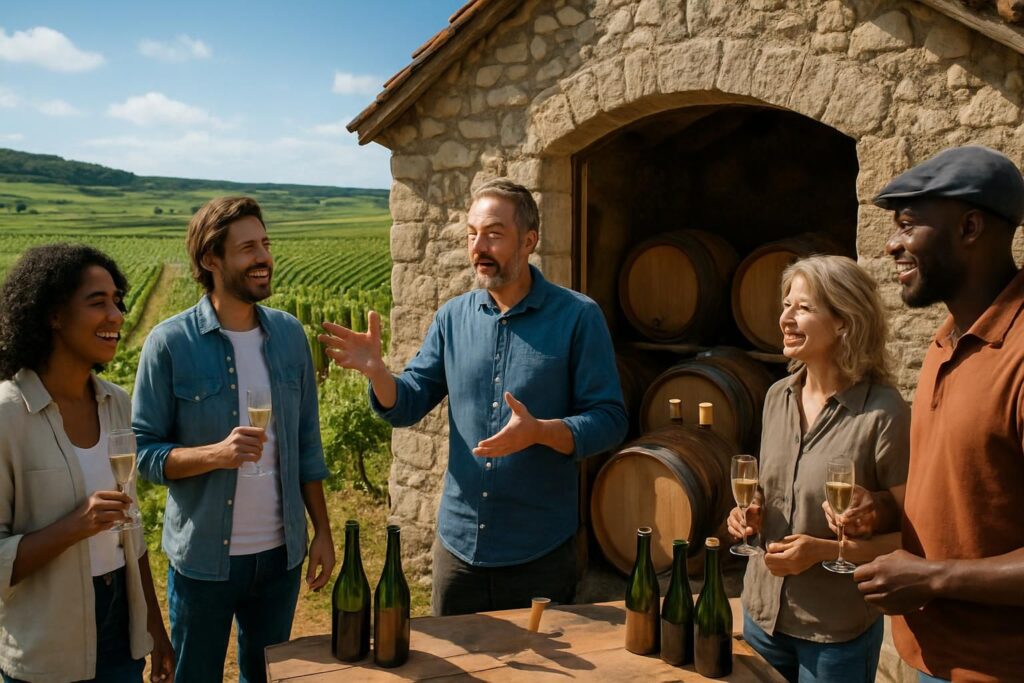
Since its inscription in 2015 on the UNESCO World Heritage list, the Champagne region has been experiencing a true transformation of its tourist appeal centered around wine. This designation has breathed new life into wine tourism, attracting a growing number of visitors every year eager to discover the richness and subtleties of Champagne. The dynamism of blending, which characterizes the very making of this exceptional wine, now resonates in a renewed tourist offer combining tradition, innovation, and immersion at the heart of the historic vineyards. Between renowned houses, emerging winemakers, and unprecedented experiences, the rise of wine tourism in Champagne asserts itself as a key lever for regional and cultural development.
This proliferation is manifested not only by a notable increase in tourist flows but also by a diversification of offerings: interactive visits, tailor-made tastings, educational workshops, and sensory trails weave a complete narrative around the terroir, the geology of the hillsides, and the complexity of the blend. These enriched experiences now favor the discovery of the origin terroirs of the base wines, to better understand the Champagne exception. From Reims to Épernay, passing through the villages surrounding the Montagne de Reims or the Côte des Blancs, visitors immerse themselves in the daily life of producers, close to the vine stocks and the ancestral method that makes Champagne world-renowned.
The UNESCO inscription: catalyst of wine tourism dynamism in Champagne
The listing of the “hillsides, houses, and cellars of Champagne” as a UNESCO World Heritage site on July 4, 2015, marked a real turning point for the entire sector. This prestigious recognition led to a comprehensive project for the enhancement and sustainable management of the territory, which includes the promotion of wine tourism. Since then, a concerted effort has been made to preserve and highlight the authenticity of the landscapes, know-how, and architecture related to Champagne production.
This momentum is accompanied by a significant networking of stakeholders, bringing together producers, local institutions, UNESCO, and tourism actors. These partnerships have led to the creation of themed tourist itineraries, the rehabilitation of historic cellars, and the dissemination of an oenological culture accessible to the general public. This inclusive approach now enables visitors to grasp the crucial importance of blending, the cornerstone of Champagne wine, relying on educational and entertaining trails.
This has translated on several levels: investment in welcome infrastructures, strengthened training of reception teams, and the multiplication of dedicated events. For example, the Grandes Caves de Reims have been named an essential site, while original experiences, such as tasting workshops around grape varieties linked to terroirs, captivate more and more wine enthusiasts.
Tourism in Champagne thus benefits from an enhanced framework generated by this listing, which offers increased international visibility and encourages quality and sustainable tourism. The region has thereby strengthened its position as the champion of wine tourism in France, thanks to a steady increase in visitor numbers and a diversification of the experiences offered. It is worth noting that the positive impact on the local economy is tangible, notably favoring employment in the tourism and wine sectors.
Champagne blending at the heart of the wine tourism experience
The major particularity that distinguishes Champagnes lies in the complex art of blending. This unique process consists of marrying base wines from different grape varieties, vintages, and terroirs to create an exceptional gustatory harmony. For several years now, this ancestral technique has become an essential pillar of wine tourism routes.
Visitors are invited to understand how the subtle marriage of grapes notably from Pinot Noir, Pinot Meunier, and Chardonnay influences the aromas, texture, and final character of the wine. The discovery of base wines, after fermentation but before blending, is a foundational educational step. Several houses now offer workshops where the public can learn about the fundamental role of each grape variety and the choice of proportions, thus revealing the technical and sensory complexity behind each bottle.
The wine tourism offer has been enriched with multi-sensory visits allowing exploration of terroir differences, such as the Côte des Blancs, the Montagne de Reims, or the Vallée de la Marne. These regions offer specific soils and microclimates, each bringing particular nuances to the grapes. The staging of these regional diversities by houses and estates helps deepen the public’s knowledge, beyond a simple tasting.
This educational approach, centered on blending, also restores greater importance to talented winemakers who showcase their terroirs. From 2020 onwards, many of these producers have begun promoting single-vineyard cuvées vinified with a stronger emphasis on soil expression, alongside the traditional classic blends. This meets a growing demand from consumers, increasingly curious and demanding, seeking authenticity.
To reinforce this aspect, various initiatives like that of Champagne Paul Dethune concretely illustrate the highlighting of the terroir and the personalization of the wine. These wine tourism approaches unleash the educational potential of blending, energizing Champagne’s image on a cultural and gustatory level.
Innovation and diversity of wine tourism offers: a major asset for tourism growth
The rapid evolution of the wine tourism sector in Champagne also goes through constant innovation that reconciles tradition and modernity. Since 2015, many initiatives have emerged, offering renewed experiences that meet the expectations of a broader and diversified clientele.
Among these innovations are immersive augmented reality tours, nocturnal tastings illuminated by a play of lights, or bike rides through the vineyard accompanied by gourmet breaks highlighting local gastronomy. The latter fits into a synergistic logic where Champagne wine enhances local products, as shown by the proliferation of addresses dedicated to wine and gastronomy pairing in the region.
Another strong lever is the organization of event gems, such as classical concerts in vaulted cellars or country picnics in the heart of the vines, bringing together amateurs and novices around a shared passion for wine. These events, often orchestrated by emblematic houses or independent estates, help animate wine-growing villages and structure the tourist offer throughout the year.
The list below presents concrete examples of initiatives illustrating this dynamic:
- Blending workshops and guided tastings with cellar masters
- Visits to historic cellars and UNESCO-listed sites
- Immersive experiences with augmented reality glasses
- Gourmet and wine-related bike rides in the vineyards
- Concerts and cultural events in cellars or outdoors
- Sensory picnics in the vineyards (e.g., wine + local products)
This diversity of offerings also contributes to a better seasonality of attendance, avoiding peaks exclusively in summer and favoring more spread-out tourism throughout the year. Highlighting each stage of the wine-making process, from the vine stock to the bottle, increases the sustainable attractiveness of Champagne.
The synergy between innovation and authenticity now constitutes an essential pillar of wine tourism development in this region. It perfectly meets a modern demand for unprecedented sensory and cultural experiences, reflecting the vitality of a wine region whose history and know-how continue to inspire the whole world.
Collective mobilization and networking of actors: keys to the growth of wine tourism
The success of Champagne wine tourism largely depends on the stakeholders’ ability to collaborate effectively. This mobilization includes Champagne houses, family estates, local authorities, as well as startups specializing in tourism and technology. Since 2015, this convergence of skills has structured a coherent offer combining geography, heritage, and marketing innovation.
Historic houses such as Veuve Clicquot play a leading role in promoting wine tourism. Thanks to substantial investments and ambitious cultural programs, they offer visitors a unique immersion combining tasting, cellar discovery, and blending workshops. You can learn more about how Maison Veuve Clicquot encourages wine tourism in Champagne, innovating without ever losing sight of authenticity.
Moreover, cooperation between wine regions, such as those of the Coteaux de la Montagne de Reims, and local authorities promotes the creation of tourist itineraries that guide visitors to less traditional but equally rich sites in history and discovery.
However, this collective work is accompanied by increased consideration of environmental issues that underpin the sustainability of tourism practices. Awareness campaigns, standards adapted to the attendance of prestigious sites, and the enhancement of natural heritage are integrated into local development. This shared responsibility ensures not only the preservation of natural areas but also the economic sustainability of the sector.
Beyond that, coordination between actors has led to the emergence of digital networks facilitating information and reservations, thus simplifying the visitor’s journey. These digital tools help amplify the growth of wine tourism in Champagne while constantly improving the quality of the services offered.
What is blending in Champagne?
Blending is a technique that consists of marrying different base wines from several grape varieties, vintages, and terroirs to create the balance and complexity characteristic of Champagne.
How has UNESCO World Heritage inscription impacted wine tourism in Champagne?
Since this inscription in 2015, the region has seen a strong development of wine tourism initiatives, with a more structured, diversified tourism, and better enhancement of viticultural and cultural heritage.
What are the main terroirs highlighted in Champagne wine tourism?
Emblematic terroirs such as the Montagne de Reims, the Côte des Blancs, and the Vallée de la Marne are at the heart of wine tourism discoveries, each area offering specificities that influence the wine profiles.
What wine tourism innovations are offered to visitors today?
One can find augmented reality visits, nocturnal tastings, gourmet bike rides, concerts in cellars, and sensory picnics, among others.
How do Champagne actors collaborate to promote wine tourism?
Historic houses, family estates, local authorities, and startups work together to structure a coherent offer, integrate sustainability issues, and facilitate the visitor experience through digital tools.