
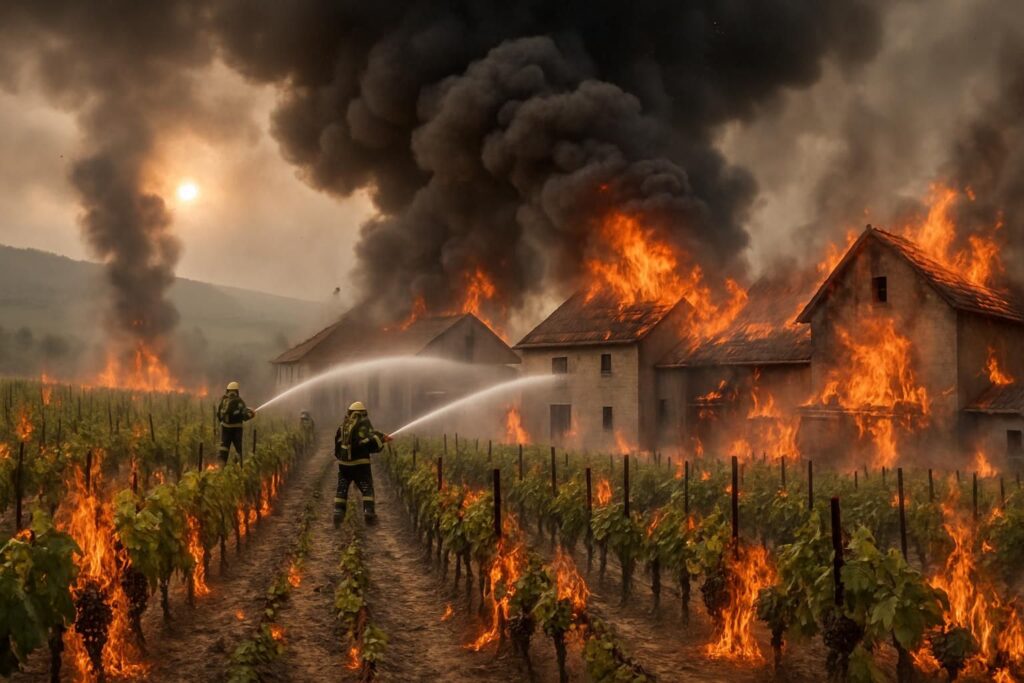
Last Sunday, the tranquility of Cuisles was abruptly shattered by an exceptionally violent fire that ravaged a vineyard estate located not far from Épernay. This fire, of considerable magnitude, spread rapidly, causing major material devastation and spreading fear among the winemakers and local residents. This dramatic event highlights the fragility of vineyard infrastructures in the face of natural hazards and accidents, as well as the determined mobilization of firefighters confronting a disaster threatening one of the cultural and economic treasures of the Champagne region.
The fire broke out in the early afternoon in the estate’s technical premises, a site known for the superior quality of its champagne. The flames, fueled by flammable materials stored and the summer heat, quickly grew to such an extent that emergency intervention services had to deploy significant resources to try to contain the fire. The wine-growing community, already weakened by sometimes difficult climate conditions, is now faced with the extent of the damage caused by this fire. Several hectares of vineyards were affected or destroyed, compromising the next harvest as well as the years to come.
This catastrophe resonates as a poignant reminder of the risks to which the world of viticulture in Champagne is exposed, especially in a national context marked by formidable forest fires affecting other regions such as Gironde or Landes. The rapid mobilization of firefighters limited what could have become an even wider disaster, but it remains clear that the road to reconstruction will be long and fraught with difficulties for the operators of Cuisles.
Probable causes of the fire that ravaged the vineyard estate in Cuisles
Determining the exact origin of a fire of such intensity is crucial to understanding the mechanisms that led to this disaster and to prevent similar future catastrophes. In Cuisles, the initial investigations by fire experts suggest that the fire started in the technical premises, an area where tools, materials, and often flammable products used in viticulture are stored.
The role of climatic factors cannot be underestimated. With increasingly hot and dry summers observed in recent years in Champagne, the risk of ignition and rapid fire spread is extremely high, particularly when temperatures far exceed seasonal norms, as was the case on that dramatic Sunday. The low ambient humidity, combined with dry vegetation in the adjacent vineyards, acted as a natural accelerator of the disaster.
Finally, another hypothesis raised by local authorities concerns a possible electrical or human failure in the use of the estate’s technical equipment. The technical premises indeed host a large amount of machinery and installations that could be potential fire sources, notably due to complex electrical circuits or the handling of devices during production operations. These hypotheses are, however, still subject to in-depth investigation.
Winemakers and fire safety experts are now working to reinforce prevention around sensitive infrastructures. Among the measures considered:
- Installation of efficient fire detection and alarm systems in vineyard buildings.
- Strengthening maintenance of technical premises and strict control of electrical installations.
- Enhanced training of personnel in first aid procedures in case of fire.
- Establishing weeded buffer zones around vineyards to slow the spread of the fire.
These measures are essential to limit the risk of disaster, which could, in the future, jeopardize the entire sector. The fire in Cuisles illustrates both organizational vulnerabilities and environmental dangers related to viticulture in the heart of Champagne.
Impact of the fire on vineyards and Champagne viticulture in the Cuisles region
A fire of this magnitude is not limited to material damage to buildings: the vineyards, true pillars of wine production, also suffer considerable damage. In Cuisles, several hectares of plots were directly affected by the fire, with areas where the fire destroyed the vines, significantly impacting production.
The consequences are multiple. First, the immediate loss of the upcoming harvest, which compromises not only the estate’s turnover but also the supply of the prestigious Champagne appellation. Then, the restoration of the vineyards requires heavy investments, both human and financial. Replanting and recovery of the vines take several years before regaining optimal quality, delaying future production and weighing on the vineyard’s economic sustainability.
The impacts on Champagne viticulture are accentuated by a broader context of climate change. In 2026, winemakers must already cope with frequent hazards: spring frost, intense summer drought, and opportunistic diseases linked to a changing climate. This dramatic fire, occurring in a key area, adds to these challenges. Local and regional solidarity thus becomes indispensable to overcome this crisis.
Viticultural cooperatives as well as institutional partners have already offered support to allow affected operators to restart as quickly as possible. These supports take the form of:
- Targeted subsidies for replanting and infrastructure renovation.
- Enhanced technical support to optimize vineyard reconstruction.
- Agronomic advice aimed at adapting cultural practices to increased risks.
Furthermore, this tragic event calls on the sector to integrate fire risk management into the global strategy of Champagne viticulture. Discussions are underway to review large-scale prevention plans and strengthen alert systems. This catastrophe in Cuisles will likely fuel an essential debate on the vineyard’s resilience to extreme hazards.
This video illustrates the violence of the fire and the rapid intervention of firefighters during the dramatic Sunday in Cuisles. It also shows the complexity of operations to control a fire in a vineyard area, notably with the presence of flammable products and sensitive technical installations.
The mobilization of firefighters in response to the fire disaster in Cuisles
Faced with this scene of destruction, the firefighters played a crucial role in limiting the fire’s extent. Their expertise, speed, and coordination helped prevent an uncontrollable spread to neighboring vineyards and inhabited areas. They had to face a complex environment, mixing dry vines, buildings made of fragile materials, and intense heat.
The resources deployed were significant: several dozen firefighters engaged on the ground, accompanied by specialized vehicles and water tanks. Despite this, the wind and the dry nature of the terrain continuously complicated the progress of the interventions. Their fight against the fire is an example of dedication and professionalism.
This intervention also serves as a reminder that fire prevention in rural vineyard areas must be taken very seriously. The firefighters themselves emphasize the importance of having easy access routes, sufficient water reserves, and instant alert systems. To better prepare for future challenges, several specialized training sessions are planned for intervention teams.
Beyond their direct action, firefighters have benefited from the moral support of the population and local leaders, who praised their courage in the face of this ordeal. Solidarity initiatives have also multiplied, such as the collaboration among young regional firefighters, visible in this recent article, demonstrating the involvement of future generations in protecting local heritage.
Reconstruction prospects and preventive measures for the fire-damaged vineyard estate
After a dramatic Sunday marked by a devastating fire, the path to reconstruction looks long and complex for the vineyard estate of Cuisles. The immediate priority is to assess the extent of material and agricultural damage in order to plan an effective and sustainable upgrade. Specialized assessments will be carried out to define the best strategy for rehabilitating the buildings and vines.
This is a long-term task, combining infrastructure restoration, renewal of plantations, and adaptation to modern viticulture requirements. Operators will have to integrate innovative solutions into their project, notably:
- The establishment of reinforced natural or artificial firebreak barriers.
- The installation of fire monitoring systems connected via the Internet of Things (IoT).
- The diversification of production and storage modes to limit concentrated risks.
- A risk management plan addressing climatic and environmental scenarios of emergency.
Financial and technical support from regional and national institutions is also essential. Funds dedicated to the preservation of viticultural heritage, in a context already marked by several fires in different areas, have recently been strengthened. These mechanisms support fire-damaged estates like that of Cuisles in their reconstruction.
Beyond technical aspects, this dramatic episode prompts broader reflection on responsible and sustainable viticulture. Collaboration among winemakers, firefighters, researchers, and local authorities is crucial to anticipate, prepare, and limit future disasters. The case of Cuisles may provide valuable feedback helping to strengthen the sector’s resilience in the years to come.
The impact of this fire beyond the visible flames also represents a technological and human challenge, requiring a global and coordinated response to rebuild a safer and more efficient vineyard estate.
Regional and national lessons learned from the dramatic Sunday in Cuisles
Every setback, however painful, carries its share of lessons. The fire that struck the vineyard estate in Cuisles is no exception and raises several issues, both locally and nationally. It sheds light on structural vulnerabilities of certain operations to fires, but also on the need to integrate risk management into a sustainable viticulture development policy.
The Champagne region, following other similar crises like those that occurred further west in Gironde or Landes, has initiated enhanced dialogue among local actors, firefighters, researchers, and policymakers. The goal is to anticipate a future marked by extreme climatic hazards likely to worsen disasters.
Several measures can be identified as priorities to provide a safer framework:
- Strengthening firefighting infrastructures in agricultural and vineyard areas.
- Setting up connected early warning networks for rapid detection and immediate intervention.
- Sensitization campaigns aimed at operators and residents regarding fire prevention.
- Encouragement of innovative viticultural practices compatible with natural risk management.
Finally, this dramatic Sunday in Cuisles more broadly illustrates the fragility of an emblematic sector, which must combine a tradition of quality with adaptation to contemporary challenges. The disaster has sparked numerous reactions within the wine world, emphasizing the need to better protect the terroir and ensure the sustainability of a heritage recognized among the jewels of French heritage.
To deepen understanding of developments and issues related to fires in Champagne, it is advisable to consult recent analyses such as those available on the fire situation in Champagne, which illuminate the general dynamics and adaptation strategies adopted by the sector.
{“@context”:”https://schema.org”,”@type”:”FAQPage”,”mainEntity”:[{“@type”:”Question”,”name”:”What are the main causes of a fire in a vineyard estate?”,”acceptedAnswer”:{“@type”:”Answer”,”text”:”Fires in a vineyard estate can result from electrical malfunctions, human negligence, or particularly dry and hot climatic conditions. The presence of flammable materials in technical premises increases vulnerability.”}},{“@type”:”Question”,”name”:”How can winemakers limit fire risks?”,”acceptedAnswer”:{“@type”:”Answer”,”text”:”They can install fire detection systems, organize weeded buffer zones around plots, rigorously maintain electrical installations, and train staff in safety procedures.”}},{“@type”:”Question”,”name”:”What is the impact of a fire on wine production?”,”acceptedAnswer”:{“@type”:”Answer”,”text”:”Beyond building destruction, fire often devastates vineyards, leading to lost harvests and the need for replanting, which delays production for several years.”}},{“@type”:”Question”,”name”:”How do firefighters intervene during a fire in a vineyard area?”,”acceptedAnswer”:{“@type”:”Answer”,”text”:”They deploy significant human and material resources, using specific techniques to fight flames in rural areas, while protecting surrounding zones and sensitive infrastructures.”}},{“@type”:”Question”,”name”:”What measures are taken for reconstruction after a vineyard fire?”,”acceptedAnswer”:{“@type”:”Answer”,”text”:”Operators establish firebreak barriers, modernize monitoring equipment, diversify production structures, and often benefit from financial and technical aid from institutions.”}}]}What are the main causes of a fire in a vineyard estate?
Fires in a vineyard estate can result from electrical malfunctions, human negligence, or particularly dry and hot climatic conditions. The presence of flammable materials in technical premises increases vulnerability.
How can winemakers limit fire risks?
They can install fire detection systems, organize weeded buffer zones around plots, rigorously maintain electrical installations, and train staff in safety procedures.
What is the impact of a fire on wine production?
Beyond building destruction, fire often devastates vineyards, leading to lost harvests and the need for replanting, which delays production for several years.
How do firefighters intervene during a fire in a vineyard area?
They deploy significant human and material resources, using specific techniques to fight flames in rural areas, while protecting surrounding zones and sensitive infrastructures.
What measures are taken for reconstruction after a vineyard fire?
Operators establish firebreak barriers, modernize monitoring equipment, diversify production structures, and often benefit from financial and technical aid from institutions.