
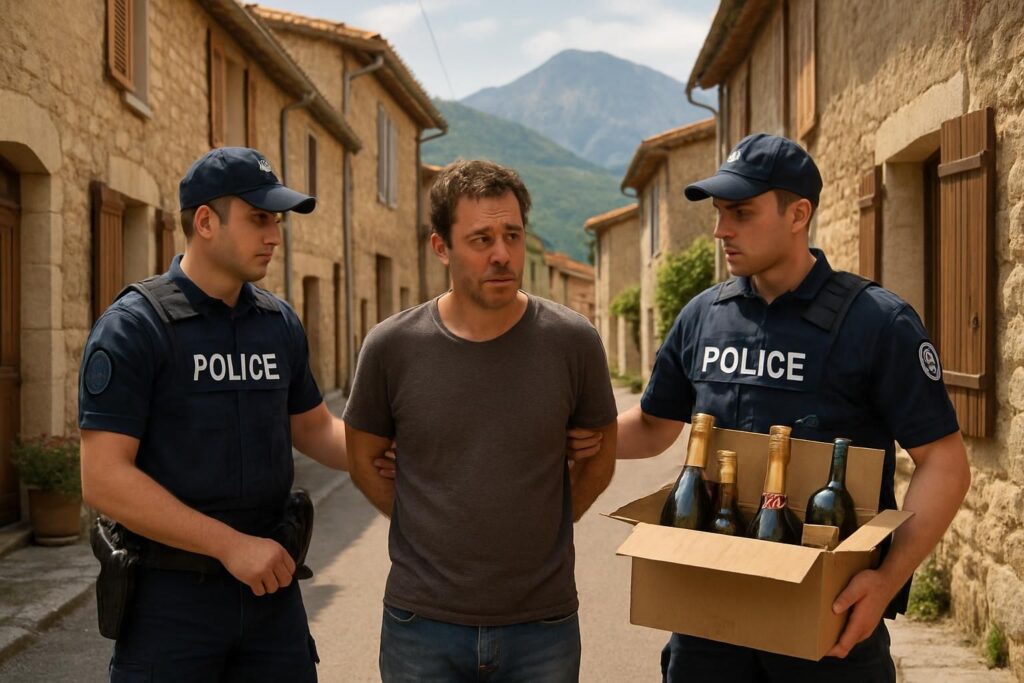
In the Alpes-de-Haute-Provence, a recent case has highlighted a growing phenomenon of crime affecting the very specific and lucrative market of champagne and spirits. A man, a Georgian national, was arrested in Barcelonnette following several repeated thefts committed in two supermarkets in the town, where he had seized expensive bottles of alcohol. These offenses, far from being isolated acts, are part of a worrying dynamic of repeated illegal appropriation. In addition to his criminal record marked by similar offenses, the suspect was subject to an obligation to leave French territory, which was not respected. The local police, seized of the investigation, quickly identified and put an end to this series of thefts, confirming the suspected organized nature of this criminal activity. The man in his forties was placed in pre-trial detention pending his immediate appearance, with judicial and social stakes remaining high around this emblematic case in the fight against crime in a region where the protection of valuable goods, such as high-end spirits, is paramount.
Repeated thefts of champagne and spirits in the Alpes-de-Haute-Provence: a growing phenomenon
The Alpes-de-Haute-Provence region is renowned for its quality of life, alpine landscapes, and a certain art of living where local products, notably spirits and champagne, hold an important place. However, in recent years, it has also seen an increase in criminal acts specifically targeting these precious goods. Repeated thefts of champagne and spirits constitute a worrying problem for merchants, producers, and local authorities. This state of affairs is explained by the high commercial value of these products, but also by a well-structured parallel market that favors their resale at attractive prices, often outside legal channels.
In the recent case of Barcelonnette, incidents multiplied with worrying consistency. The suspect, a man in his forties, did not target a single store but several. This flexibility shows advanced planning and a fine knowledge of the premises and security arrangements. The retail giants, although equipped with modern video surveillance systems, could only prevent these offenses after identifying the repetition of similar thefts. Cooperation between merchants and the local police was decisive, demonstrating the importance of a rapid alert network in preventing these acts.
This form of crime is not limited to the Alpes-de-Haute-Provence. Comparable incidents are observable in other French regions, regularly reported in specialized press, which alert to the need for strengthened strategies to protect viticultural and alcoholic resources. The fight against these thefts goes beyond mere police intervention: it also involves private actors, local authorities, and specialists in the champagne sector, who must collaborate closely to implement effective prevention measures.
The economic and social stakes of spirits protection in the alpine region
Spirits, especially champagne, represent not only significant economic wealth for the region but also a precious cultural and gastronomic heritage. The arrest in the Alpes-de-Haute-Provence sheds light on the stakes related to the protection of these symbolic goods and their impact on the local economy. Each stolen bottle represents a direct loss for producers, distributors, but also for local and tourist customers who expect to find quality products on the market.
The consequences go beyond simple financial loss. Repeated thefts create a climate of insecurity for merchants, who see their confidence shaken and their investments threatened. This situation can also worsen social tensions, particularly in rural areas where proximity between inhabitants is strong and where the local economy partly depends on these businesses. Moreover, these offenses encourage a flourishing black market, feeding a vicious circle where illicit supply and demand mutually reinforce each other.
Faced with these challenges, it is imperative to strengthen the security measures at points of sale, but also to raise awareness among all actors in the territory about this issue. In 2026, the implementation of innovative solutions, such as intelligent video surveillance or anti-theft devices accompanied by prevention campaigns, is emerging as an appropriate response. These tools will not only enable suspects to be intercepted more effectively but also potentially deter any attempted burglary by anticipating and detecting suspicious behaviors.
The suspect’s profile and judicial dynamics in spirits theft cases
In the case of Barcelonnette, the suspect arrested is a Georgian national in his forties, already known to the police services for similar offenses. His judicial record indicates clear recidivism, with multiple theft offenses, notably targeting high-value products such as bottles of champagne and other spirits. This complex situation is aggravated by the failure to comply with an obligation to leave French territory (OQTF), which reflects a deep dysfunction in the monitoring of administrative measures.
The judicial police, during their investigation, were able to reconstruct this individual’s modus operandi. The thefts are characterized by calculated discretion and frequent mobility between several points of sale, which complicates the task of law enforcement. The analysis of surveillance footage and the comparison with other similar cases were essential to establish a solid body of evidence. Moreover, the local merchants’ cooperative activated a vigilance network, allowing rapid mobilization of authorities as soon as an incident was reported.
This episode recalls the importance of effective coordination between the national police, the gendarmerie, and territorial actors to ensure an appropriate judicial response. Indeed, the arrest led to the individual’s placement in pre-trial detention pending a trial by immediate appearance scheduled in the following days. The judicial system must thus reconcile the urgency of repression with ensuring the suspect’s rights, while sending a strong message against these criminal practices.
The legal framework and procedures in cases of repeated theft
Repeated thefts, especially when concerning high-value goods such as champagne, are treated with particular severity within the French judicial system. When a suspect is arrested, he is immediately placed in custody to be questioned about the various alleged offenses. Within this framework, several procedures may be initiated:
- Pre-trial detention, notably when there is a risk of recidivism or flight.
- Immediate appearance, allowing for rapid judgment of the suspect when facts are clearly established.
- Monitoring of legal obligations such as OQTFs, which, when ignored, aggravate the judicial situation.
In the Alpes-de-Haute-Provence as elsewhere, this legal framework seeks to deter criminal acts while ensuring the protection of rights. In this respect, the rapid intervention of law enforcement relies on strengthened collaboration with the concerned businesses, showing that prevention also relies on collective vigilance.
Prevention and the fight against champagne and spirits thefts in the Alpes-de-Haute-Provence
The recent arrest has again highlighted the importance of a proactive policy in prevention against theft in the spirits sector. Local merchants and distributors, often confronted with this type of delinquency, must adopt appropriate strategies to limit losses and protect their goods. These strategies combine innovative technologies, staff training, and close cooperation with law enforcement.
One of the most effective means consists in improving video surveillance devices coupled with instant alert systems. For example, some stores now equip their champagne aisles with specific alarms triggered by unauthorized product movement. This double surveillance — human and technological — increases the chances of rapid intervention in case of incident.
Moreover, staff awareness plays a fundamental role. Learning to detect suspicious behaviors and establishing heightened vigilance during busy periods, such as holidays or sales, help prevent malicious acts. Prevention also relies on communication campaigns aimed at regular customers, highlighting risks related to illicit resale.
It is also essential to note that the parallel market for resale of stolen spirits prospers thanks to an organized and often cross-border network. The arrested suspect was very likely a link in these criminal circuits, which requires international police coordination. Measures such as strengthening customs controls and European cooperation appear as essential levers to reduce the impact of these thefts on the local economy.
A concrete example of integrated strategy against wine and alcohol crime
In another French region, a consortium of vineyards and distributors has set up a traceability system combining QR codes and blockchain to secure prestige bottles. This model has significantly reduced thefts and falsification. Such an initiative could inspire the Alpes-de-Haute-Provence where the enhancement of champagne and spirits also involves guaranteeing authenticity and product integrity.
The mobilization of local authorities, with the support of chambers of commerce, is also a strategic pillar. By combining prevention, sanction, and innovation, the territory gives itself the means to resist the rise of crime in this sensitive field.
Consequences for the champagne sector and local economy of the Alpes-de-Haute-Provence
Beyond the immediate impact on targeted businesses, repeated thefts of champagne and spirits raise broader questions concerning the sector and the local economy in the Alpes-de-Haute-Provence. The region’s reputation for quality can be affected when such incidents multiply, creating a certain mistrust among consumers and commercial partners.
Economically, direct financial losses incurred by merchants ripple through the entire value chain — from producers to distributors. Moreover, such acts feed demand on parallel, often unregulated markets, which calls into question the security of legal commercial circuits and weakens regional competitiveness.
Faced with this situation, professionals in champagne and spirits organize to present a united front. They collaborate with specialized organizations and participate in exchange platforms dedicated to security. The challenge is to maintain consumer trust by ensuring traceability and impeccable quality of sold products.
The sector must also integrate crime-related issues into its marketing strategies and commercial relations. Protecting brand image is essential to preserve national and international outlets, especially at a time when wine tourism is gaining importance in the Alpes-de-Haute-Provence. This sector greatly benefits from the quality and reputation of its spirits and champagne, a wealth that must be defended against any threat.
Levers to strengthen economic resilience
Several actions can be considered to consolidate the local economy against theft risks:
- Develop surveillance networks among merchants for common prevention
- Encourage law enforcement training on the specifics of crime in the spirits sector
- Promote technological innovation, notably through advanced traceability systems
- Strengthen ties with judicial authorities for rapid and effective handling of offenses
- Support communication on the importance of the champagne sector in the regional and national economy
These measures are essential to ensure the sustainability of a key sector while significantly reducing the negative impacts of crime. To learn more about the stakes related to the protection of this liquid heritage, it is interesting to consult news related to champagne thefts in other regions and current initiatives in this area.
What are the risks incurred by a person in the event of repeated thefts of spirits?
Repeated thefts are punishable by prison sentences of up to several years, accompanied by pre-trial detention during the procedure. Failure to comply with obligations such as the OQTF aggravates the situation.
How can merchants protect themselves against these thefts?
They can invest in advanced video surveillance devices, train their staff to detect suspicious behaviors, and work closely with the local police.
Is the black market for stolen spirits a national problem?
Yes, it concerns several French regions and requires cooperation between law enforcement at the national and European levels to effectively combat this phenomenon.
What is the judicial procedure in case of confirmed theft?
After arrest, a suspect can be placed in custody, then referred to a court. Depending on the severity, an immediate appearance is organized. Pre-trial detention may be ordered to prevent recidivism.
How does the champagne sector protect itself against these risks?
It develops innovative traceability systems, establishes partnerships between producers, distributors, and law enforcement, and promotes awareness at all levels to safeguard its image and heritage.
Moreover, staff awareness plays a fundamental role. Learning to detect suspicious behaviors and establishing heightened vigilance during busy periods, such as holidays or sales, help prevent malicious acts. Prevention also relies on communication campaigns aimed at regular customers, highlighting risks related to illicit resale.
It is also essential to note that the parallel market for resale of stolen spirits prospers thanks to an organized and often cross-border network. The arrested suspect was very likely a link in these criminal circuits, which requires international police coordination. Measures such as strengthening customs controls and European cooperation appear as essential levers to reduce the impact of these thefts on the local economy.
A concrete example of integrated strategy against wine and alcohol crime
In another French region, a consortium of vineyards and distributors has set up a traceability system combining QR codes and blockchain to secure prestige bottles. This model has significantly reduced thefts and falsification. Such an initiative could inspire the Alpes-de-Haute-Provence where the enhancement of champagne and spirits also involves guaranteeing authenticity and product integrity.
The mobilization of local authorities, with the support of chambers of commerce, is also a strategic pillar. By combining prevention, sanction, and innovation, the territory gives itself the means to resist the rise of crime in this sensitive field.
Consequences for the champagne sector and local economy of the Alpes-de-Haute-Provence
Beyond the immediate impact on targeted businesses, repeated thefts of champagne and spirits raise broader questions concerning the sector and the local economy in the Alpes-de-Haute-Provence. The region’s reputation for quality can be affected when such incidents multiply, creating a certain mistrust among consumers and commercial partners.
Economically, direct financial losses incurred by merchants ripple through the entire value chain — from producers to distributors. Moreover, such acts feed demand on parallel, often unregulated markets, which calls into question the security of legal commercial circuits and weakens regional competitiveness.
Faced with this situation, professionals in champagne and spirits organize to present a united front. They collaborate with specialized organizations and participate in exchange platforms dedicated to security. The challenge is to maintain consumer trust by ensuring traceability and impeccable quality of sold products.
The sector must also integrate crime-related issues into its marketing strategies and commercial relations. Protecting brand image is essential to preserve national and international outlets, especially at a time when wine tourism is gaining importance in the Alpes-de-Haute-Provence. This sector greatly benefits from the quality and reputation of its spirits and champagne, a wealth that must be defended against any threat.
Levers to strengthen economic resilience
Several actions can be considered to consolidate the local economy against theft risks:
- Develop surveillance networks among merchants for common prevention
- Encourage law enforcement training on the specifics of crime in the spirits sector
- Promote technological innovation, notably through advanced traceability systems
- Strengthen ties with judicial authorities for rapid and effective handling of offenses
- Support communication on the importance of the champagne sector in the regional and national economy
These measures are essential to ensure the sustainability of a key sector while significantly reducing the negative impacts of crime. To learn more about the stakes related to the protection of this liquid heritage, it is interesting to consult news related to champagne thefts in other regions and current initiatives in this area.
What are the risks incurred by a person in the event of repeated thefts of spirits?
Repeated thefts are punishable by prison sentences of up to several years, accompanied by pre-trial detention during the procedure. Failure to comply with obligations such as the OQTF aggravates the situation.
How can merchants protect themselves against these thefts?
They can invest in advanced video surveillance devices, train their staff to detect suspicious behaviors, and work closely with the local police.
Is the black market for stolen spirits a national problem?
Yes, it concerns several French regions and requires cooperation between law enforcement at the national and European levels to effectively combat this phenomenon.
What is the judicial procedure in case of confirmed theft?
After arrest, a suspect can be placed in custody, then referred to a court. Depending on the severity, an immediate appearance is organized. Pre-trial detention may be ordered to prevent recidivism.
How does the champagne sector protect itself against these risks?
It develops innovative traceability systems, establishes partnerships between producers, distributors, and law enforcement, and promotes awareness at all levels to safeguard its image and heritage.