
Rolampont is set to offer a unique experience for nature enthusiasts and curious individuals eager to better understand the unsuspected richness of nocturnal wildlife. Through an immersive day, the village transforms into a true crossroads of exploration, focused on the captivating world of bats. Co-organized by the Conservatoire d’espaces naturels de Champagne-Ardenne and the local Foyer rural, this initiative is part of the “International Bat Night,” an unmissable annual event to promote and protect these often misunderstood flying mammals. On September 19th, the speakers will propose a path that is both educational and entertaining, mixing conferences, screenings, exhibitions, practical workshops, and nighttime outings. The goal is twofold: to raise awareness about ecology and biodiversity while revealing the crucial importance of these animals for our environment.
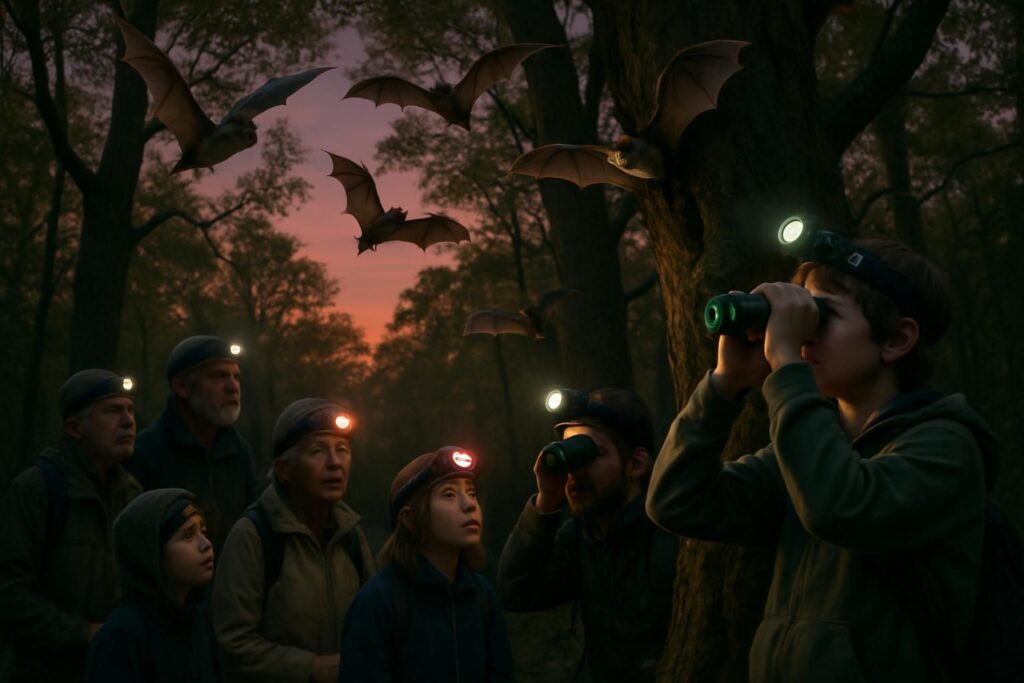
On the agenda are highlights that will allow visitors to approach bats from various angles. From the morning, a scientific conference will detail the biology and ecology of chiropterans, unveiling their lifestyles, behaviors, and essential role in natural ecosystems. The afternoon will be more practice-oriented with workshops on building bat boxes, in collaboration with the Parc national de forêts. These artificial refuges are designed to promote the development of colonies and strengthen local biodiversity, a crucial issue given the threats faced by these species. The day will culminate with a guided nighttime walk, where participants will have the chance to observe these animals in their natural habitat, equipped with flashlights and acoustic listening equipment to perceive the characteristic ultrasounds of bats. Rolampont therefore invites a complete immersion, at the heart of a discreet yet vital world, to better understand and protect this nocturnal fauna.
Rolampont: a privileged place for in-depth exploration of bats and their environment
Located in the rich natural landscape of Champagne-Ardenne, Rolampont benefits from an environment conducive to animal diversity, notably for bats that quietly inhabit the region. Wooded areas, waterways, and old historic buildings compose an ideal setting for the in-depth study of these nocturnal mammals. This immersive day organized in Rolampont aims precisely to highlight this environmental richness often inaccessible to the general public. By leveraging partnerships with local and national nature protection actors, notably the Conservatoire d’espaces naturels and the Parc national de forêts, the event spotlights the importance of collective collaboration among scientists, elected officials, associations, and citizens to promote the conservation of chiropterans.
Bats, despite their discretion, play a fundamental ecological role. They act by regulating insect populations, some of which are harmful to agriculture or human health. Moreover, they participate in pollination and seed dispersal in certain environments. However, these mammals face numerous challenges, including habitat loss linked to urbanization, intensive pesticide use, and climate change. Thus, allowing a broad audience to acquire practical knowledge about their biology and ways to protect them strengthens the collective capacity to act in favor of preserving local biodiversity.
The Michel-Gallissot media library, the core of this event, will host from 10 a.m. a conference dedicated to the discovery of chiropterans, followed by the screening of a documentary film. This cultural space in Rolampont thus becomes a meeting place between science, culture, and awareness-raising. Maxime May, a renowned nature photographer, will simultaneously exhibit a series of shots illustrating the impressive diversity of species present in the region, revealing a sometimes unsuspected visual universe. These images help change the public’s perception, often influenced by preconceived ideas and myths, to promote a respectful and informed approach.
Exploration and understanding of bat biology: a key to their preservation
The opening conference of the day given by bat specialists offers an educational dive into the fascinating world of these mammals. Bat biology reveals remarkable adaptations: their ability to fly, their use of echolocation to navigate and hunt in darkness, but also reproductive and hibernation modes that vary according to species. These elements are essential to understand their living conditions and specific needs.
The diversity of species present in France is also highlighted, with a focus on those inhabiting the Champagne-Ardenne territory. The greater horseshoe bat, for example, is among the emblematic species that the film “Une vie de grand rhinolophe” presents in detail. This documentary traces the life cycle of this animal, from feeding the young to selecting resting sites, and highlights the impact of environmental changes on its habitat. Participants thus benefit from a complete immersion, combining scientific and emotional learning.
It is also essential to explain the ecological functions of bats, which are often little known. By consuming significant quantities of flying insects each night, they act as natural regulators, thereby reducing the need for pesticides in agricultural areas. This action directly contributes to soil conservation and the quality of crops. Moreover, several species participate in the pollination of nocturnal plants, an irreplaceable role for the survival of certain ecosystems.
In-depth knowledge of this biology allows the establishment of adapted conservation strategies. For example, by understanding the importance of hibernation habitats and resting sites, it is possible to implement concrete measures such as protecting rocks, hollow trees, or buildings naturally hosting bats. This approach supports local biodiversity and reinforces the balance of natural environments.
Practical workshops: building bat boxes to support local biodiversity in Rolampont
In the afternoon, the workshops offered at the small town hall reception room embody the desire to act concretely for bat preservation. In collaboration with the Parc national de forêts, participants will learn to build specific bat boxes adapted to the needs of different species present in the region. These artificial shelters compensate for the scarcity of natural resting places, a major challenge amid the continuous transformation of landscapes.
Registration is essential to benefit from these interactive sessions held in two slots, from 2 p.m. to 4 p.m. and then from 4 p.m. to 6 p.m. Guided by experts, participants are provided with materials and plans necessary to design these ecological shelters. This workshop is open to all, from amateurs to professionals, thus encouraging citizen involvement and active awareness of environmental challenges.
Bat boxes are designed to offer optimal conditions: an untreated wooden structure, a narrow entrance to prevent predators, and a rough interior surface promoting the grip of chiropterans. Once installed in gardens, parks, or forested areas, these devices facilitate reproduction and colonization of protected species. Their educational construction engages participants from both a technical and ecological point of view, as it illustrates the tangible impact of simple actions on local biodiversity.
This practical activity fits within a broader dynamic of environmental education, where every action counts. By involving the entire community in these concrete gestures, Rolampont asserts itself as a regional example of citizen mobilization in the service of nature.
Night walk to discover bats: a sensory and educational experience in Rolampont
The end of the day offers a unique experience with the nighttime outing organized at the Tufière natural site, an emblematic place for observing bats in their natural environment. This meeting at 8 p.m. is accessible to all, regardless of level, and invites participants to plunge into the darkness to observe these mammals in their daily activity. Equipped with flashlights and listening devices, visitors can hear the ultrasonic signals produced by bats, a fascinating spectacle that reveals the complexity of their lifestyle.
During this walk, led by specialists, participants discover the nocturnal habits of bats as well as their interactions with their environment. They learn to identify different species by their flight, sounds, and behaviors. The sensory experience is coupled with awareness-raising about conservation issues, highlighting how these animals are valuable indicators of ecosystem health.
An essential aspect of this outing is to promote respect for nature at night by adopting appropriate behaviors, thus avoiding disturbing these vulnerable animals. Guides emphasize that silent and respectful observation is the key to watching bats without harming their well-being.
Providing a friendly and educational framework for this immersion in nocturnal fauna helps strengthen ties between the inhabitants of Rolampont and their natural environment, fostering a sense of belonging to a rich and fragile territory. This approach contributes to stimulating a sustainable protection dynamic, essential in the face of current ecological upheavals.
- In-depth knowledge: understanding the ecological interactions specific to bats and their role in the environment.
- Concrete actions: building nest boxes promoting repopulation and the safety of colonies.
- Collective engagement: active community participation to strengthen local biodiversity.
- Respect for nocturnal fauna: awakening to the necessity of harmonious coexistence with these mammals.
- Cultural sharing: visual and sensory discoveries through photographs, films, and nature outings.
Why organize a day about bats in Rolampont?
Rolampont presents an exceptional natural environment for the diverse presence of bats. This immersive day aims to raise public awareness about local ecology and to mobilize the community for their protection.
What are the objectives of the bat box building workshops?
These workshops allow the territory to be equipped with refuges adapted to bats, compensating for the loss of natural habitat and promoting their reproduction while actively involving participants in an ecological approach.
How does the night walk in Rolampont take place?
The guided outing is conducted with a spirit of respect and discovery, using flashlights and listening devices. It is accessible to all and allows observing bats in their natural behavior.
What role do bats play in the ecosystem?
Bats regulate insect populations, participate in pollination, and contribute to maintaining natural balances, making them essential actors for biodiversity and the health of surrounding environments.
How can the public get involved after the immersive day?
Beyond participating in workshops, residents can install bat boxes, respect natural habitats, and join local associations engaged in the protection of chiropterans and nature in general.