
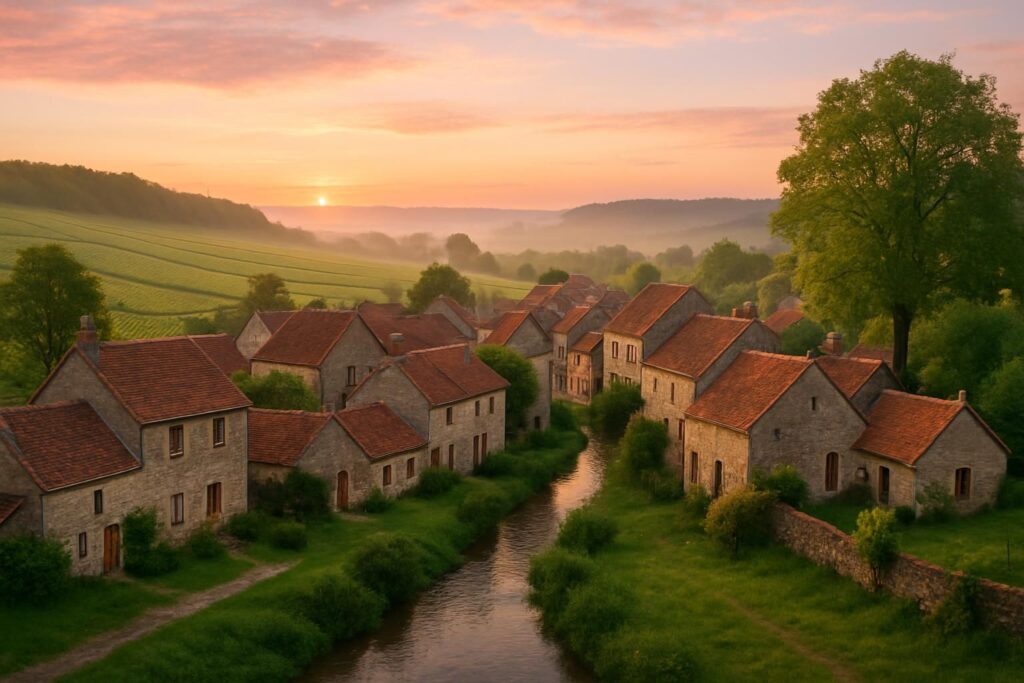
Only 1 hour and 45 minutes from Dijon, nestled in the Aube department, lies a village that harmoniously combines preserved nature, Champagne tradition, and a peaceful atmosphere. This place, emblematic of the Côte des Bar, attracts both wine lovers and enthusiasts of authentic landscapes and heritage steeped in history. Ideal for quiet getaways, this village invites a slow discovery, in a setting where time seems suspended between the vineyards and the peaceful banks of the Ource River. Far from urban bustle, visitors can immerse themselves in a rare serenity, carried by the gentleness of natural sites and the surrounding cultural richness, offering a rejuvenating pause close to Dijon.
This village in the Aube is especially renowned for its close connection to the world of Champagne, a product of an exceptional terroir and a craftsmanship developed over several generations. The hundreds of hectares of vineyards surrounding it shape the landscape and local identity, revealing a living heritage rich in stories and tastings. The local wine-growing tradition blends with a bucolic environment where nature fully expresses itself, between trails and picnic spots along the river, composing an ideal destination for those who wish to combine tourism, discovery, and moments of tranquility.
A village in the Aube with preserved natural charms
This picturesque village located in the heart of the Côte des Bar offers true immersion in nature. Bordered by the Ource River, it unfolds a green setting where flowered lanes and stone houses merge into the scenery. The recent redevelopment of the Ource quays has enhanced this natural space, transforming it into a place conducive to walking and relaxation. Visitors can stroll in complete tranquility, observing traces of a still tangible rural past, notably through the small descents once used to water livestock. Nearby, hiking trails wind through the vineyards and woods, offering a beautiful escape into the heart of the Champagne landscape.
The riverbanks also provide an ideal setting for organizing a family picnic or simply relaxing in peace. In every season, this natural scenery invites contemplation and reconnection with a healthy and soothing environment. One perceives a timeless atmosphere, perfectly suited for tourists seeking serenity away from the crowds. The village has preserved remarkable authenticity, palpable in every stone, every lane turn, and every panorama over the surrounding hills.
Some must-do nature activities in the village:
- Walks along the Ource, with views over the vineyard landscapes.
- Themed hikes in the heart of the Côte des Bar vineyards.
- Picnics and relaxation breaks on the arranged riverbanks.
- Observation of local wildlife and discovery of Champagne flora.
- Visits to small streams and protected areas on the edge of the woods.
In the footsteps of Pierre-Auguste Renoir, an artistic heritage at the heart of the village
The village is also distinguished by its unique connection with the famous impressionist painter Pierre-Auguste Renoir. His wife, Aline Charigot, native of the village, introduced the artist who eventually fell under the spell of the region’s soft and luminous landscapes. In 1896, Renoir acquired a family home there, to which was added a few years later a studio filled with natural light, strictly designed to fuel his creativity. Today, the house and the publicly accessible studio allow visitors to reconnect with the painter’s intimacy and understand how this inspiring environment nourished many of his works.
A trail marked by points of interest in the village allows recognition of certain places that shaped the master’s palette. The lanes, the edges of the Ource, and the vineyards were all sources of inspiration, as well as a living testimony of the close relationship between Renoir and this Champagne land. The visit is enriched with anecdotes about the family’s daily life, offering a striking dive into the artistic and cultural context of this late 19th century still palpable today.
This artistic dimension gives the village a particular aura, subtly blending culture and nature for tourists seeking a rewarding getaway. It invites taking the time to stop before landscapes that have marked art history, but also to appreciate the peaceful atmosphere of this place steeped in memory.
The discreet yet essential heritage for understanding local history
Beyond its artistic influence, this Champagne village highlights a rich history and well-preserved architectural heritage. Among the buildings not to be missed, Saint-Remi Church, rebuilt in the 19th century, stands out with its elegant neo-Gothic style and colorful stained glass. It reflects local religious traditions and strong ties with the village’s old families. Inside, the frescoes and sculpted elements enrich the visit with an appreciable spiritual and historical dimension.
Simply wandering the lanes also allows one to grasp the bygone atmosphere. Stone houses with traditional facades, traces of former rural activities, and perspectives on grazed hillsides testify to an authentic and still deeply rooted village life. Each of these facets evokes the daily life of those who shaped this land while offering visitors a rich and varied panorama, perfect for a complete and serene cultural discovery.
As part of this approach, it is possible to combine cultural outings with oenological discoveries, thus linking history and terroir harmoniously. The Champagne tradition is omnipresent, inscribed in every stone and every vine.
Immersion in the world of Champagne, between cellars and tastings
It is impossible to talk about this village in the Aube without mentioning the majesty of the Côte des Bar vineyards, one of the most renowned cradles of Champagne. Local estates, often family-run, open their doors to introduce visitors to the process of making the iconic drink. These guided tours explore vaulted cellars, true showcases where sparkling treasures rest, and allow appreciation of the passionate winemakers’ know-how.
During the tasting, one perceives all the finesse and richness of Champagnes from these terroirs. Typical grape varieties such as Pinot Noir and Chardonnay, combined with the limestone soil, give the wines a unique character. Exchanges with producers enrich this moment with a human and artisanal dimension, making every sip more meaningful.
To extend this oenological experience, local tourism offers various packages combining cellar visits, tasting workshops, and participation in events such as the famous Route du Champagne en Fête, an annual event that celebrates Champagne’s richness through festivities and discoveries in the heart of the wine-growing nature.
This unique setting is ideal for a day trip or a longer stay, blending nature, history, and gourmet pleasures in an environment where calm prevails.
Complementary tourist assets for a serene getaway from Dijon
Located less than two hours from Dijon, this village in the Aube represents an excellent destination for tourists seeking tranquility and authenticity. Its easy access makes it a preferred stop for those wishing to discover another side of the Bourgogne-Champagne region. Every visitor can enjoy gentle tourism, focused on nature, heritage, and tasting, at a moderate pace and without crowd pressure.
Proximity to Dijon also allows following up with other cultural or oenological discoveries, making this village an ideal starting point to explore Champagne and the Aube department. In this regard, excursions can be enhanced by diverse experiences, notably thanks to the numerous flea markets and regularly organized events in the region, offering a different perspective on local life and traditions. Among the appointments not to be missed, enthusiasts can inquire about upcoming best flea markets in Champagne-Ardenne, true moments of exchange and discovery.
Charming accommodations in cottages or guest rooms perfectly complement this tourist offer, providing relaxing stays with views of the vineyards and a deep immersion in the serenity of the place. This destination thus asserts itself as a haven of softness, where nature, heritage, and Champagne intertwine to offer a rich and soothing experience to be discovered in every season.
This video offers an immersive visit to Essoyes, highlighting its heritage, landscapes, and the unique atmosphere that reigns in this Champagne village.
A capsule dedicated to discovering the Champagne vineyards and natural sites of the Aube, ideal for preparing a calm and serene getaway.
How to get to this village from Dijon?
Simply take the A31 motorway towards Troyes, then follow the D619 to reach this village located about 1 hour 45 minutes from Dijon. The journey is accessible by car, facilitating a day trip or a weekend getaway.
What activities are offered for Champagne lovers?
Several wine estates open their doors for guided tours, offering tastings accompanied by explanations on the production process. It is also possible to participate in local events such as the Route du Champagne en Fête.
Is the village family-friendly?
Yes, thanks to its protected natural areas and walks along the river, the village proves ideal for family outings, including picnics and gentle strolls.
Is there a connection between this village and Pierre-Auguste Renoir?
Indeed, the impressionist painter has a special relationship with this village thanks to his wife, a local native. His house and studio are visible and open to visitors, attesting to the importance of this setting in his work.
What are the recommended times to visit?
Each season offers a different charm: spring and autumn provide a colorful spectacle in the vineyards, while summer is ideal for enjoying outdoor activities in mild weather.