
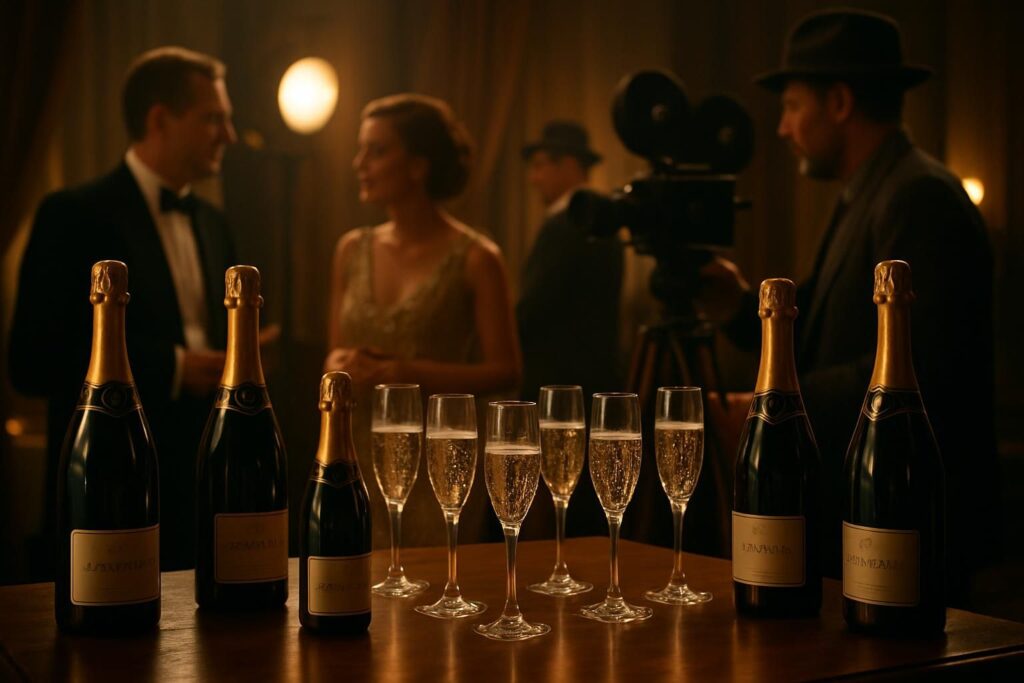
This Thursday evening, M6 offers viewers a unique dive into the sparkling world of French cinema with the unprecedented free-to-air broadcast of the film “Champagne“. Directed by the talented Nicolas Vanier, this feature film reveals much more than a simple comedy: it invites you on a journey through the story of a deep friendship set against the authentic backdrop of the Champagne vineyard. Carried by an outstanding cast, including Elsa Zylberstein and François-Xavier Demaison in central roles, the film skillfully blends emotions, laughter, and moments of tension, wonderfully embodying the human and cultural richness linked to the Champagne region. Moreover, this evening represents a valuable opportunity for enthusiasts to discover a work that is part of a continuity in promoting the Champagne heritage, through a resolutely contemporary and sincere cinematic perspective.
This little-known success, which attracted only 280,000 viewers at its release, thus benefits from a second life on M6 and its M6+ platform, allowing a reunion with this comedy that is both funny and touching. The action takes place in this natural and invigorating setting that is world-renowned for Champagne, a territory depicted here with accuracy, beyond the simple festive aspect. The rebroadcast comes with a selection of additional elements that enrich the understanding of this film and highlight its key actors, offering an unprecedented insight into a work that captures the very essence of friendship, roots, and modernity in the world of French cinema.
A profound narrative thread: the intergenerational story at the heart of the film “Champagne”
The screenplay of the film “Champagne” rejects clichés to offer an authentic and moving story. It tells the story of a group of friends, Jean, Patrick, Joanna, Romane, and Guillaume, an inseparable band for over thirty years. This strong bond, crossing the highs and lows of life, demonstrates a rare and precious complicity. The theme of friendship is handled with refinement, far from the superficial lightness one might expect from a so-called group comedy. The plot focuses on a weekend organized in Champagne to celebrate Patrick’s bachelor party, the last single of the group, who seems on the verge of definitively turning the page on his youth.
The unexpected arrival of Patrick’s future wife triggers a disruption in the group’s dynamic, bringing to light past grudges and personal dilemmas that each character keeps secret. This gradual unveiling of tensions mingles with bursts of joy and sincere exchanges, attesting to a friendship unafraid of the test of time and challenges. The Champagne setting, with its vineyard landscapes and festive tradition, is not a mere backdrop but plays an essential role as a catalyst for emotions and confrontations. The contrast between the lightness of the bubbles and human sparks creates an atmosphere both warm and electric, captivating the viewer from beginning to end.
The scope of this story goes beyond simple comedy: it invites reflection on how human relationships are built and evolve, and how the capacity for acceptance and forgiveness can redefine old bonds. Such a narrative fosters an immediate and deep identification with the characters, propelling “Champagne” beyond entertainment to reach a true dramatic and universal dimension.
The key actors: portraits and performances in “Champagne”
The film “Champagne” owes much of its credibility and emotional richness to the quality of its casting. The main cast brings together well-known French cinema talents who portray characters as diverse as they are deep with accuracy. Elsa Zylberstein lends her features to Romane, portraying a woman with a strong temperament, both protective and vulnerable. François-Xavier Demaison interprets Jean with his characteristic subtlety, blending humor and seriousness without ever overdoing it.
Éric Elmosnino, Stéphane De Groodt, and Sylvie Testud complete this group of friends, each bringing a different energy that energizes interactions and enriches the story. The palpable onscreen chemistry seems to continue behind the scenes, enhancing the authenticity of their performances. These actors, through their commitment, succeed in conveying the complexity of feelings related to long-term friendship with all its nuances: joy, rivalry, misunderstandings, and reconciliations.
The secondary characters, notably played by Valérie Karsenti, Stéfi Celma, and Marie Julie Baup, add a complementary dimension to the story, introducing new perspectives and parallel plots that nourish the main thread. The care given to the choice of performers contributes to the film’s success, which relies on a perfect balance between comedy and drama.
This range of actors also allows discovering emblematic figures of French cinema from a new angle, especially thanks to the Champagne setting which becomes a sort of character in its own right. Their presence contributes to the promotion of the region’s cultural heritage, anchoring “Champagne” in a tangible and evocative reality.
The role of the Champagne region in the staging and atmosphere of the film
The Champagne vineyard is not simply a picturesque setting: it embodies an entire universe of traditions, know-how, and history. This dimension is essential to fully grasp the atmosphere enveloping the film. The rolling landscapes, typical stone houses, and vast stretches of vines bring a rare authenticity that far exceeds visual aesthetics.
Director Nicolas Vanier, by favoring this region, invites a deeper discovery of its heritage, which resonates perfectly with the spirit of the film. This local involvement also offers an indirect spotlight on contemporary issues related to the evolution of viticulture, challenges linked to climate change, as well as the economic stakes of the Champagne sector in 2026.
Indeed, this setting also illustrates the tension between tradition and modernity, a theme central to the film. The characters, evolving in this environment steeped in history, confront their personal and collective choices. Furthermore, this dive into the Champagne terroir strengthens the sense of belonging and emphasizes the idea that, like wine, human relationships require time, patience, and care.
This tacit but powerful report on the Champagne region can also be compared with current viticultural news, such as recent developments in vineyard management and local cultural initiatives, like those reported in recent articles available on the protection of Champagne heritage or on new oenological adventures. Thus, the film fits into an expanded dynamic of promotion and awareness-raising of the French terroir.
The cultural and economic significance of the film “Champagne” in 2026
Beyond its cinematic qualities, “Champagne” plays a symbolic role in promoting the Champagne territory, a sector of major importance for the French economy, especially in the current context. The champagne industry faces notable developments, both commercially and environmentally, making the spotlight through cinema a powerful tool to enhance its visibility.
Broadcast on a major channel like M6 ensures wide exposure, helping to generate renewed interest in this region and its exceptional products. It is not just entertainment but a genuine discovery approach, reinforced by the option to watch the film via streaming on M6+, accessible anywhere and anytime.
Moreover, this film indirectly contributes to raising awareness of issues related to the wine sector and its economic dynamics, especially regarding international competition and changing consumption patterns. It also reflects attachment to the tradition conveyed by Champagne culture and the need to adapt this tradition to modern challenges, particularly relevant in a world where heritage values are more than ever at the heart of debates.
Ultimately, “Champagne” is fiction but also acts as a cultural testimony, a mirror of the evolutions of a region emblematic of French heritage. It offers a bridge between cinema and reality, inviting a renewed look at a rich region where history, know-how, and conviviality blend.
Essential things to know about the film “Champagne” and its broadcast on M6
To accompany this cinema evening, it is useful to recall some essential points about the film “Champagne”, its team, and its broadcast context:
- Title and broadcast: “Champagne” is being broadcast for the first time free-to-air this Thursday, June 4, 2026, at 9:10 p.m. on M6.
- Director: Nicolas Vanier, who signs here a work imbued with sensitivity and authenticity.
- Cast: Elsa Zylberstein, François-Xavier Demaison, Éric Elmosnino, Stéphane De Groodt, Sylvie Testud, among others.
- Theme: A dramedy centered on friendship, reunions, and conviviality, with the Champagne vineyard at its heart.
- Access: The film is available live on M6 and on replay on M6+ for those who wish to watch it again or discover it at their own pace.
- Current context: The broadcast aligns with a dynamic to promote Champagne heritage, enriched by specialized articles such as those on discounted prices in Champagne distribution or local events.
This evening promises a moment combining the pleasure of cinema and cultural discovery, enriching the public’s knowledge about this unique work and its universe. Both enthusiasts and newcomers will find rich and refreshing content, at the crossroads of heritage, emotions, and humor.
What is the main theme of the film “Champagne”?
The film explores the long-standing friendship between a group of friends who meet in the Champagne region, blending moments of joy, tension, and personal revelations.
Who are the main actors in the film?
Elsa Zylberstein, François-Xavier Demaison, Éric Elmosnino, Stéphane De Groodt, and Sylvie Testud make up the core cast of the film.
How is the Champagne region represented in the film?
It is not only a picturesque setting but also a central element reflecting the cultural, economic, and historical richness of the Champagne vineyard.
Where can one watch the film “Champagne” on replay?
The film is accessible via streaming on the M6+ platform, offering easy access to the content at any time.
What contemporary issues does the film indirectly address?
It touches on the tensions between tradition and modernity, as well as challenges linked to viticulture, reflecting current economic and environmental changes.